
























Biomarkers and Longevity: What Health Tests Can and Can't Tell You
Summary
This article explores the growing trend of using biomarkers—measurable biological signs—as tools for health optimization and longevity. It explains what biomarkers are (e.g., blood glucose, cholesterol, inflammation markers), how they can be tracked through at-home tests and wearables, and what experts say about their potential and limitations. The piece balances the promise of personalized health insights with cautions about over-monitoring, data interpretation challenges, and the risk of unnecessary anxiety. It positions biomarkers as a key pillar in the expanding wellness industry, projected to surpass $2 trillion by 2025, and as a practical tool for those focused on extending healthspan.
Source

 Twitter / XBiomarkers and Longevity: What Health Tests Can and Can't Tell Youharpersbazaar.com
Key quotes
· 3 pulledBiomarkers are measurable signs in the body that give information about how your body and its systems are functioning.
The question dominating the conversation is no longer simply how to be well—it's how to stay well for longer.
While biomarkers offer a window into our health, experts caution that more data doesn't always mean better outcomes.
You might also wanna read


Biomolecular profiling for noninvasive health monitoring - Nature Biotechnology

The Unintended Harms of Alzheimer's Biomarker Testing: Why Amyloid Isn't a Diagnosis
This article critically examines the growing trend of Alzheimer's Disease biomarker testing, arguing that testing for amyloid plaques does n
 abpp.org·29d ago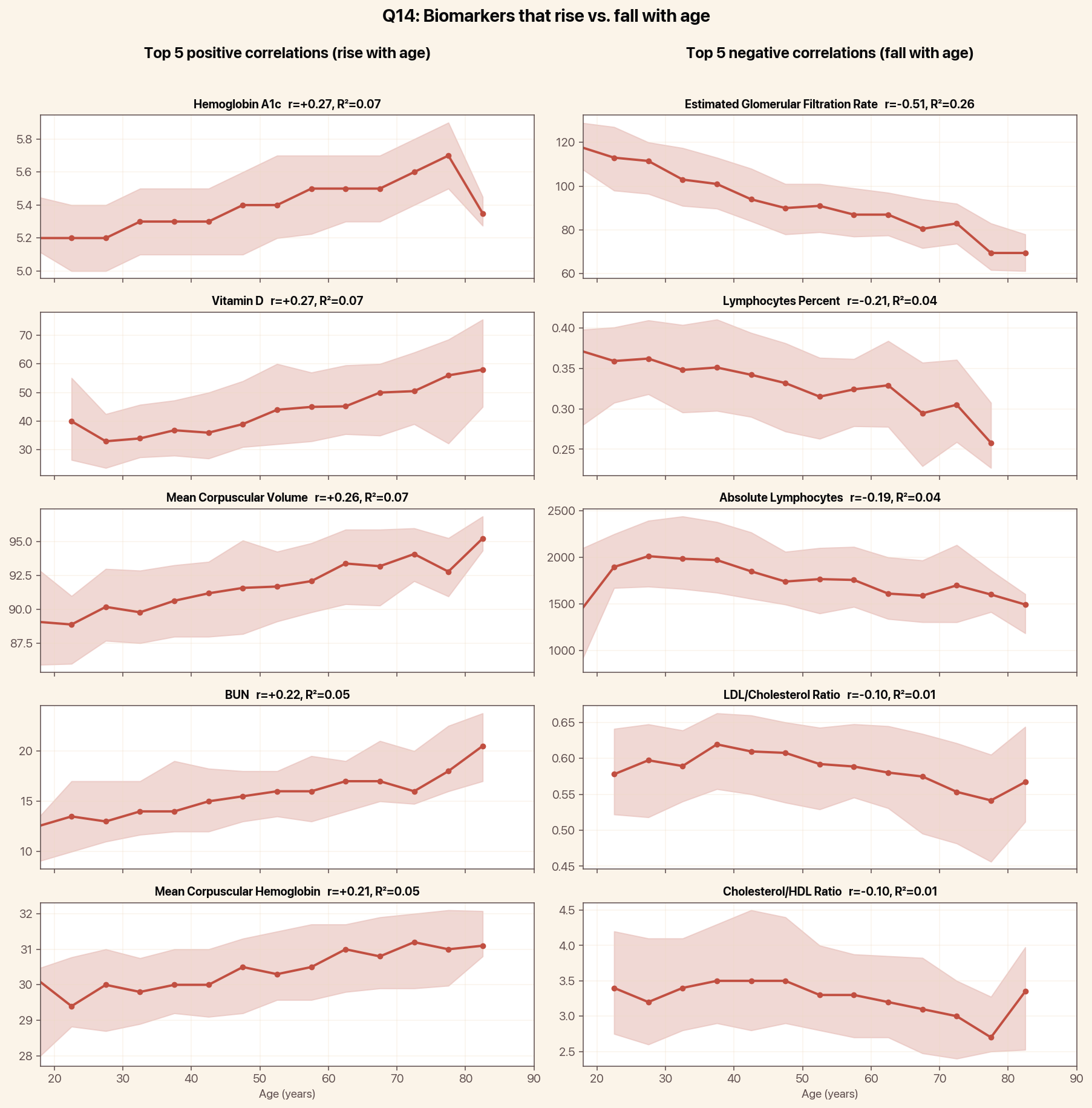
The biological metrics that reveal how our bodies age
The article explores the subtle, measurable biological changes that occur as we age, focusing on objective metrics like kidney filtration ra
 empirical.health·1mo ago
Harvard Scientists Develop Genetic Clock That Measures Biological Aging Across Species
Harvard scientists have developed a new "genetic clock" that measures biological age at the cellular level, going beyond chronological age t
 singularityhub.com·1mo ago
https://doi.org/10.1126/science.aeb6987
New Gene Activity-Based Clock Improves Biological Aging Predictions
Scientists have developed a new epigenetic 'clock' based on gene activity that can predict lifespan and capture hallmarks of chronic disease
 sciencealert.com·1mo ago
Comments
Sign in to join the conversation.
No comments yet. Be the first.