
























Harvard Scientists Develop Genetic Clock That Measures Biological Aging Across Species
By
Shelly Fan
Summary
Harvard scientists have developed a new "genetic clock" that measures biological age at the cellular level, going beyond chronological age to better predict disease risk and life expectancy. The research involved a large-scale analysis of gene expression across multiple species, revealing genetic hallmarks of aging that could accelerate the development of anti-aging treatments. This biological clock offers a more accurate picture of health than traditional age metrics, explaining why people of the same chronological age can have vastly different health outcomes.
Source

 bskyHarvard Scientists Develop Genetic Clock That Measures Biological Aging Across Speciessingularityhub.com
Key quotes
· 3 pulledThere's truth to the old adage, 'Age is just a number.' People of the same age differ vastly in health and mental capabilities.
Rather than the number of candles on a birthday cake, these tools capture health at the cellular level and are remarkably accurate at estimating disease risk and even life expectancy.
A huge analysis of gene expression across species revealed genetic hallmarks of aging and could accelerate anti-aging treatments.
You might also wanna read


Biological aging and generational shifts in early-onset cancer risk
Method to reverse cellular ageing is about to be tested in humans

Age engineering: Creating age-matched tissues for better biomedical models of ageing
This article discusses the emerging field of 'age engineering' or 'ageneering' — the methodological approach to engineering the age of tissu

Stanford Medicine Study Uncovers Biomolecular Shifts in 40s and 60s
A Stanford Medicine study reveals significant biomolecular changes in individuals in their 40s and 60s, impacting molecules and microorganis
med.stanford.edu·1y ago
Moderate Coffee Consumption Linked to Slower Biological Ageing in People with Severe Mental Illness
New research from King's College London reveals that moderate coffee consumption (within NHS recommended limits) is associated with longer t
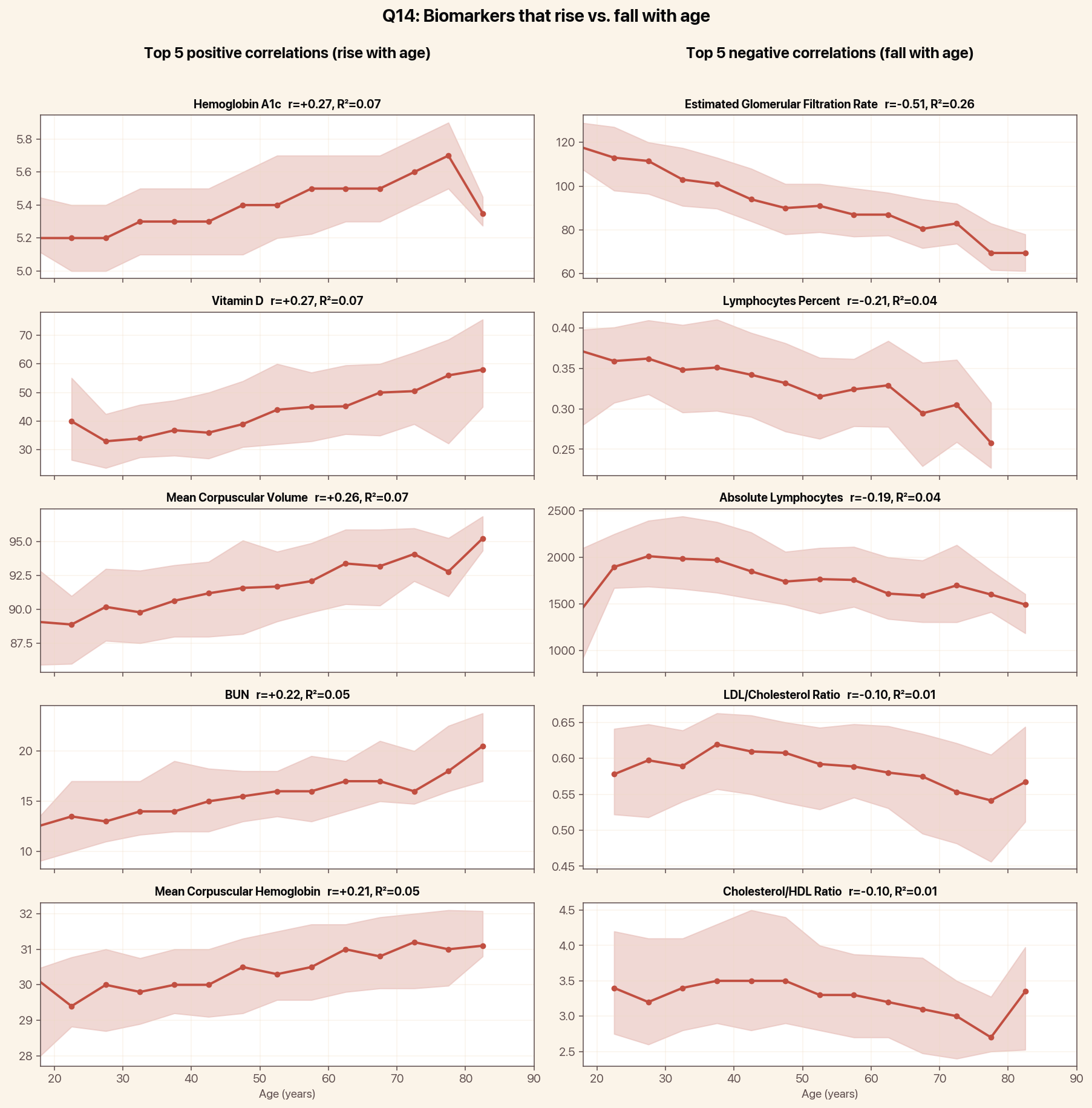
The biological metrics that reveal how our bodies age
The article explores the subtle, measurable biological changes that occur as we age, focusing on objective metrics like kidney filtration ra
 empirical.health·27d ago
Comments
Sign in to join the conversation.
No comments yet. Be the first.