
























The senescence-stiffening loop: How extracellular matrix remodeling, vascular decline, and mitochondrial dysfunction collectively drive tissue aging
By
Luigi Ferrucci1 Send email to [email protected]
Summary
This article presents a unified perspective on tissue aging through a "senescence-stiffening loop" — a self-reinforcing cycle involving extracellular matrix (ECM) stiffening, microvascular hypoperfusion, and mitochondrial dysfunction. As tissues age, collagen crosslinking, elastin degradation, and basement membrane thickening cause ECM stiffening, which reduces vascular compliance and impairs angiogenesis. This leads to capillary rarefaction and diminished blood flow, creating chronic or intermittent hypoxia. Hypoxia in turn triggers transcriptional and proteomic changes that suppress oxidative phosphorylation and promote glycolysis, further impairing mitochondrial function. The article outlines a matrix-vascular-metabolic axis as a unifying framework for understanding tissue aging and identifies potential therapeutic entry points to preserve tissue resilience and function with age.
Source
 Twitter / XThe senescence-stiffening loop: How extracellular matrix remodeling, vascular decline, and mitochondrial dysfunction collectively drive tissue agingcell.com
Key quotes
· 3 pulledStiffening of the extracellular matrix that results from collagen crosslinking, elastin loss, and basement membrane thickening reduces vascular compliance and impairs local angiogenesis.
The consequent reduction in capillaries and diminished endothelial reactivity leads to ongoing or intermittent hypoxia, which triggers changes in transcriptomic and proteomic programs that inhibit oxidative phosphorylation.
This perspective outlines a unifying matrix-vascular-metabolic axis and highlights potential entry points to preserve tissue resilience and function with age.
You might also wanna read


Microvascular hypoxia and inflammation as unified drivers of chronic pain syndromes
This opinion article proposes that compromised microvascular perfusion (capillary constriction, hypoxia) and inflammation are fundamental, i

Mechano-metabolic feedback connects tissue fluidity to mitochondrial DNA–dependent immunity in breast cancer
Study Identifies Phosphatidylcholine Loss as Driver of Mitochondrial Aging, Shows Reversal Possible
Scientists have discovered that the loss of phosphatidylcholine, a membrane lipid essential for mitochondrial flexibility and connectivity,
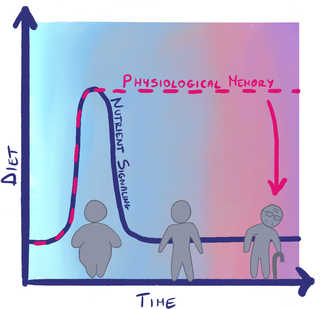
Toward a life-course biology of aging: How early-life conditions shape late-life health and longevity
This article proposes a "life-course biology of aging" framework, arguing that aging is not solely determined by current conditions but is s
 plos.io·27d ago
Ageing Acceleration Around Age 50: Study Reveals Tissue Changes
An analysis reveals that ageing of tissues accelerates around age 50, with an inflection point where ageing speeds up, especially in blood v
nature.com·11mo ago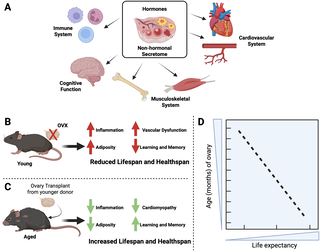
Ovarian biology as a blueprint for rejuvenation: Exploring germline immortality and somatic longevity
This essay reframes ovarian biology as a model for rejuvenation rather than solely as a site of reproductive decline. It explores how oocyte
plos.io·27d agoComments
Sign in to join the conversation.
No comments yet. Be the first.