
























Scientists discover rare 'super-Jupiter' planet with 180-day long orbit
5h agoen
From the article
Scientists from Queen's University Belfast have led an international team in the discovery of a rare new planet, which is larger than Jupiter and orbits a distant star every 180 days. Named NGTS-38 b, it is an exoplanet—a planet that orbits a star beyond our solar system. It is about 8% larger than Jupiter and almost five times more massive. Planets of this size and mass are often referred to as "super-Jupiters."
Continue reading on PhysYou might also wanna read

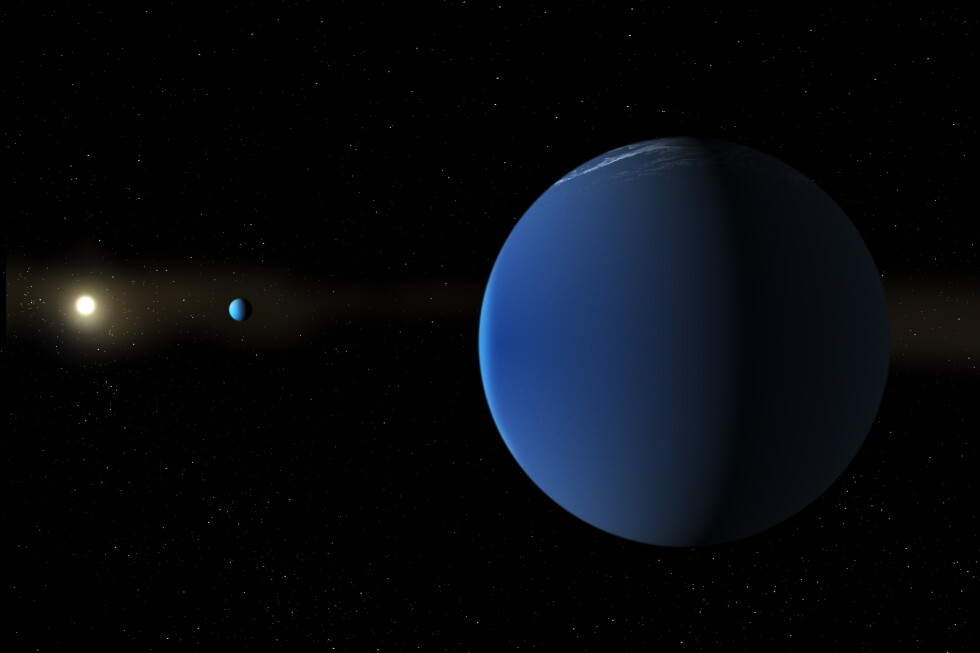
Astronomers discover Jupiter-sized exoplanets with density lower than cotton candy
Astronomers have discovered two giant exoplanets, each the size of Jupiter but with densities lower than cotton candy. These "super-puffs" o
 apnews.com·13d ago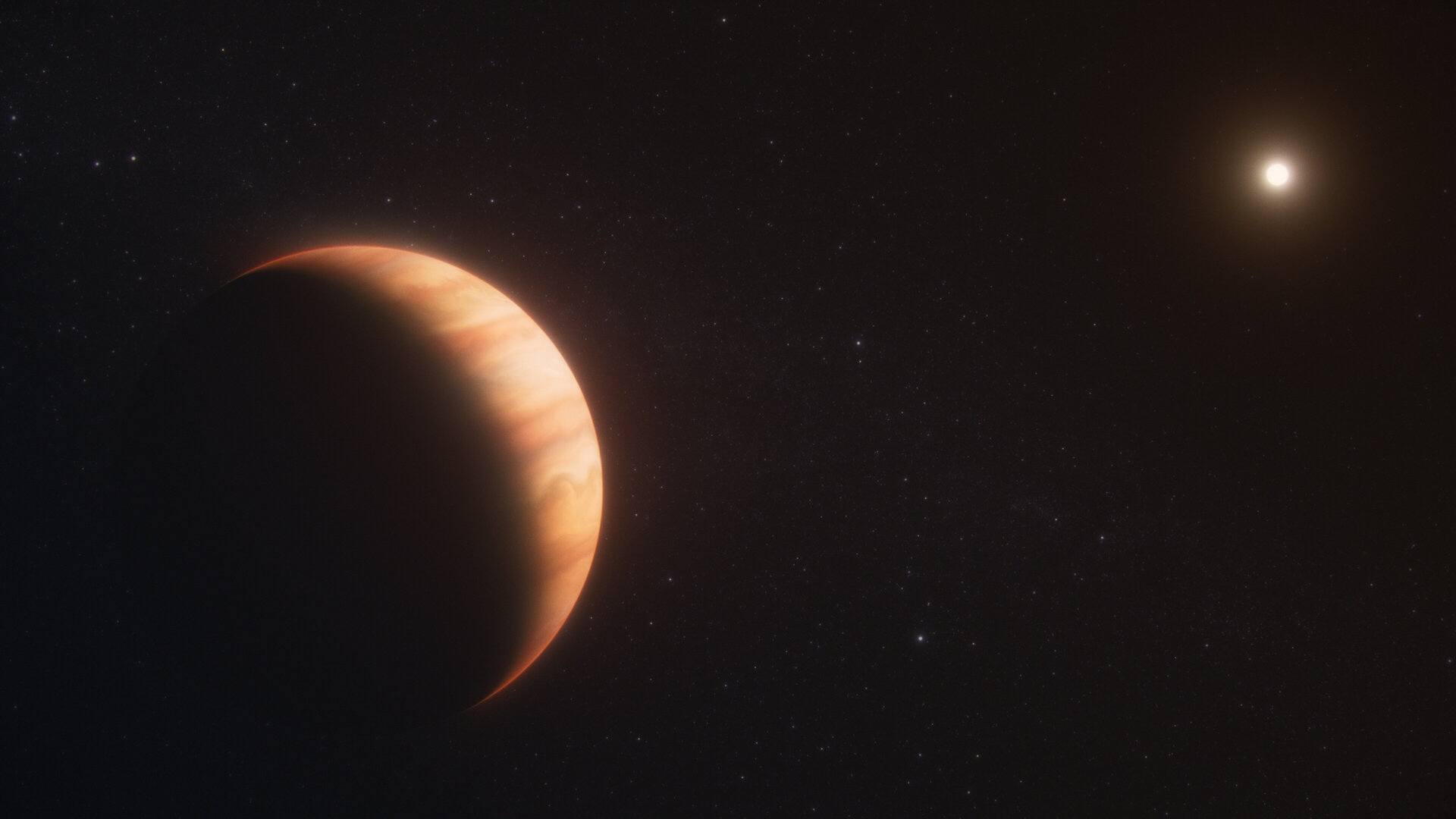
Webb Telescope reveals how a Jupiter-sized exoplanet survived its star's death and now orbits a white dwarf
An international team of astronomers used the James Webb Space Telescope to study exoplanet WD 1856 b, a Jupiter-sized planet orbiting a whi
esa.int·7d ago

Kmt-2023-blg-0332l b
NASA·5d ago
Kmt-2023-blg-0332l b
NASA·5d ago

Astronomers discover two ultra-low-density 'super-puff' exoplanets orbiting dwarf star TOI-791
Astronomers have discovered two "super-puff" exoplanets, TOI-791 b and TOI-791 c, orbiting the dwarf star TOI-791. These are the lightest ga
 space.com·13d ago
Astronomers discover two ultra-low-density 'super-puff' exoplanets orbiting dwarf star TOI-791
Astronomers have discovered two "super-puff" exoplanets, TOI-791 b and TOI-791 c, orbiting the dwarf star TOI-791. These are the lightest ga
space.com·13d agoThere is a planet that survived the death of its star, and now we know how it did it.
Theweather.com·9h ago
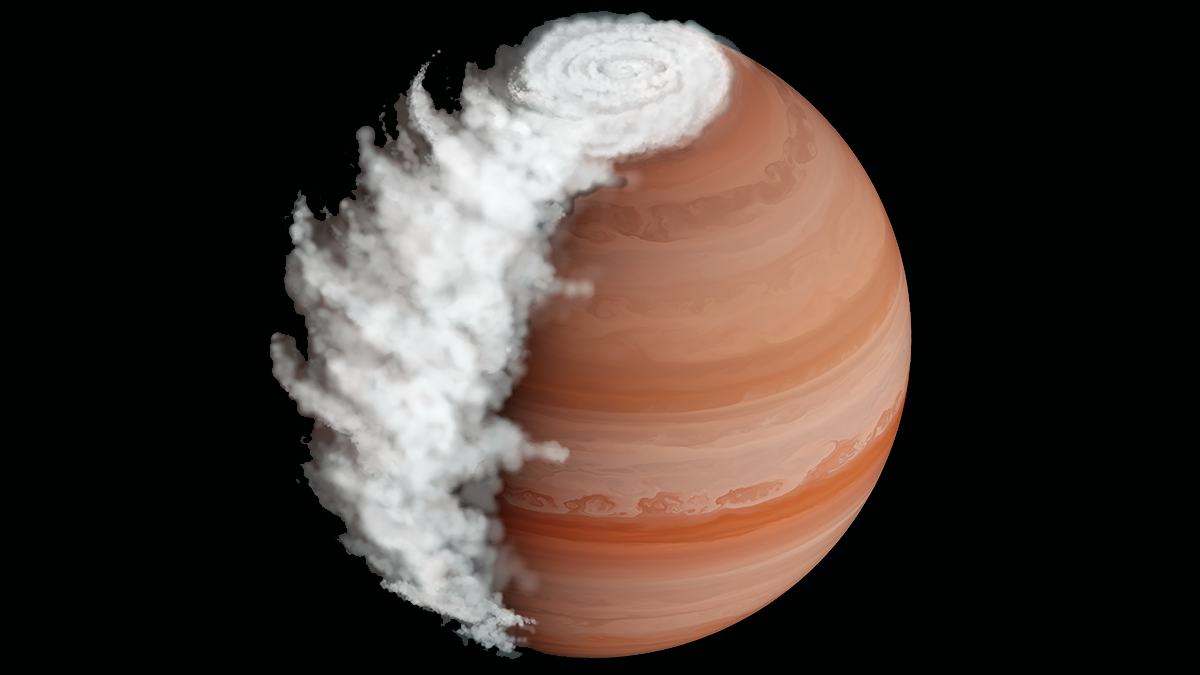
JWST Reveals WASP-39b Has Cloudy Mornings and Clear Evenings, Solving Longstanding Exoplanet Mystery
Astronomers using the James Webb Space Telescope (JWST) have developed a novel observation technique to study the exoplanet WASP-39b, a hot
 eos.org·22d ago
Comments
Sign in to join the conversation.
No comments yet. Be the first.