
























Metaverse Standards Forum Launches Open-Source Sneeze Browser Engine for Spatial Computing
By
Staff Reporter
Summary
The Metaverse Standards Forum has introduced Sneeze, an open-source metaverse browser engine released under the Apache 2.0 license through its Open Metaverse Browser Initiative. Announced on 15 June 2026, Sneeze aims to address the lack of a standards-based spatial platform for multi-origin 3D scenes and proximity-based service discovery. The engine supports spatial services across mobile, desktop, AR, and VR devices, with RP1 serving as lead architect and maintainer. Key features include per-service WebAssembly sandboxing and shared spatial experiences. The announcement is tied to AWE 2026 and a University of Rochester-led academic alliance, though performance and adoption claims remain unverified.
Source
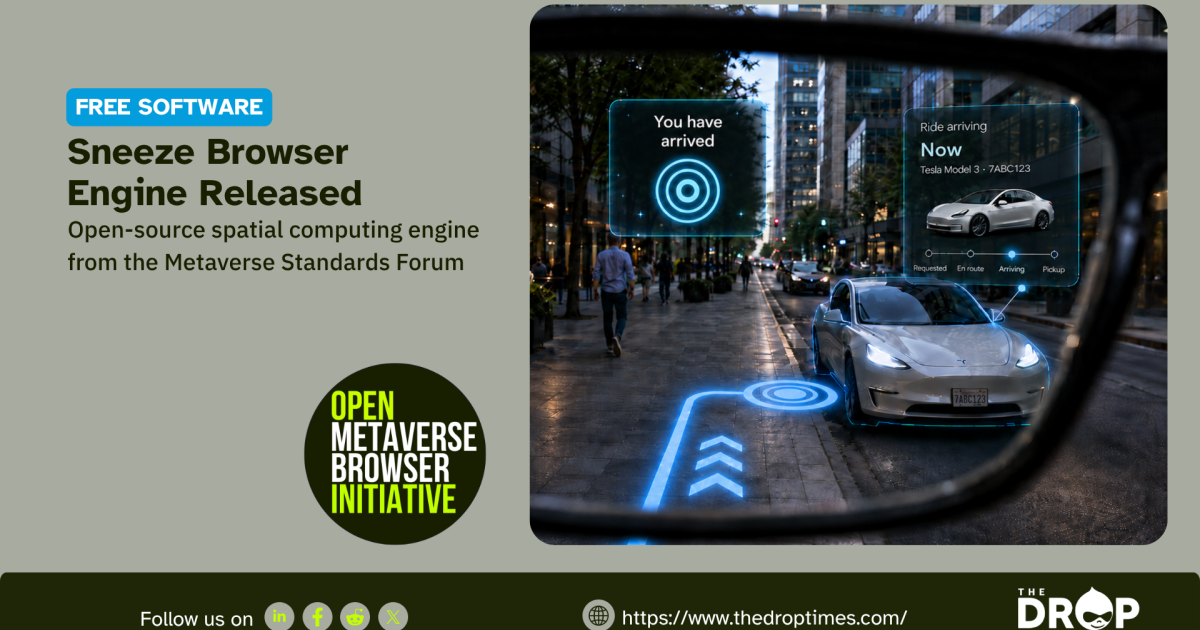
 bskyMetaverse Standards Forum Launches Open-Source Sneeze Browser Engine for Spatial Computingbit.ly
Key quotes
· 3 pulledSneeze is available under the Apache 2.0 licence and is intended to support spatial services across mobile, desktop, augmented reality (AR), and virtual reality (VR) devices.
Sneeze attempts to address what the Forum describes as the absence of a standards-based spatial platform for multi-origin 3D scenes, proximity-based service discovery
The project is intended to support proximity-based spatial services, multi-origin 3D scene composition, per-service WebAssembly sandboxing, and shared spatial experiences across AR, VR, desktop, and mobile devices.
You might also wanna read


Building Scalable Agent Infrastructure: From AWS Lambda to Unikraft Micro-VMs
Browser Use shares their technical journey from running web agents on AWS Lambda to developing a more robust infrastructure using Unikraft m

OpenClaw: The Viral Open Source Gateway Service with AI Agent Capabilities
The article discusses OpenClaw, an open source project that went viral as a gateway service connecting local devices to third-party services
 12gramsofcarbon.com·4mo ago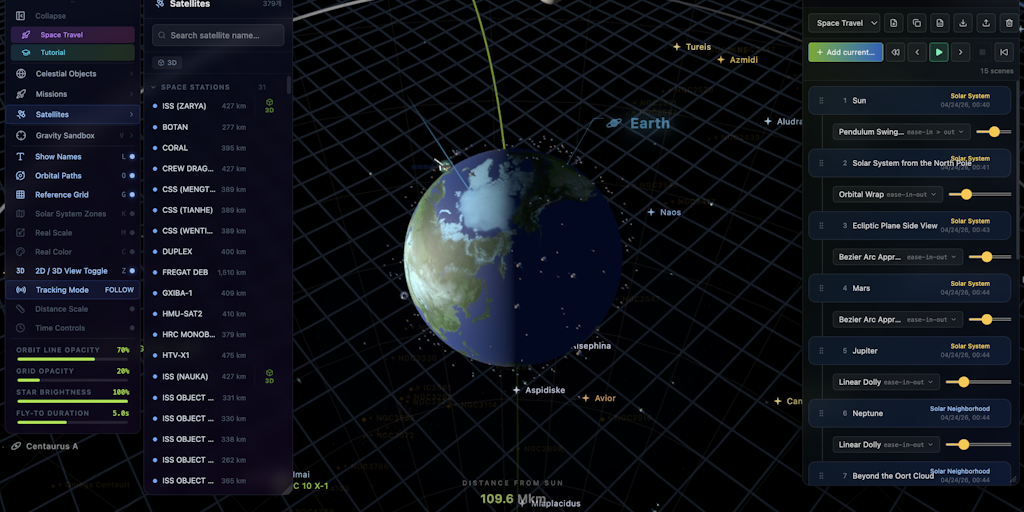
AstroGrid: A Browser-Based Real-Time 3D Universe Explorer
AstroGrid is a browser-based, real-time 3D universe exploration tool that lets users fly from Earth's surface to the edge of the observable
 Product Hunt·2mo ago
Box3D: An Open-Source 3D Physics Engine Forked from Box2D Released on GitHub
The article announces the release of Box3D, an open-source 3D physics engine forked from Box2D. It describes Box3D as extending Box2D's arch
 box2d.org·5d ago
Box3D: An Open-Source 3D Physics Engine Forked from Box2D Released on GitHub
The article announces the release of Box3D, an open-source 3D physics engine forked from Box2D. It describes Box3D as extending Box2D's arch
box2d.org·5d ago
Exploring surfel-based global illumination with WebGPU on the open web
A technical blog post exploring the use of WebGPU to compute real-time global illumination using surfels (surface patches). The author inves
 Jure Triglav·1mo ago
Experimental WebGPU Physics Engine Using AVBD Solver for Rigid-Body and Soft-Body Simulations
This article presents an experimental WebGPU physics engine called webphysics that implements an AVBD-style (Augmented Vertex Block Descent)
 github.com·2mo ago
Comments
Sign in to join the conversation.
No comments yet. Be the first.