
























Study reveals Homo floresiensis was a scavenger, not a hunter, challenging assumptions about the 'hobbit' species
By
Kristina Killgrove
Summary
Archaeological analysis of Homo floresiensis ("hobbits") reveals they were scavengers rather than hunters, feeding on dwarf elephants after Komodo dragons had taken the best parts. This finding challenges the long-held assumption that this extinct human species, which lived on Flores island from at least 700,000 years ago, hunted big game. The species, discovered in 2003, stood about 3 feet 6 inches tall with small brains, large teeth, and big feet.
Source

 bskyStudy reveals Homo floresiensis was a scavenger, not a hunter, challenging assumptions about the 'hobbit' specieslivescience.com
Key quotes
· 3 pulledThe diminutive, now-extinct humans known as the 'hobbits' were scavengers who dined on dwarf elephants after Komodo dragons took the best cuts, archaeologists have discovered.
The finding upends the assumption that Homo floresiensis, a human species that arrived on the Indonesian island of Flores at least 700,000 years ago, hunted big game.
First discovered in 2003, H. floresiensis has been nicknamed the hobbit because of its small size, averaging around 3 feet, 6 inches (106 centimeters) tall, along with its small brain, large teeth and big feet.
You might also wanna read
Ancient hobbit-like humans may have survived on meat left behind by Komodo dragons


Study suggests Homo floresiensis scavenged meat left by Komodo dragons rather than hunting big game
A study of animal bones found in caves on Flores, Indonesia, suggests that Homo floresiensis (the 'hobbit' hominins) had limited hunting ski
 newscientist.com·4d ago
Study suggests Homo floresiensis scavenged Komodo dragon leftovers rather than hunting
New analysis of bones found with Homo floresiensis ("hobbits") remains on the Indonesian island of Flores suggests these ancient hominids sc
 sciencenews.org·8h ago
Hobbit-like Humans May Have Scavenged Komodo Dragons' Leftovers to Survive
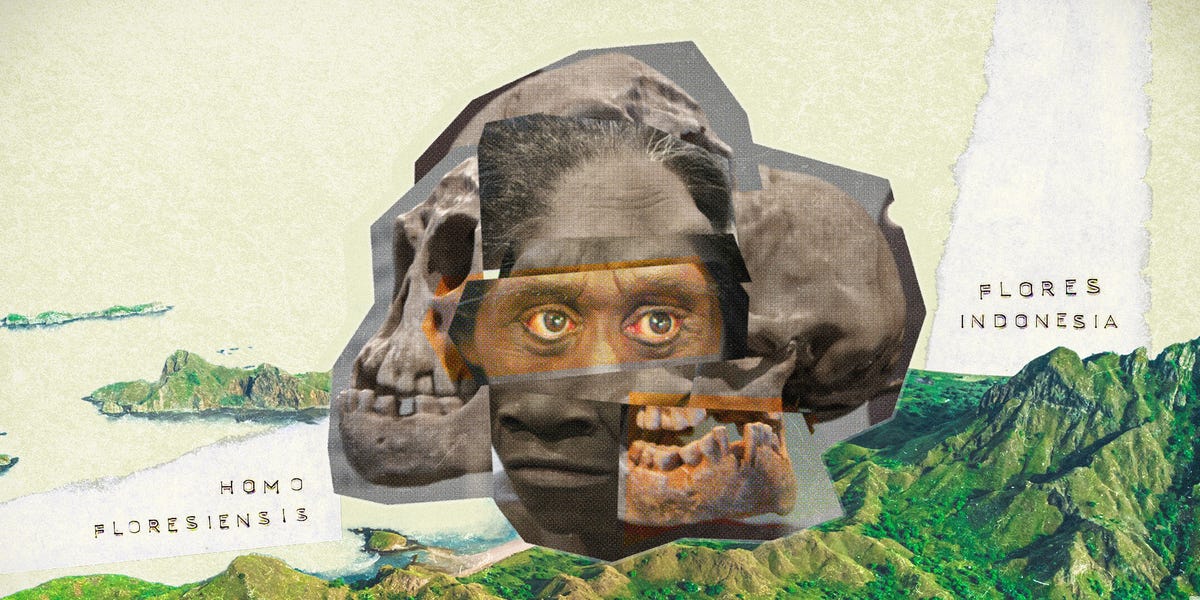
Anthropologist Suggests Homo floresiensis May Have Survived Until Modern Times on Flores Island
Anthropologist Gregory Forth explores the possibility that Homo floresiensis (the "hobbit" hominid discovered on Flores Island, Indonesia) m
 popularmechanics.com·5d ago
Taphonomic study suggests Komodo dragons, not Homo floresiensis, had primary access to large prey at Liang Bua
A systematic taphonomic study of the proboscidean bone assemblage at Liang Bua (Flores, Indonesia) challenges the notion that Homo floresien
 science.org·3d ago
Comments
Sign in to join the conversation.
No comments yet. Be the first.