
























YOLO26: New Real-Time Vision AI Model Family Removes NMS for Lower Latency, Optimizes for Edge Hardware
By
Contributing Writer
Summary
YOLO26 is a new family of real-time computer vision models released in January 2026, supporting object detection, instance segmentation, pose estimation, oriented object detection, and image classification across five size variants (Nano to Extra Large). Key architectural innovations include the removal of Non-Maximum Suppression (NMS) for lower latency and dropping the Distribution Focal Loss module for better edge and low-power hardware compatibility. The article covers architecture details, COCO benchmark results, download links, and comparisons to competing models like RF-DETR, LW-DETR, and D-F.
Source
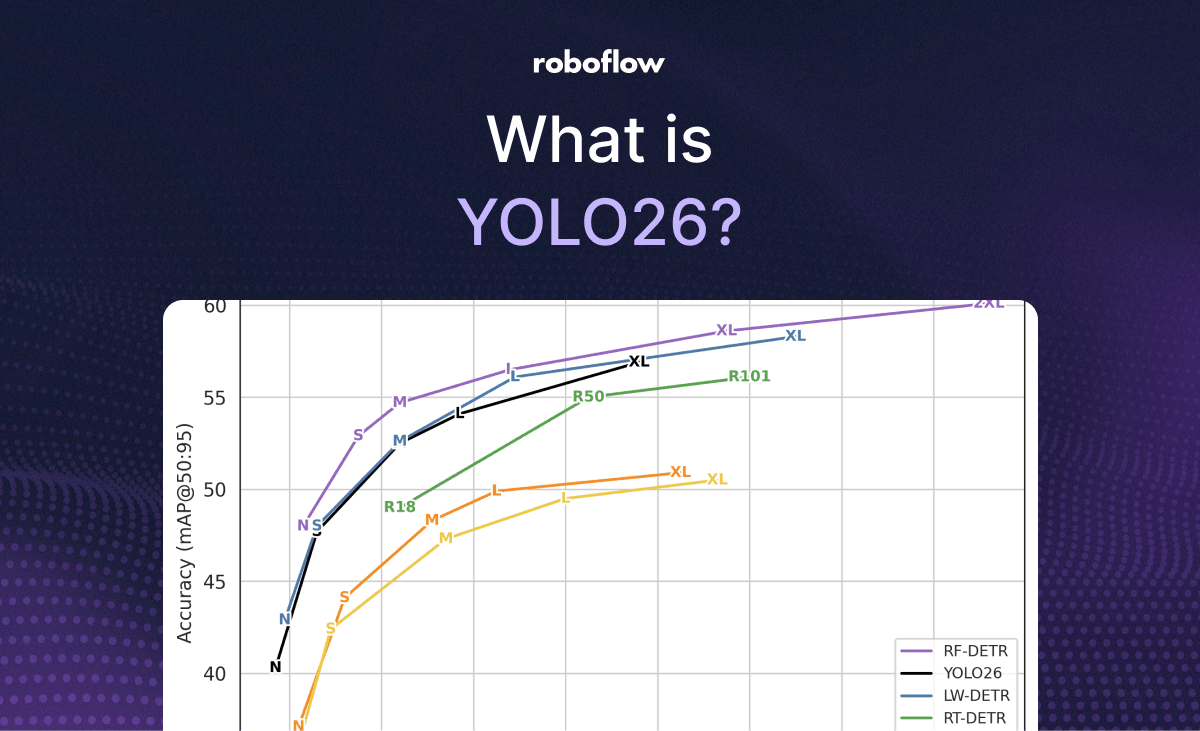
 Hacker NewsYOLO26: New Real-Time Vision AI Model Family Removes NMS for Lower Latency, Optimizes for Edge Hardwareblog.roboflow.com
Key quotes
· 3 pulledYOLO26 is an end-to-end object detection and multi-task model family supporting detection, instance segmentation, pose estimation, oriented object detection, and image classification across five size variants from Nano to Extra Large.
Released in January 2026, it removes Non-Maximum Suppression for lower latency and drops the Distribution Focal Loss module for better compatibility with edge and low-power hardware.
YOLO26 brings faster CPU inference, small-object accuracy, and edge optimization to the YOLO family.
You might also wanna read

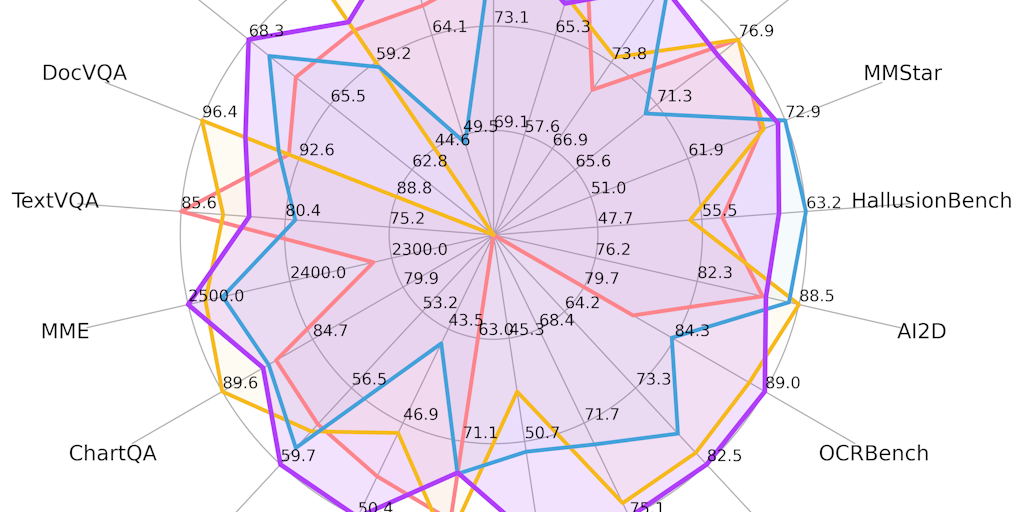
MiniCPM 4.0: Open-source 8B multimodal AI model outperforms GPT-4o and Gemini Pro on vision benchmarks
MiniCPM 4.0 is an ultra-efficient 8B open-source multimodal AI model designed for on-device use that outperforms larger models like GPT-4o a
 Product Hunt·10mo ago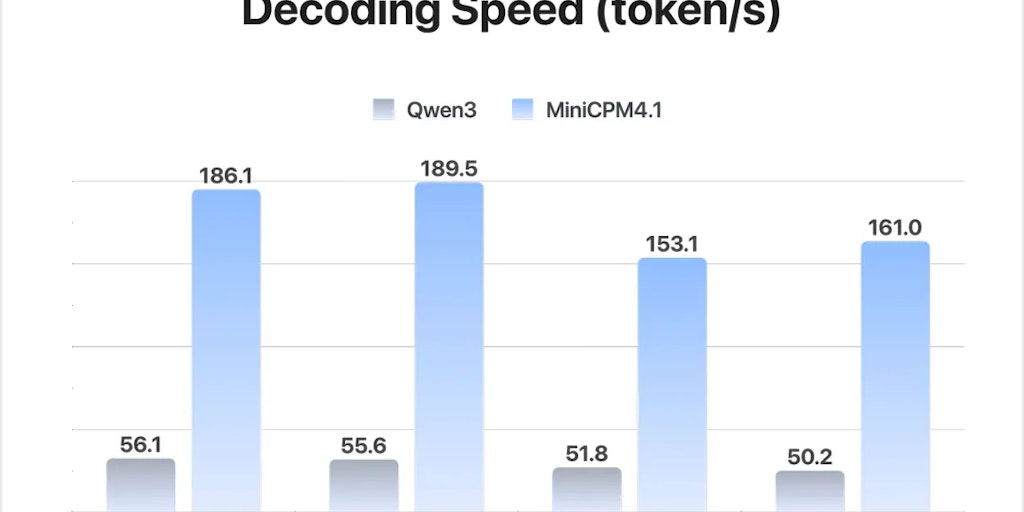
MiniCPM 4.0: Ultra-Efficient Open-Source AI Models for On-Device Deployment
MiniCPM 4.0 is an ultra-efficient, open-source AI model family designed for on-device deployment, featuring significant speed improvements o
 Product Hunt·9mo ago
Lumos-Nexus: A Training-Efficient Two-Stage Framework for High-Fidelity Video Generation with Reasoning Capabilities
Lumos-Nexus is a training-efficient unified video generation framework that addresses the computational challenge of integrating large high-
 arxiv.org·23d ago
LoomVideo: A 5B-Parameter Unified Model for Efficient Video Generation and Editing
LoomVideo is a new 5-billion parameter unified architecture for video generation and editing that addresses computational bottlenecks in exi
arxiv.org·18d ago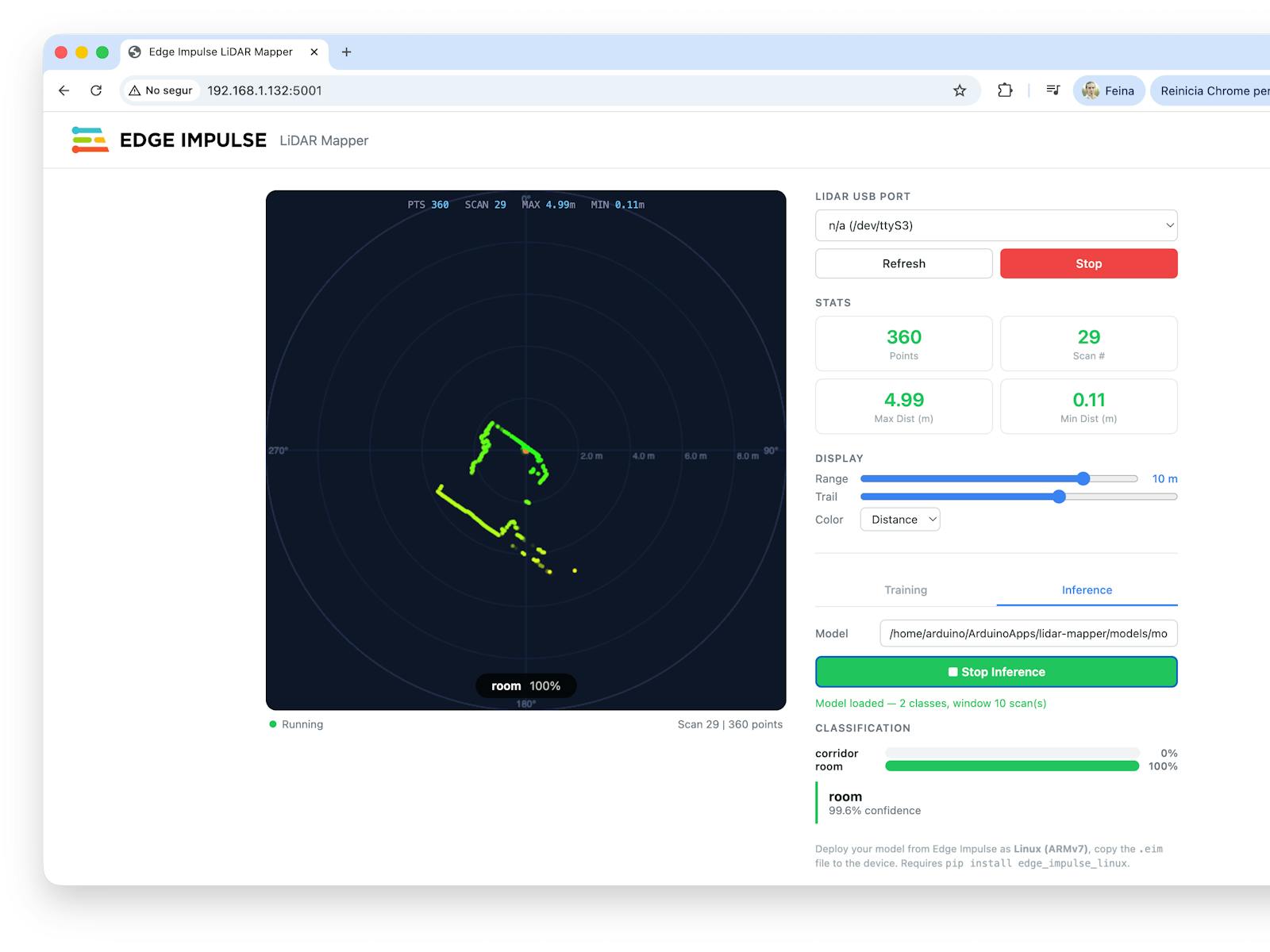
Edge AI Room Detection Using 2D dToF LiDAR and Arduino UNO
This project demonstrates Edge AI for environment classification using a 2D dToF LiDAR sensor connected to an Arduino UNO. Instead of using
 hackster.io·5d ago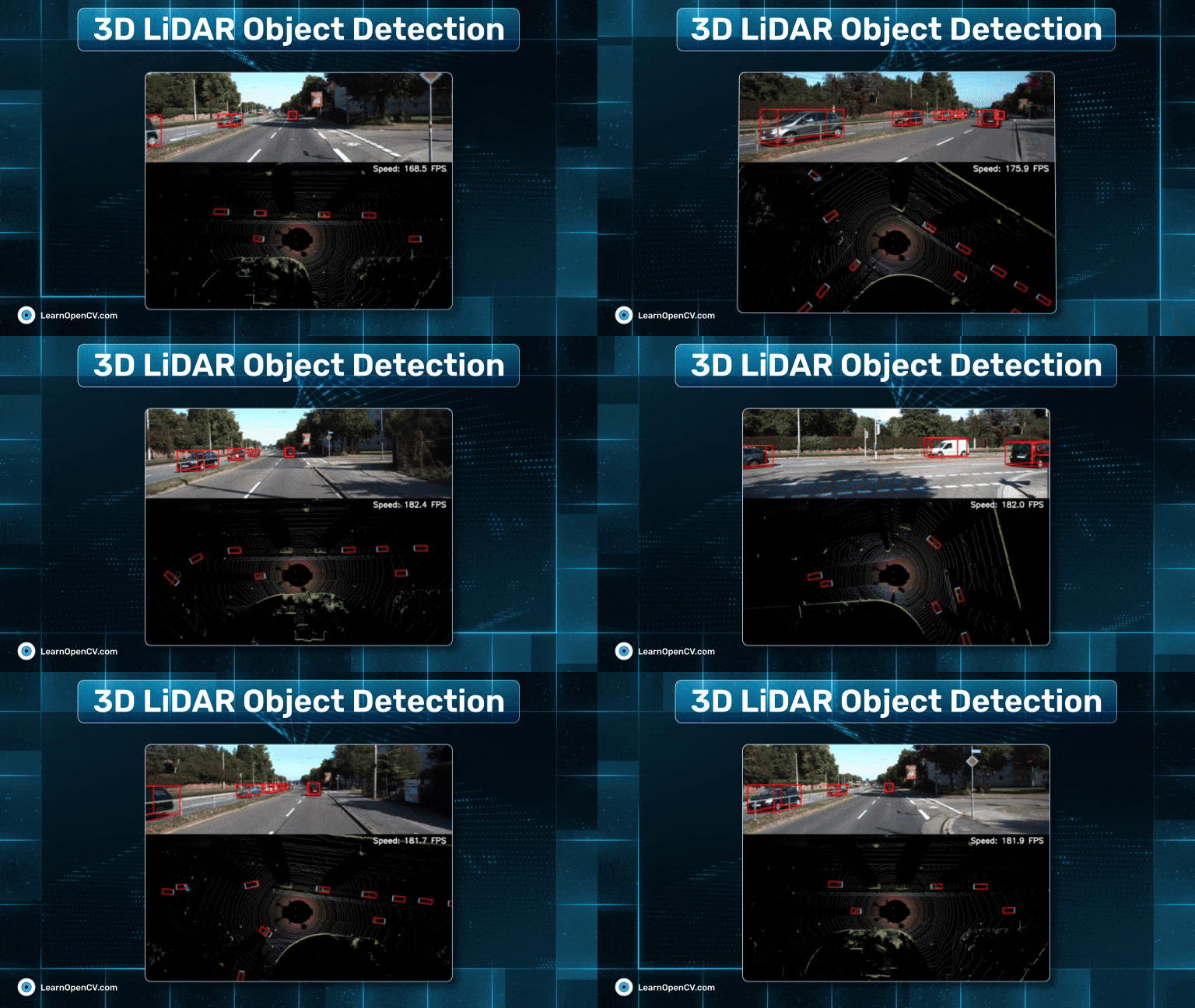
3D LiDAR Object Detection for Autonomous Driving: Training a Keypoint Feature Pyramid Network on the KITTI 360 Vision Dataset
This research article explores 3D LiDAR object detection for autonomous driving systems, focusing on the implementation and training of a Ke
 learnopencv.com·10h ago
Comments
Sign in to join the conversation.
No comments yet. Be the first.