
























Hubble telescope images distant galaxy that helped clear the early universe's hydrogen fog
By
Keith Cooper
Summary
The Hubble Space Telescope has imaged a distant galaxy (MXDFz4.4) that existed 1.4 billion years after the Big Bang. This galaxy contains a bright, dense cluster of hot, massive stars that are helping to end the early universe's "foggy" period by emitting ultraviolet light that clears the neutral hydrogen gas that once obscured luminous objects across the cosmos. The discovery helps explain how the early universe transitioned from its opaque, hydrogen-shrouded state to the transparent cosmos we observe today.
Source
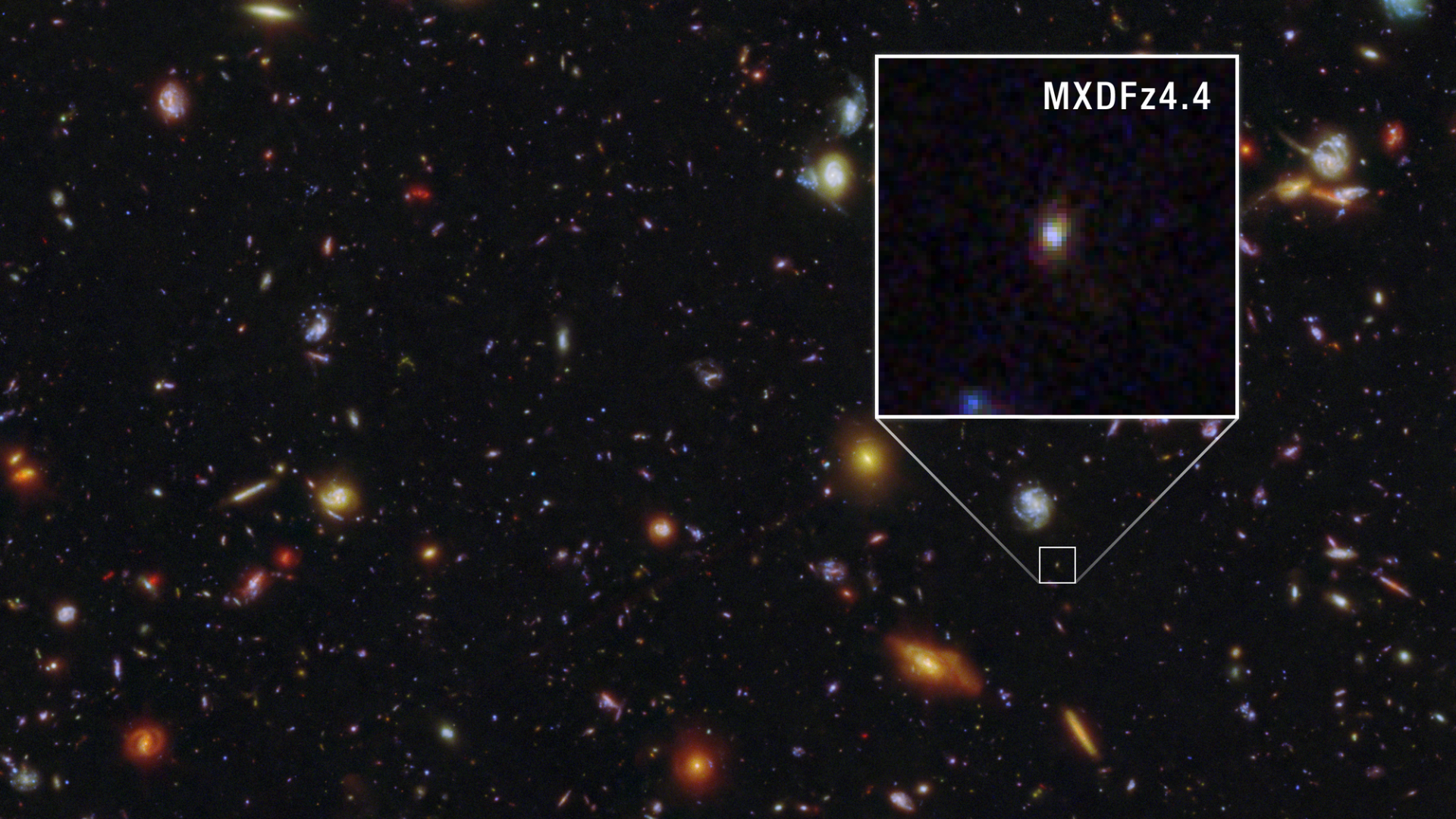
 Twitter / XHubble telescope images distant galaxy that helped clear the early universe's hydrogen fogspace.com
Key quotes
· 3 pulledA bright, dense cluster of hot, massive stars in a galaxy that existed 1.4 billion years after the big bang has been found helping to end the early universe's foggy days.
The cluster was found emitting ultraviolet light in a small but quickly growing galaxy.
Neutral hydrogen gas was draped across the cosmos, obscuring ultraviolet light from luminous objects.
You might also wanna read

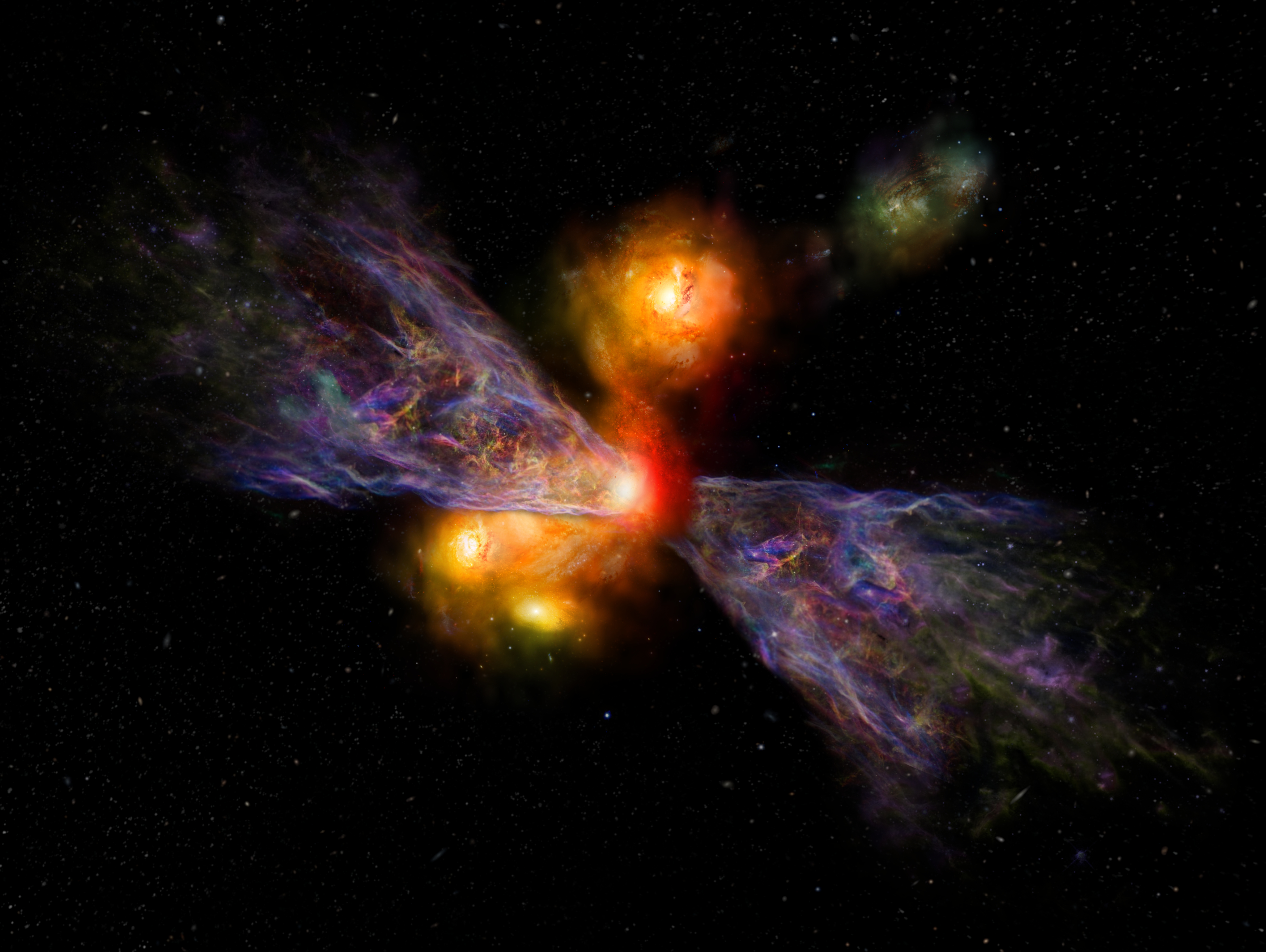
Astronomers discover galaxy-killing wind that explains early universe's dead galaxies
Astronomers using the James Webb Space Telescope have discovered a 'galaxy-killing wind' in the early universe, powered by cosmic collisions
 ras.ac.uk·13d ago
Astronomers observe young galaxy blowing away star-forming gas, explaining early 'dead' galaxies found by JWST
Astronomers have observed a young galaxy system called CRISTAL-02 that appears to be blowing away the cold gas needed for star formation, pr
 astronomynow.com·13d ago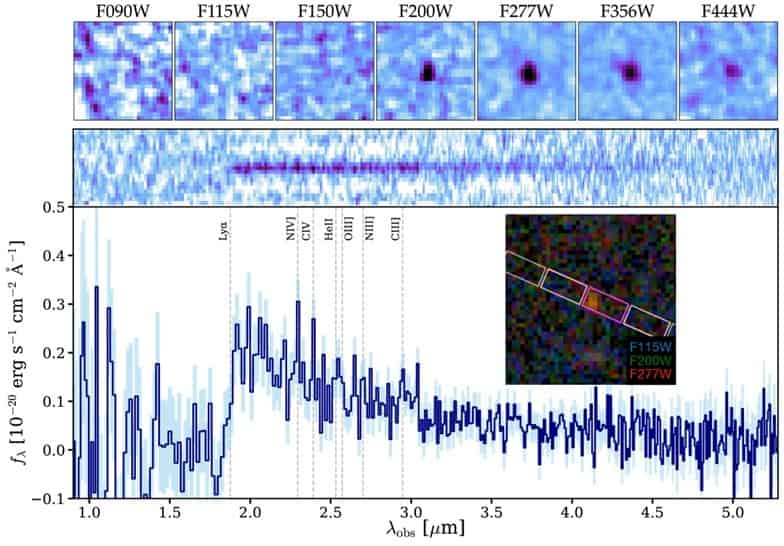
JWST Confirms Discovery of Exceptionally Luminous Galaxy at z=14.44, 280 Million Years After Big Bang
The James Webb Space Telescope has confirmed the discovery of MoM-z14, an exceptionally luminous galaxy that existed just 280 million years
 astro.theoj.org·4mo ago
Hubble Captures Galaxy Cluster MACS0329-0211 With Gravity-Warped Light Forming Figure-Eight Shape
NASA's Hubble Space Telescope has captured a stunning image of MACS0329-0211, a massive galaxy cluster whose immense gravity warps and bends
 news.bitcoin.com·5d ago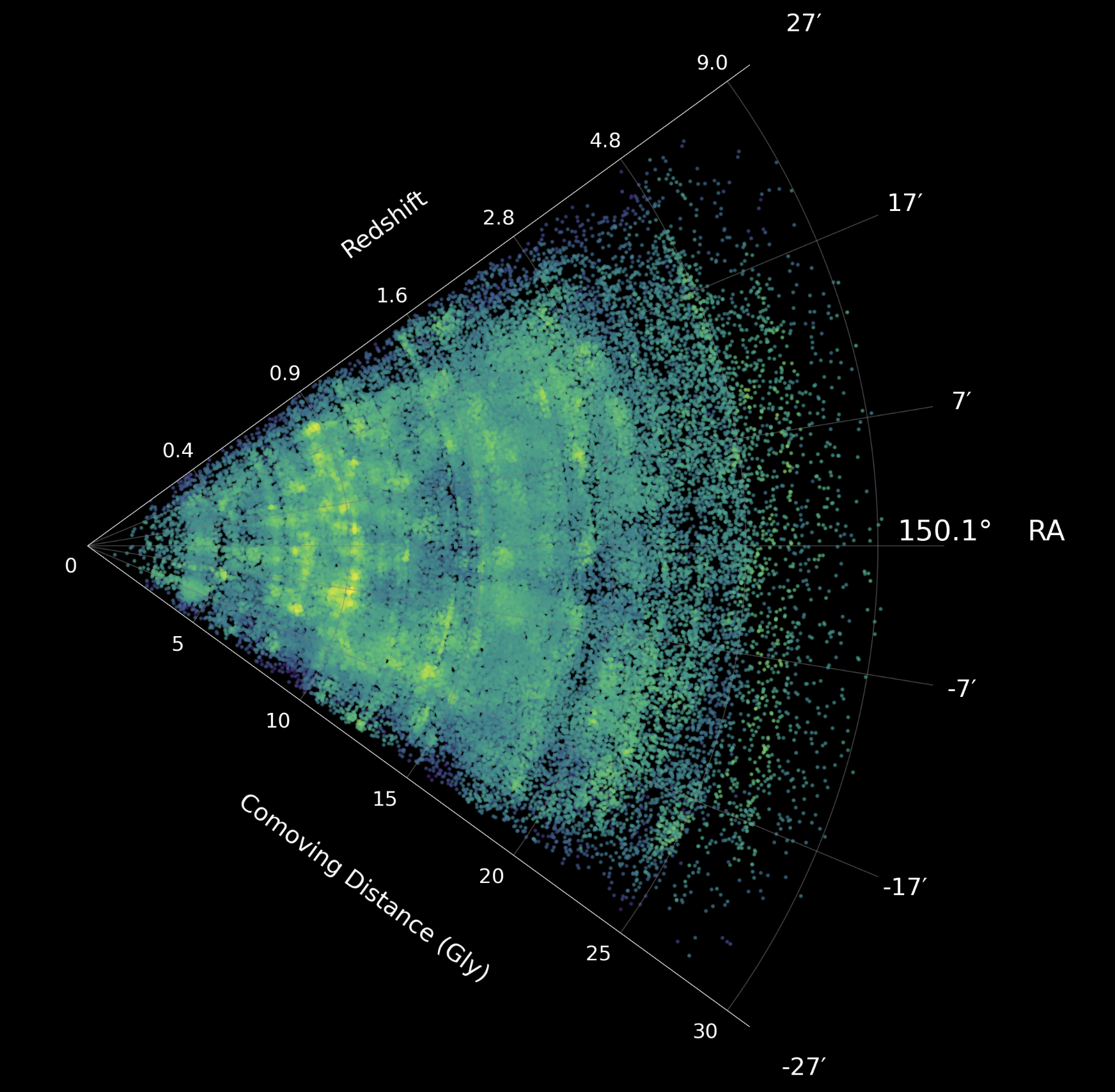
JWST's COSMOS-Web Survey Maps the Cosmic Web and Galaxy Evolution to Redshift z~7
Astronomers used the largest JWST survey (COSMOS-Web) to map the cosmic web — the large-scale structure of the Universe — tracing galaxy evo
 astrobites.org·29d ago
JWST observes normal AGB stars at Cosmic Noon through 5000x gravitational lensing
This article discusses a scientific study where researchers used the James Webb Space Telescope (JWST) to observe a galaxy magnified 5000 ti
astrobites.org·28d agoComments
Sign in to join the conversation.
No comments yet. Be the first.