

























Study confirms humans transported Stonehenge stones hundreds of kilometers, glaciers only moved them partway
By
Chloe Harcombe
Summary
New research using geological analysis and computer modeling suggests that Stonehenge's massive stones were transported by humans over hundreds of kilometers, not by glaciers. While glaciers may have moved the rocks partway during the last Ice Age—potentially as far as Dogger Bank in the North Sea—the study found no glacial pathways linking the source region directly to southern England. This reinforces the conclusion that human transport was required, and the journey from Doggerland towards Wiltshire was deliberate and carefully planned.
Source

 bskyStudy confirms humans transported Stonehenge stones hundreds of kilometers, glaciers only moved them partwaybbc.co.uk
Key quotes
· 3 pulledOur modelling shows glaciers may have transported rocks part of the way during the last Ice Age - potentially as far as Dogger Bank in the North Sea - but not into southern England, meaning the stone would still have needed to be moved hundreds of kilometres by people.
The research indicates there were no viable glacial pathways linking the source region directly to Stonehenge, reinforcing the conclusion that human transport was required.
Co-lead author Dr Anthony Clarke said the findings suggested the monolith's journey from Doggerland towards Wiltshire was 'deliberate' and 'carefully planned'.
You might also wanna read


Archaeologists discover evidence of sun worship near Stonehenge dating back to 3000 BC
Archaeologists have discovered evidence of sun worship near Bulford, Wiltshire, just three miles from Stonehenge, dating back to 3000 BC — a
 independent.co.uk·3d ago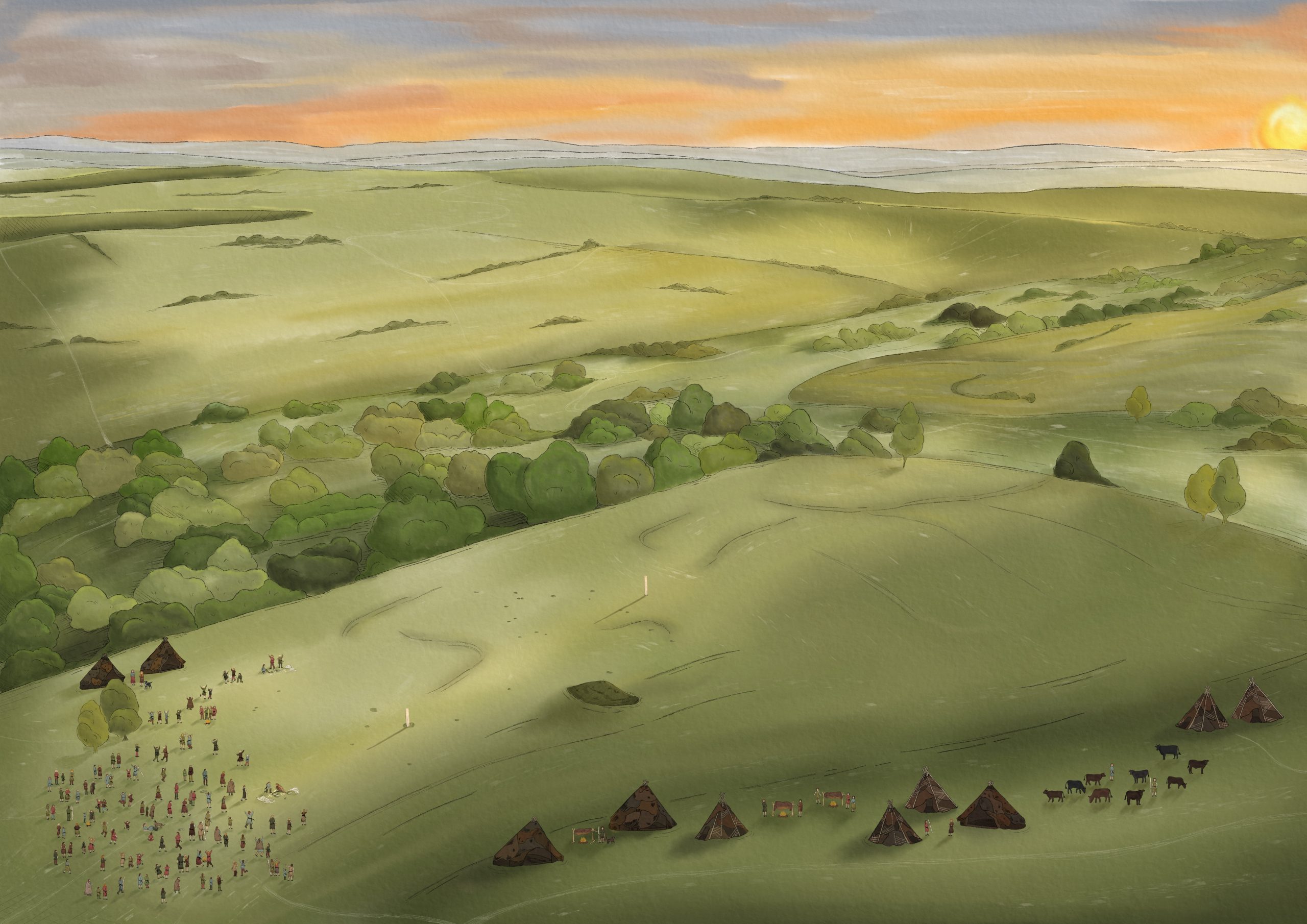
Archaeologists Find Solstice Site at Bulford Predating Stonehenge by 500 Years
Archaeologists have discovered that ancient peoples gathered at Bulford, just three miles east of Stonehenge, to celebrate the solstice 500
 news.artnet.com·10h ago
Geochronology supports LGM age for human tracks at White Sands, New Mexico

New analysis suggests Snowball Earth climate cycles may be more complex than current models predict
This article examines the Snowball Earth and Slushball Earth hypotheses during the Sturtian glacial period of the Neoproterozoic Era. It dis
 Science X·1mo ago
8,500-Year-Old Stone Age Settlement Discovered Underwater in Denmark's Bay of Aarhus
Archaeologists have discovered an 8,500-year-old Stone Age settlement preserved underwater in Denmark's Bay of Aarhus. The ancient settlemen
 The Onion·9mo ago
Characterizing the American Upper Paleolithic
Comments
Sign in to join the conversation.
No comments yet. Be the first.