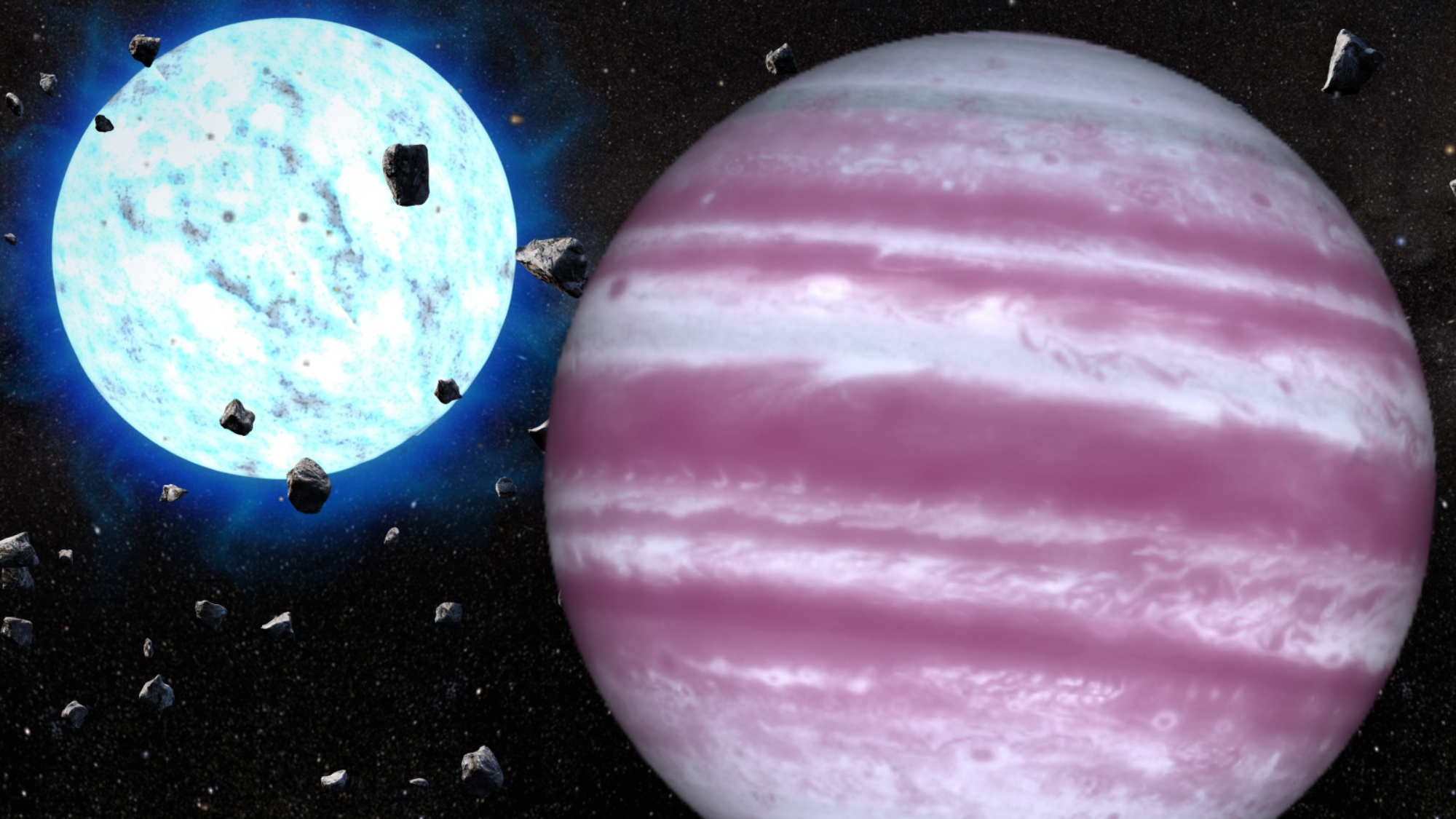
The Sun's death is still billions of years away, but it is inevitable. Understanding what will happen when our star exhausts its nuclear fuel has long been one of astronomy's biggest questions. Solar System The Sun's fate will ultimately determine the future of Earth and the entire solar system, now, a groundbreaking study published in Nature by researchers at the University of St Andrews in the United Kingdom has provided one of the clearest glimpses yet into that distant future. What Will Happen to the Sun? Using observations from NASA's James Webb Space Telescope, astronomers have studied a giant planet orbiting a dead star and reconstructed its remarkable history. Their findings suggest that the death of a star may not mark the end of its planetary system. In about 5 billion years, the Sun will run out of hydrogen in its core and begin its final transformation. It will expand into a red giant, growing to more than 100 times its current size. During this phase, Mercury and Venus will almost certainly be engulfed. Earth's fate remains uncertain, but many scientists believe it could also be consumed by the expanding Sun. Eventually, the Sun will shed its outer layers into space, leaving behind only its incredibly dense core, a white dwarf Although only about the size of Earth, this stellar remnant will contain roughly half of the Sun's current mass packed into an object no larger than our planet. While the inner planets are expected to disappear, scientists have long wondered whether the outer planets, Jupiter, Saturn, Uranus, and Neptune, could survive. The new study centers on WD 1856 b, a giant exoplanet located about 80 light-years from Earth. Roughly the size of Jupiter but between four and eleven times more massive, the planet circles a white dwarf every 1.4 days at an astonishingly close distance of just 0.02 astronomical units, about 3 million kilometers. That orbit presented astronomers with a mystery. When the star was a red giant, it would have expanded far beyond the planet's current orbit. If WD 1856 b had always been that close, it should have been destroyed long ago. Related article James Webb Telescope captures exoplanet evaporating under the heat of its own sun. For years, scientists debated two possibilities. Either the planet somehow survived inside the red giant's enormous outer layers, or it originally formed much farther away and migrated inward billions of years after the star died. James Webb Solves the Mystery To answer that question, researchers turned to the James Webb Space Telescope's Near-Infrared Spectrograph (NIRSpec). During one of the planet's brief eight-minute transits across the white dwarf, Webb gathered enough data to analyze the planet's atmosphere with unprecedented precision. The observations revealed an atmosphere rich in hydrocarbons, likely including methane, along with clouds and hazes. Even more intriguing was the unusually high abundance of carbon, the first time astronomers have successfully characterized the atmosphere of a planet orbiting a dead star. James Webb Space Telescope The atmospheric chemistry provides important clues about the planet's history. Some of the carbon may date back to the planet's formation, while additional carbon-rich material could have accumulated over billions of years. Perhaps the study's biggest surprise came from the planet's temperature. Using models that track how giant planets cool over time, researchers reconstructed the planet's thermal history. They discovered that a major heating event occurred between 3 and 5.5 billion years after the star had already become a white dwarf. That finding effectively rules out the idea that the planet survived inside the expanding red giant. If that had happened, the heating would have occurred much earlier, during the star's final stages. Related article Astronomical Discovery: A NASA Telescope Discovers More Than 10,000 New Exoplanets Instead, the evidence strongly supports a different scenario. The planet likely spent billions of years in a safe, distant orbit before gravitational interactions with other objects gradually pulled it closer to the white dwarf. As its orbit changed, powerful tidal forces generated enormous amounts of heat inside the planet. The discovery suggests that planetary systems can remain active long after their stars have died. Rather than ending when a star becomes a white dwarf, planets may continue migrating, interacting gravitationally, and evolving for billions of years. Scientists do not yet know whether something similar will happen in our own solar system. However, WD 1856 b offers the strongest evidence yet that Jupiter and the other giant planets could survive the Sun's death and continue orbiting its stellar remnant long after Earth is gone. News reference Ryan J. MacDonald, Christopher E. O’Connor, Victoria A. Boehm, E. M. May, David K. Sing, Elijah Mullens, L. C. Mayorga, Trevor O. Foote, Simon Blouin, Logan A. Pearce, Nikole K. Lewis, Jeff Valenti, Natasha E. Batalha, Maura Lally, Joshua D. Lothringer, Mark S. Marley, Ishan Mishra & Susan E. Mullally. (2026). Aerosols and hydrocarbons in the atmosphere of a white dwarf planet .


























 space.com·5d ago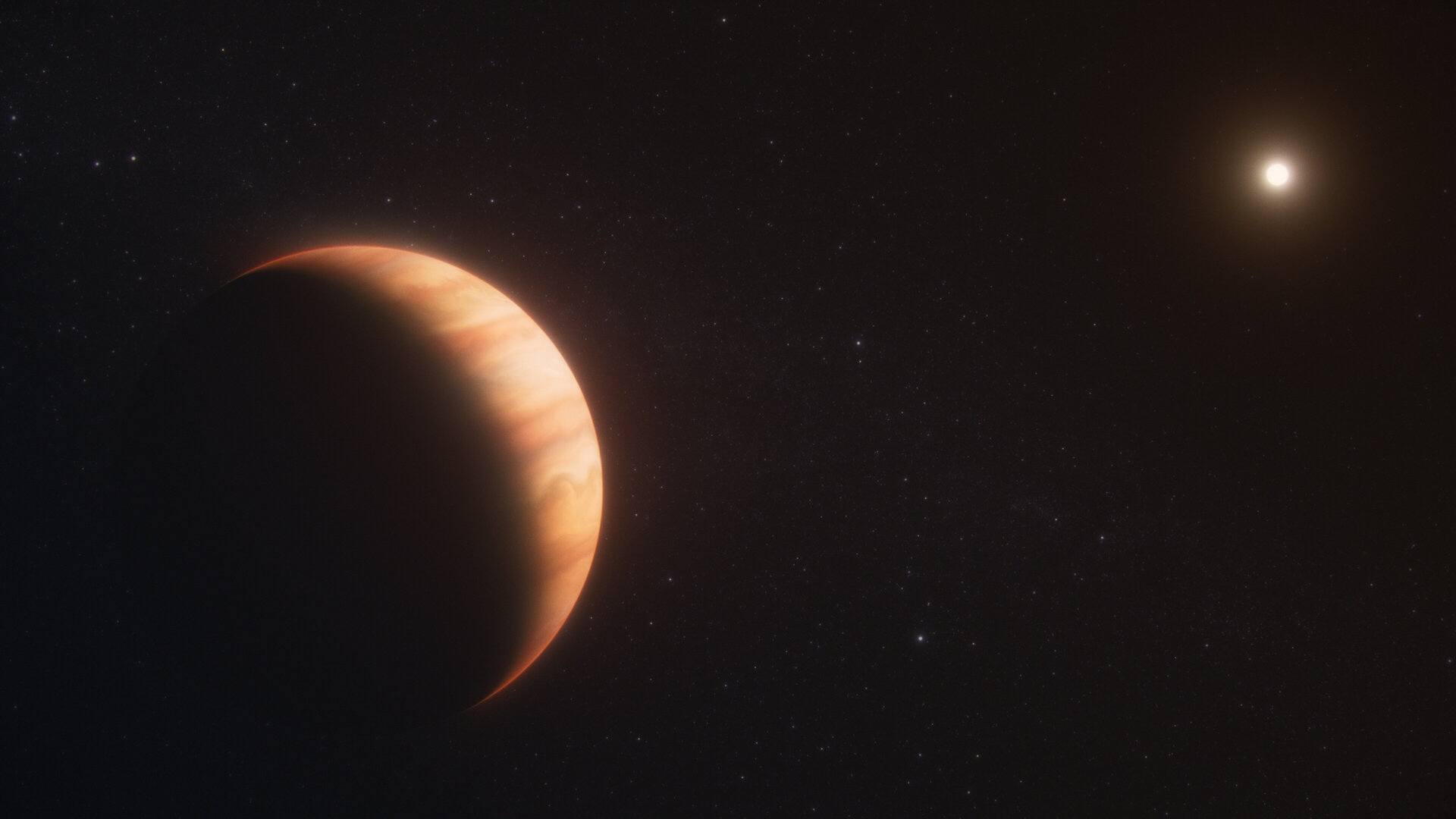

 news.stsci.edu·6d ago
 eos.org·21d ago
Comments
Sign in to join the conversation.
No comments yet. Be the first.