
























NASA's Webb Telescope Reveals How Exoplanet WD 1856 b Survived Its Star's Death
Summary
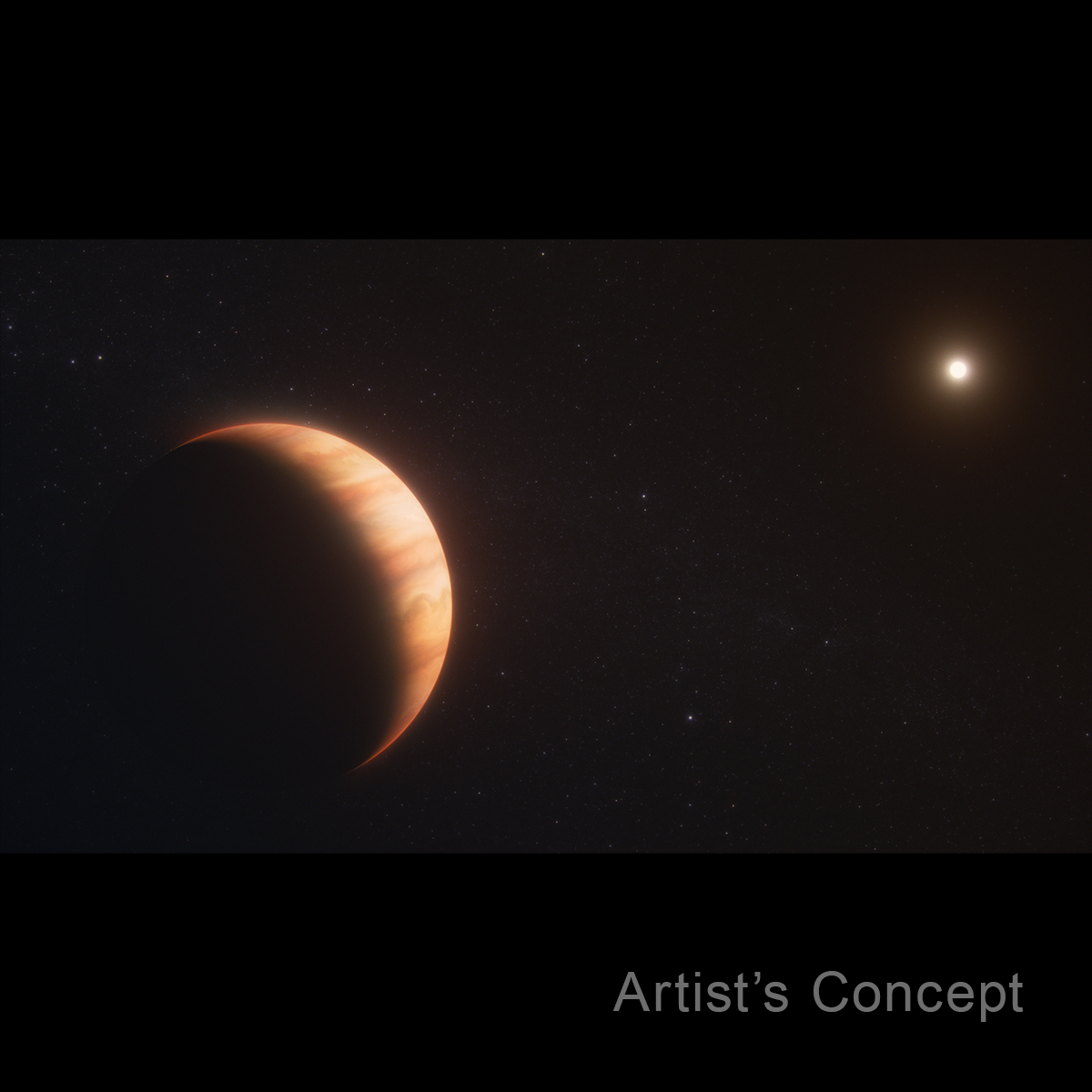
Astronomers using NASA's Webb Space Telescope studied exoplanet WD 1856 b, a Jupiter-sized world orbiting a white dwarf star at less than 2 million miles — well within the zone where it should have been destroyed when its star expanded into a red giant. The research suggests the planet migrated to its current location billions of years after the star became a white dwarf, surviving a process that would typically engulf nearby planets. The study provides insights into planetary system evolution and the possible fate of our own solar system.
Source
 Twitter / XNASA's Webb Telescope Reveals How Exoplanet WD 1856 b Survived Its Star's Deathnews.stsci.edu
Key quotes
· 3 pulledWD 1856 b is a world that shouldn't exist.
It orbits a white dwarf star at a separation of less than 2 million miles – well within the 'danger zone' where it should have been engulfed when its host star went through a red giant phase earlier in its life.
The planet likely migrated to its current location billions of years after its star became a white dwarf.
You might also wanna read
Aerosols and hydrocarbons in the atmosphere of a white dwarf planet

James Webb Space Telescope Captures First Direct Image of Exoplanet
The James Webb Space Telescope has captured its first direct image discovery of an exoplanet by identifying the infrared light of a likely p
smithsonianmag.com·1y ago
JWST reveals asymmetric cloud cycle on hot Jupiter exoplanet WASP-94A b
New observations from the James Webb Space Telescope (JWST) of the hot Jupiter exoplanet WASP-94A b reveal an asymmetric weather pattern tha
JWST Reveals WASP-39b Has Cloudy Mornings and Clear Evenings, Solving Longstanding Exoplanet Mystery
Astronomers using the James Webb Space Telescope (JWST) have developed a novel observation technique to study the exoplanet WASP-39b, a hot
 eos.org·18d ago
Candidate Giant Planet Detected in Habitable Zone of α Cen A via JWST Observations
The article reports on coronagraphic observations of the star α Cen A using the James Webb Space Telescope's MIRI instrument. A candidate gi
 arxiv.org·11mo ago
How Clouds Obscure Exoplanet Atmospheres: A Challenge for JWST and Astronomers
SETI Institute research scientist Dr. Lauren Sgro and Arizona State University postdoctoral fellow Dr. Sagnick Mukherjee discuss how clouds
 seti.org·2d ago
Comments
Sign in to join the conversation.
No comments yet. Be the first.