
























Study Reveals How Chronic Stress Accelerates Immune Aging Through Gut Microbiome Disruption
By
Neuroscience News
Summary
Researchers have demonstrated a definitive brain-gut-bone marrow axis in mice showing that chronic psychological stress suppresses key brain regions, disrupts the gut microbiome, and causes a severe drop in spermidine — an essential microbial compound. This spermidine depletion travels to the bone marrow and accelerates aging-like defects in hematopoietic stem cells, which are responsible for producing all blood and immune cells. The study provides a mechanistic link between stress, microbiome changes, and immune aging.
Source
 Twitter / XStudy Reveals How Chronic Stress Accelerates Immune Aging Through Gut Microbiome Disruptionneurosciencenews.com
Key quotes
· 3 pulledChronic psychological stress suppresses key executive and emotional regions of the brain, disrupting the delicate ecosystem of the gut microbiome.
This intestinal crash causes a severe drop in an essential microbial compound called spermidine, which travels to the bone marrow and accelerates aging-like defects in hematopoietic stem cells.
The data reveals a definitive brain-gut-bone marrow axis in mice that explains this destructive link.
You might also wanna read

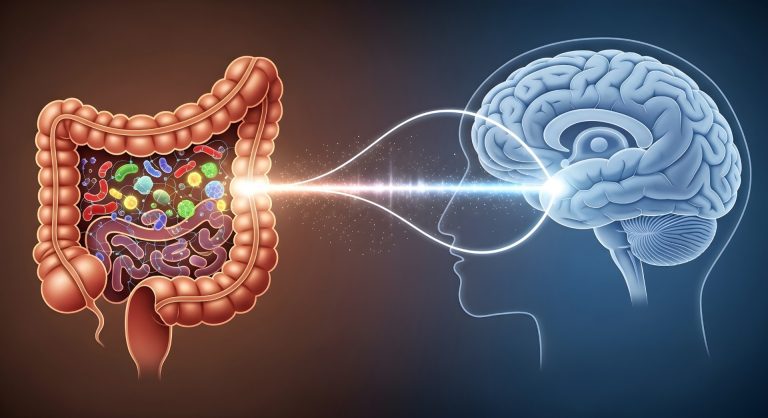
Stanford Study: Restoring Gut-Brain Communication Reverses Cognitive Decline in Aging Mice
Stanford Medicine researchers discovered that aging-related changes in gut bacteria composition trigger an inflammatory response that impair
 med.stanford.edu·3mo ago
Study reveals coffee shapes gut microbiome and influences mood through gut-brain axis
Researchers at APC Microbiome Ireland, University College Cork, published a study in Nature Communications examining how coffee interacts wi
UCC study reveals how coffee affects the gut-brain axis and mood
New research from APC Microbiome Ireland at University College Cork, published in Nature Communications, explores the mechanisms behind coff
 ucc.ie·8d ago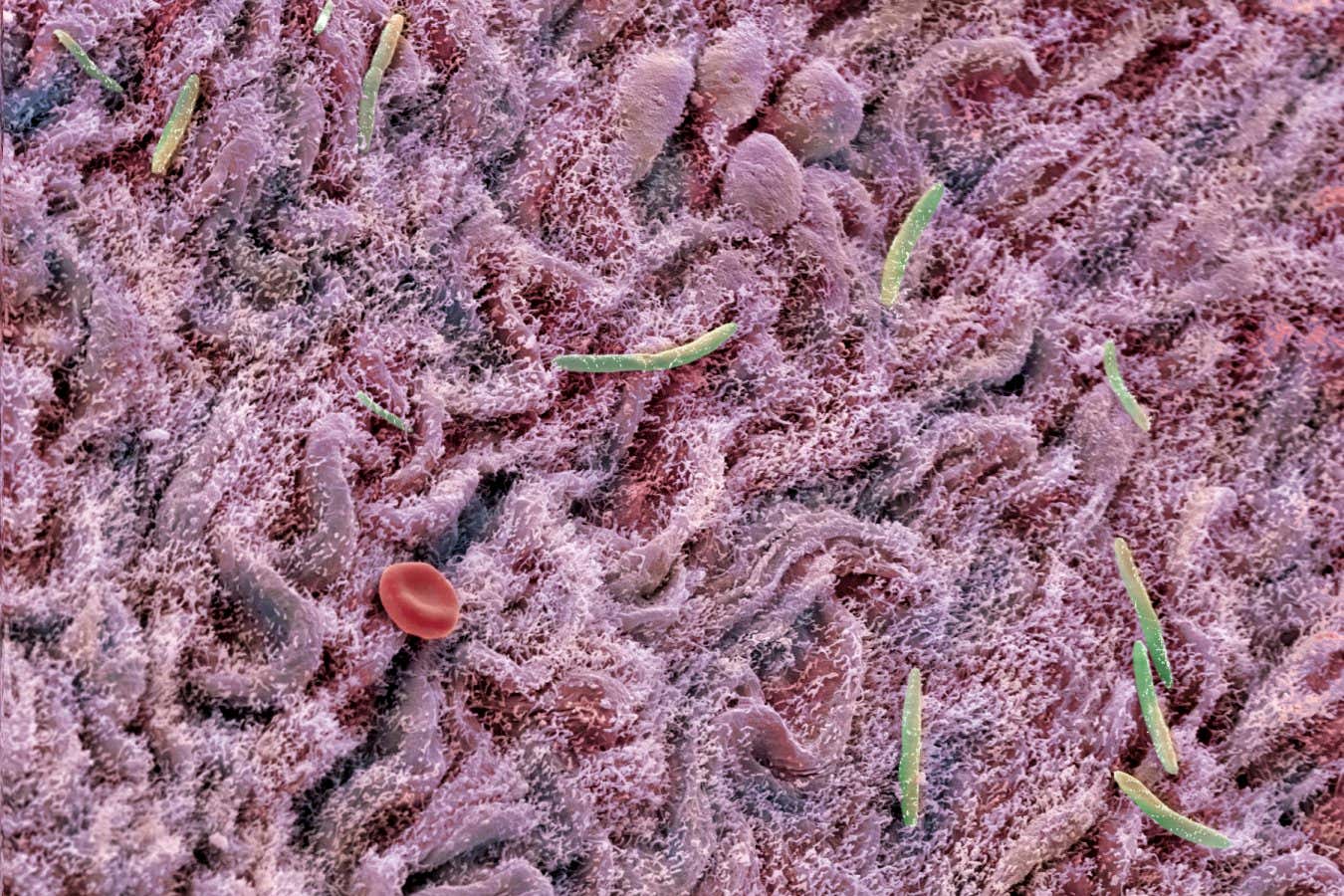
Study finds faecal microbiome transplants from young mice improve brain plasticity in older mice
A study has shown for the first time that older mice given faecal microbiome transplants (FMT) from younger mice experienced improved brain
 newscientist.com·11d ago
Study finds faecal microbiome transplants from young mice improve brain plasticity in older mice
A study has shown for the first time that older mice given faecal microbiome transplants (FMT) from younger mice experienced improved brain
newscientist.com·11d ago
Study reveals antibiotics disrupt gut microbiome by increasing pancreatic protease activity across IBD and non-IBD patients
This study investigates how antibiotics disrupt the gut microbiome and trigger inflammatory bowel disease (IBD)-like proteolytic activity. U

Fasting primes intestinal regeneration through Akkermansia muciniphila and propionate-driven epigenetic changes
This scientific research article investigates how fasting enhances small intestinal regeneration after damage (e.g., radiation) through a mi
 pnas.org·6d ago
Comments
Sign in to join the conversation.
No comments yet. Be the first.