
























Ultrasound-activated ruthenium complex offers resistance-free antibacterial treatment for deep-tissue infections
By
Victoria Atkinson
Summary
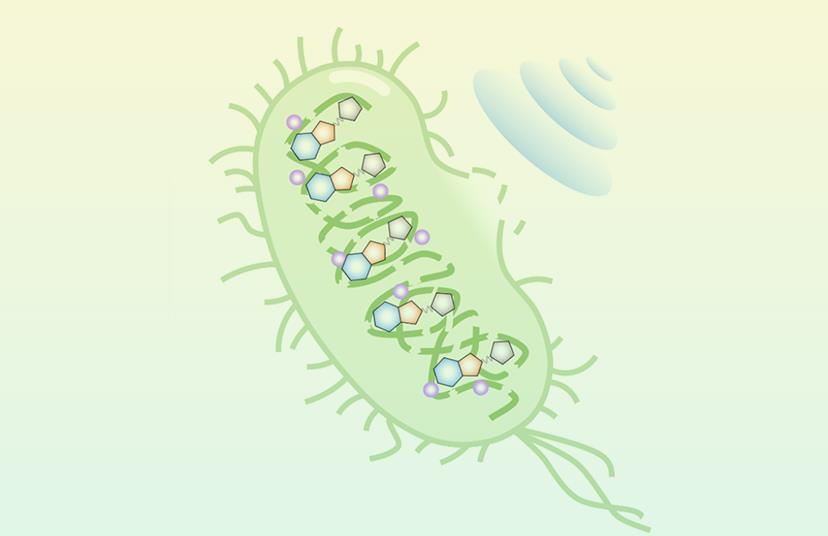
Researchers have developed a sound-activated antibacterial compound using a ruthenium complex that, when exposed to ultrasound, generates reactive oxygen species capable of damaging bacterial DNA and biofilms. This approach offers a promising alternative to conventional antibiotics for deep-tissue infections without triggering antimicrobial resistance. The localized effect combined with a general mechanism provides a potential framework for treating antibiotic-resistant microorganisms, addressing the significant global health problem of antimicrobial resistance.
Source
 bskyUltrasound-activated ruthenium complex offers resistance-free antibacterial treatment for deep-tissue infectionschemistryworld.com
Key quotes
· 3 pulledA sound-activated antibacterial offers a promising alternative to conventional antibiotics for deep-tissue bacterial infections.
Upon exposure to ultrasound, the sono-sensitive ruthenium complex generates reactive oxygen species that can damage bacterial DNA and biofilms without triggering the evolution of resistance.
The team behind the work believes that this blend of general mechanism and localised effect provides a powerful framework for treatments that could beat antibiotic-resistant microorganisms.
You might also wanna read

Oregon State University Researchers Develop Iron Nanomaterial That Selectively Destroys Cancer Cells
Researchers at Oregon State University have developed a novel iron-based nanomaterial that targets and destroys cancer cells from within. Th

Lead-Free Organic-Inorganic Halobismuthate Material Developed for Large Piezoelectric Effect
Researchers have developed a lead-free organic-inorganic halobismuthate material with significant piezoelectric properties, offering a promi
 pubs.acs.org·6mo ago
University of Pennsylvania researchers develop AI tool to accelerate antibiotic development
Researchers at the University of Pennsylvania have developed an AI tool designed to accelerate antibiotic development by enhancing the antib
 nih.gov·3d ago
Manganese perovskite nanocubes convert cold tumors to hot in hepatocellular carcinoma via PANoptosis/STING activation
This article presents a novel nanosystem for treating hepatocellular carcinoma (HCC) by converting immunologically "cold" tumors into "hot"
 scim.ag·8d ago
Doctors Could Hack the Nervous System with Ultrasound

Monash University study finds copper-delivering drug Cu(ATSM) reduces Alzheimer's proteins and improves memory in lab tests
Monash University researchers have discovered that a copper-delivering drug called Cu(ATSM) significantly reduces toxic Alzheimer's proteins
 monash.edu·14d ago
Comments
Sign in to join the conversation.
No comments yet. Be the first.