
























 Baker's Take
First Named Maya Astronomer Identified in Guatemalan Hieroglyphic Decipherment

By
Mr Bagel
Archaeologists working in the Petén jungle of Guatemala have deciphered the first complete name of a Maya astronomer and mathematician, ending centuries of anonymity for individual scholars of that ancient civilization. The name, rendered in various translations as "White-breasted Fox," was found on a mural at the San Bartolo-Xultún archaeological site, two Maya cities that flourished between 400 B.C. and A.D. 900, according to official sources cited by revistaquem.globo.com.

"La tradición científica maya había permanecido en el anonimato en lo que respecta a sus autores individuales. Esta situación ha cambiado radicalmente con el hallazgo"
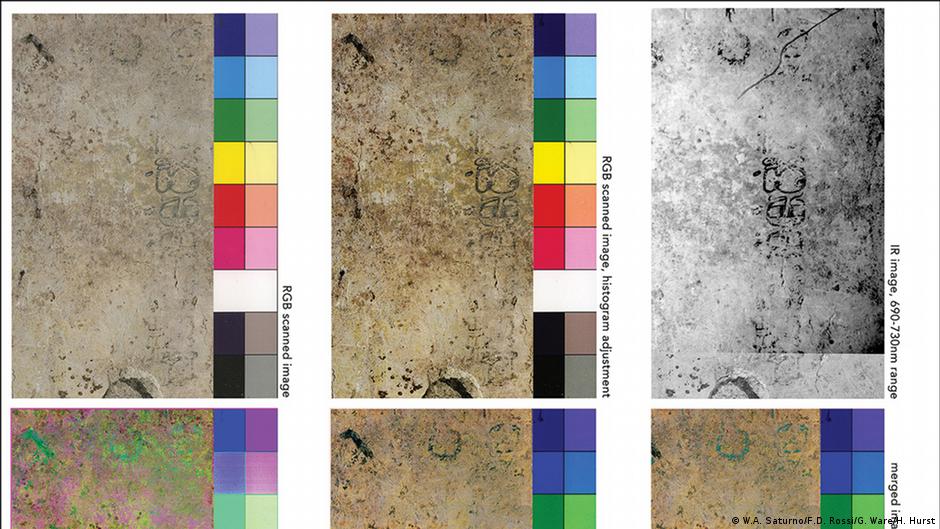
This breakthrough, noted La Brújula Verde, shifts the focus from anonymous collective knowledge to a named individual: a scholar who lived in the 8th century A.D. The decipherment used scale drawings, photographs, and scans of the hieroglyphs, which were then digitally enhanced to reveal eleven glyphs, reported afsdp.org.pe.
The wall inscription is not a simple name tag; it contains a complex astronomical formula. dw.com reported that the nine-glyph passage includes calculations for synchronizing the cycles of Venus and Mars over a period of 2,920 days, and it credits a specific erudite figure: Zactan B'aan (or Tzab Tan Waas). "El hallazgo se produjo al descifrar un pasaje de nueve glifos en una cámara maya que contenía una fórmula astronómica compleja," dw.com stated, linking the astronomer to his own mathematical work some 1,300 years ago.
"Los investigadores utilizaron dibujos a escala, fotografías y escaneos de las inscripciones, que posteriormente fueron mejorados de forma digital."
The discovery, announced by Guatemala's Ministry of Culture, was described by sudouest.fr as identifying "le nom complet d'un mathématicien et astronome de la civilisation maya." While other ancient civilizations in Greece, India, China, and Iraq have known scientific figures, the Maya tradition had remained largely authorless until this find. The name, translated as "Zorro de Pecho Blanco" in Spanish sources like La Brújula Verde, now personalizes a scientific legacy that spans millennia.
The reporting
6 outlets covered this story. Each links to the original.


Comments
Sign in to join the conversation.
No comments yet. Be the first.