
























Study Links Midlife Sleep Problems to Declining Psychological Well-Being Years Later, Especially in Women
By
Megan Brooks
Summary
A longitudinal study analyzing data from the MIDUS study found that sleep problems reported in midlife were associated with poorer psychological well-being nearly a decade later. The association remained significant among women but not among men after adjusting for demographic, health, and baseline psychological factors. The findings challenge the notion that sleep problems are a normal part of aging and suggest they may have important long-term implications for well-being.
Source

 Twitter / XStudy Links Midlife Sleep Problems to Declining Psychological Well-Being Years Later, Especially in Womenmdsc.pe
Key quotes
· 3 pulledSleep problems are sometimes viewed as a normal part of aging, but our findings suggest they may have important long-term implications for psychological well-being.
Poor sleep in midlife might have consequences for psychological well-being years later, especially in women.
Sleep problems reported in midlife were associated with poorer psychological well-being nearly a decade later.
You might also wanna read
Humans peak in midlife: A combined cognitive and personality trait perspective


Sleep chart of biological ageing clocks in middle and late life
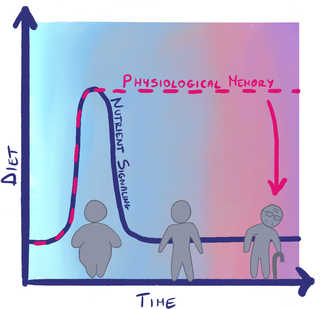
Toward a life-course biology of aging: How early-life conditions shape late-life health and longevity
This article proposes a "life-course biology of aging" framework, arguing that aging is not solely determined by current conditions but is s
 plos.io·1mo ago
Objective vs. Subjective Sleep Traits: A Phenome-wide Analysis of Disease Associations in 88,461 Adults
The study investigates the associations between accelerometer-derived objective sleep traits and various diseases in 88,461 UK Biobank adult
 spj.science.org·11mo ago
Study Links Long-Term Melatonin Use to Increased Heart Failure and Mortality Risks
A preliminary study presented at the American Heart Association's Scientific Sessions 2025 found that long-term melatonin use (one year or l

Study links post-menopause memory decline to loss of estrogen production in brain tissue
A new preclinical Northwestern Medicine study reveals that memory decline after menopause may be linked to loss of estrogen production in br
 news.northwestern.edu·28d ago
Comments
Sign in to join the conversation.
No comments yet. Be the first.