
























OmniPilot: An LLM Inference Advisor for Optimizing GPU Cluster Configuration Selection
By
[Submitted on 2 Jul 2026]
Summary
OmniPilot is an uncertainty-aware LLM inference advisor designed for heterogeneous GPU clusters. It helps users and operators select optimal GPU type, tensor-parallel degree, and precision configurations by predicting serving costs using a conformally calibrated quantile cost model paired with an out-of-distribution (OOD) abstention layer. The system ranks configurations via an economic utility metric calibrated to operator preferences. In evaluations across 460 benchmark runs on A100, H100, and H200 hardware across four precisions, OmniPilot achieves 6.2% MAPE for throughput prediction, 95% top-1 accuracy, and mean utility regret of 0.003. The abstention layer successfully flags unsupported configurations as low-confidence, with plans to integrate OOD scenarios into training to expand the support envelope over time.
Source

 bskyOmniPilot: An LLM Inference Advisor for Optimizing GPU Cluster Configuration Selectionarxiv.org
Key quotes
· 5 pulledOmniPilot pairs a conformally calibrated quantile cost model (spanning eight serving targets) with an out-of-distribution (OOD) abstention layer.
In evaluations across 460 benchmark runs on A100, H100, and H200 hardware across four precisions, OmniPilot predicts aggregate throughput with a 6.2% mean absolute percentage error (MAPE) and a log-space R²=0.92.
The advisor achieves 95% top-1 accuracy with a mean utility regret of just 0.003.
When tested on an OOD holdout of unsupported cells, prediction error climbs to 24-46% and conformal intervals cover 0 of 5 points; however, the abstention layer successfully flags all five as low-confidence.
Over time, these OOD scenarios will be integrated into the training dataset to continuously expand the advisor's support envelope.
You might also wanna read

Unsloth and NVIDIA Partner to Accelerate LLM Fine-Tuning by 20%
Unsloth has partnered with NVIDIA to optimize fine-tuning of large language models, achieving 20% faster training speeds. The collaboration
 Unsloth - Train and Run Models Locally·1mo ago
Building high-performance expert-parallel dispatch and combine kernels for MoE LLM inference
This article provides a deep technical deep-dive into the architecture and implementation of high-performance Expert Parallelism (EP) kernel
 fergusfinn.com·23d ago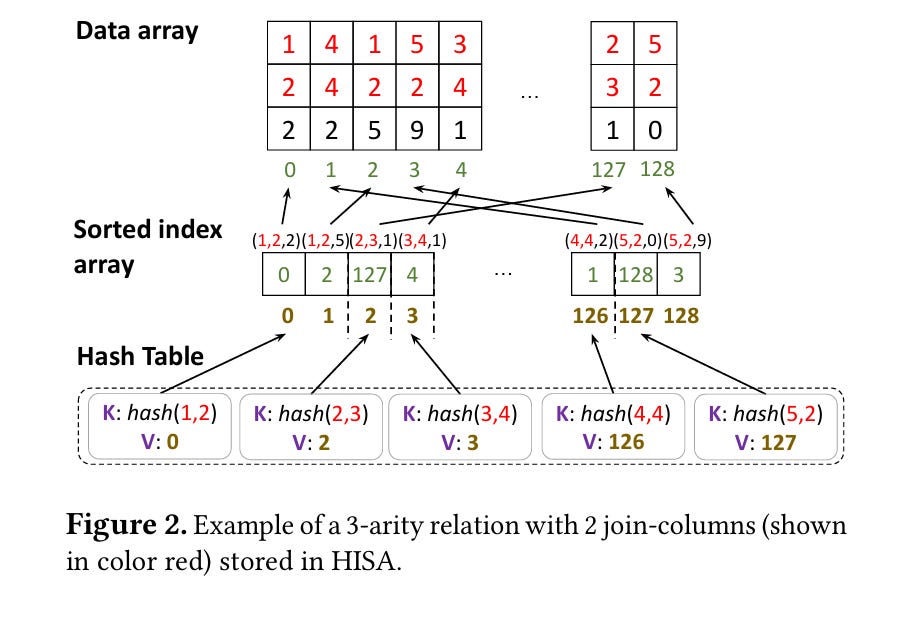
GPU-Optimized Datalog Evaluation: GPULOG System Analysis from ASPLOS'25 Paper
This article analyzes the ASPLOS'25 paper 'Optimizing Datalog for the GPU,' which presents GPULOG, a system that optimizes Datalog evaluatio
 danglingpointers.substack.com·8mo ago
GPEmu: A GPU Emulator for Rapid, Low-Cost Deep Learning Prototyping [pdf]

Rotary GPU: Enabling Large Mixture-of-Experts Models on Consumer Laptop GPUs with Limited Memory
This paper presents Rotary GPU, an exploratory approach to running large Mixture-of-Experts (MoE) language models on consumer-grade hardware
arxiv.org·1mo ago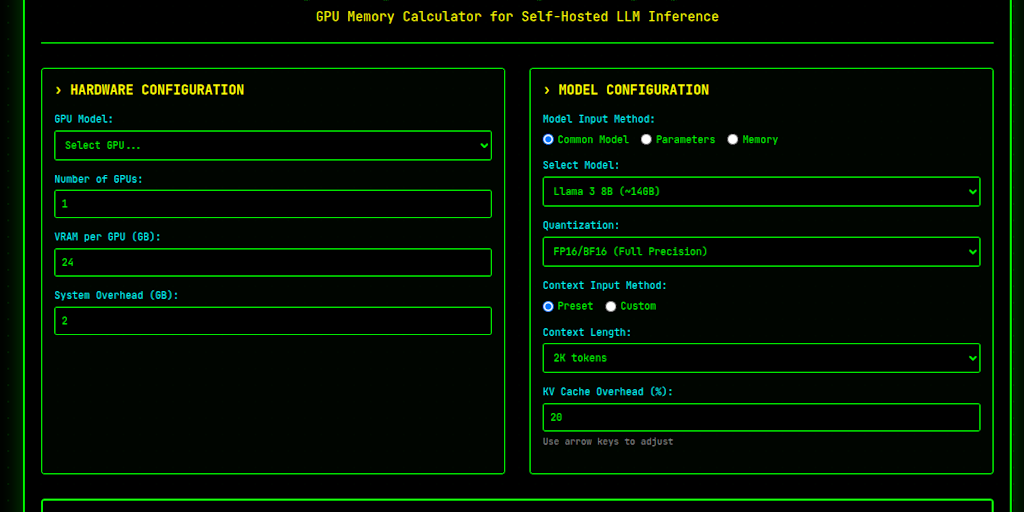
Guide to Calculating GPU Memory for Self-Hosted LLM Inference
The article provides a guide on calculating GPU memory requirements and managing concurrent requests for self-hosted large language model (L
 Product Hunt·11mo ago
Comments
Sign in to join the conversation.
No comments yet. Be the first.