
























Neural Procedural Memory: Using Implicit Activation Steering to Improve LLM Agent Memory Without Training
By
[Submitted on 29 Jun 2026]
Summary
This paper introduces Neural Procedural Memory (NPM), a training-free framework for LLM agents that replaces explicit textual instructions (like RAG) with implicit activation steering. Instead of injecting symbolic guidelines into model contexts, NPM distills procedural skills from historical contrastive experiences into steering vectors in the activation space, directly activating task-relevant neural mechanisms. Evaluations across four agent benchmarks show NPM performs comparably to explicit instruction baselines, and combining implicit steering with explicit workflows yields complementary benefits. Representational analyses reveal that the steering vectors encode consistent task logic with organized structures in the activation space.
Source

 Twitter / XNeural Procedural Memory: Using Implicit Activation Steering to Improve LLM Agent Memory Without Trainingarxiv.org
Key quotes
· 5 pulledExisting approaches predominantly employ Retrieval-Augmented Generation (RAG) to inject explicit textual guidelines into model contexts.
Relying solely on symbolic instructions can introduce a text-action disconnect, frequently failing to activate the internal representations necessary for correct task execution.
NPM directly activates the task-relevant neural mechanisms to guide task execution.
The results show that combining implicit steering with explicit workflows provides complementary advantages, leading to more robust task execution.
These findings suggest that implicit activation steering provides a promising approach for managing agent memory.
You might also wanna read


JAMEL: A Framework for Joint Memory and Exploration Learning in Language Model Agents
This paper introduces JAMEL (Joint Agent Memory and Exploration Learning), a framework that trains language model agents to explore open-end
arxiv.org·27d ago
Latent Agents: Distilling Multi-Agent Debate into Single LLMs via Post-Training Internalization
This paper introduces "Latent Agents," a post-training framework that distills multi-agent debate into a single LLM through a two-stage fine
arxiv.org·28d agoLatent Agents: Distilling Multi-Agent Debate into Single LLMs via Post-Training Internalization
This paper introduces "Latent Agents," a post-training framework that distills multi-agent debate into a single LLM through a two-stage fine
arxiv.org·28d ago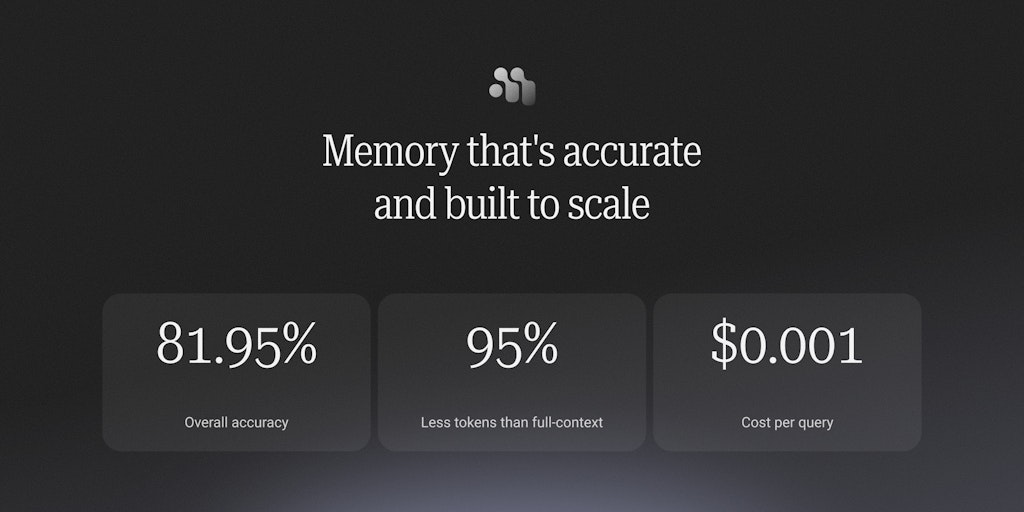
Memori launches agent-native persistent memory infrastructure using structured knowledge graphs from agent trace data
Memori is a new agent-native memory infrastructure that enables AI agents to create structured, long-term persistent memory directly from ag
 Product Hunt·1mo ago
DILLO: A Language-Based World Model for Proactive Agent Steering Without Visual Simulation
This paper introduces DILLO (DIstiLLed Language-ActiOn World Model), a proactive agent steering framework that replaces slow visual simulati
arxiv.org·10d ago
Arbor: A Multi-Agent Framework Using Tree Search for Autonomous LLM Inference Optimization
Arbor is a multi-agent framework that uses structured tree search as a cognition layer for autonomous agents operating in large, stateful ac
arxiv.org·18d ago
Robot Memory System Enables AI Robots to Learn from Past Experiences
Robot Memory (robotmem) is a persistent memory system for AI robots that enables robots to learn from past experiences. The system stores ep
 github.com·3mo ago
Comments
Sign in to join the conversation.
No comments yet. Be the first.