Reinforcement learning with verifiable rewards without human-annotated data, often referred to as zero RL, has emerged as a powerful paradigm for eliciting chain-of-thought reasoning. However, due to computational constraints, existing studies are largely
 arxiv.org22h ago
ARC‑AGI‑3 gives an agent a game environment, without an explanation of what it is seeing. At each step, the agent receives a 64×64 grid of 16 color indices and a set of legal actions. The environment supplies no object list, rule sheet, stated goal, or sh
Large language models increasingly operate as tool-using agents, where small format, argument, or function-call errors can invalidate otherwise plausible responses. We study inference-time feed-forward network (FFN) intervention for improving structured o
 Shared by @ai-firehose.column.social ↗arxiv.org2d ago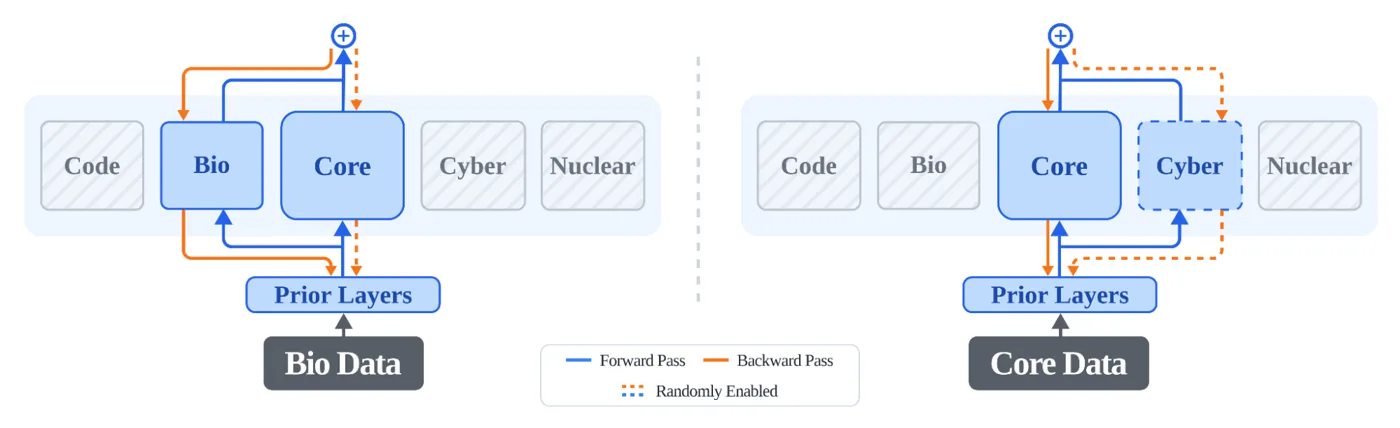
📄 Paper, 💻 Code
The past few decades have witnessed significant advances in the design of machine learning algorithms, from early studies on task-specific shallow models to more general deep Large Language Models (LLMs). Despite showing promising results in tasks that re
arxiv.org·Twitter AI (high signal)·3d ago·2 min readCLI agents are the closest thing language models have to an embodied setting: the model emits commands, the terminal executes them, and the returned stream -- stdout, errors, files, logs, and traces -- records the consequences. We argue that this stream i
 Shared by @cwolferesearch ↗arxiv.org6d ago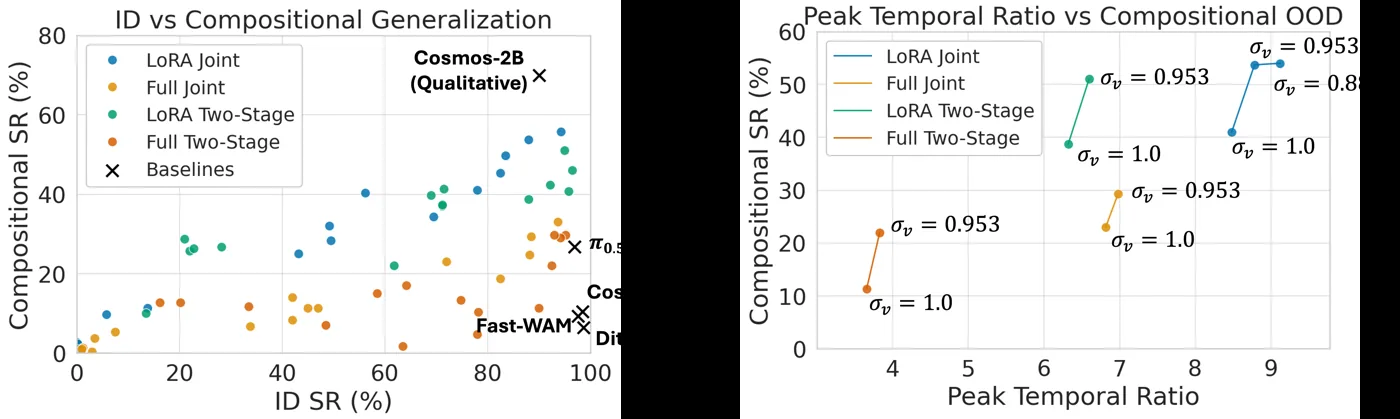
 Shared by @chris_j_paxton ↗
In long-horizon tasks, decision-relevant state is often scattered across an expanding trajectory, while the action agent must surface it and act. As trajectories grow, task requirements, environment facts, prior attempts, diagnoses, and open subgoals can
 Shared by @dair_ai ↗arxiv.org7d ago
Recent LLM agents tackle increasingly long-horizon, open-ended tasks, and external skills, reusable procedural knowledge supplied to the agent, further extend this capability. However, a fixed, hand-authored skill is rarely optimal, and cannot adapt to th
Shared by @dair_ai ↗arxiv.org10d ago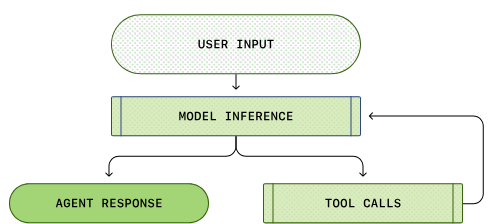
 Shared by @dejavucoder ↗
 lilianweng.github.io10d ago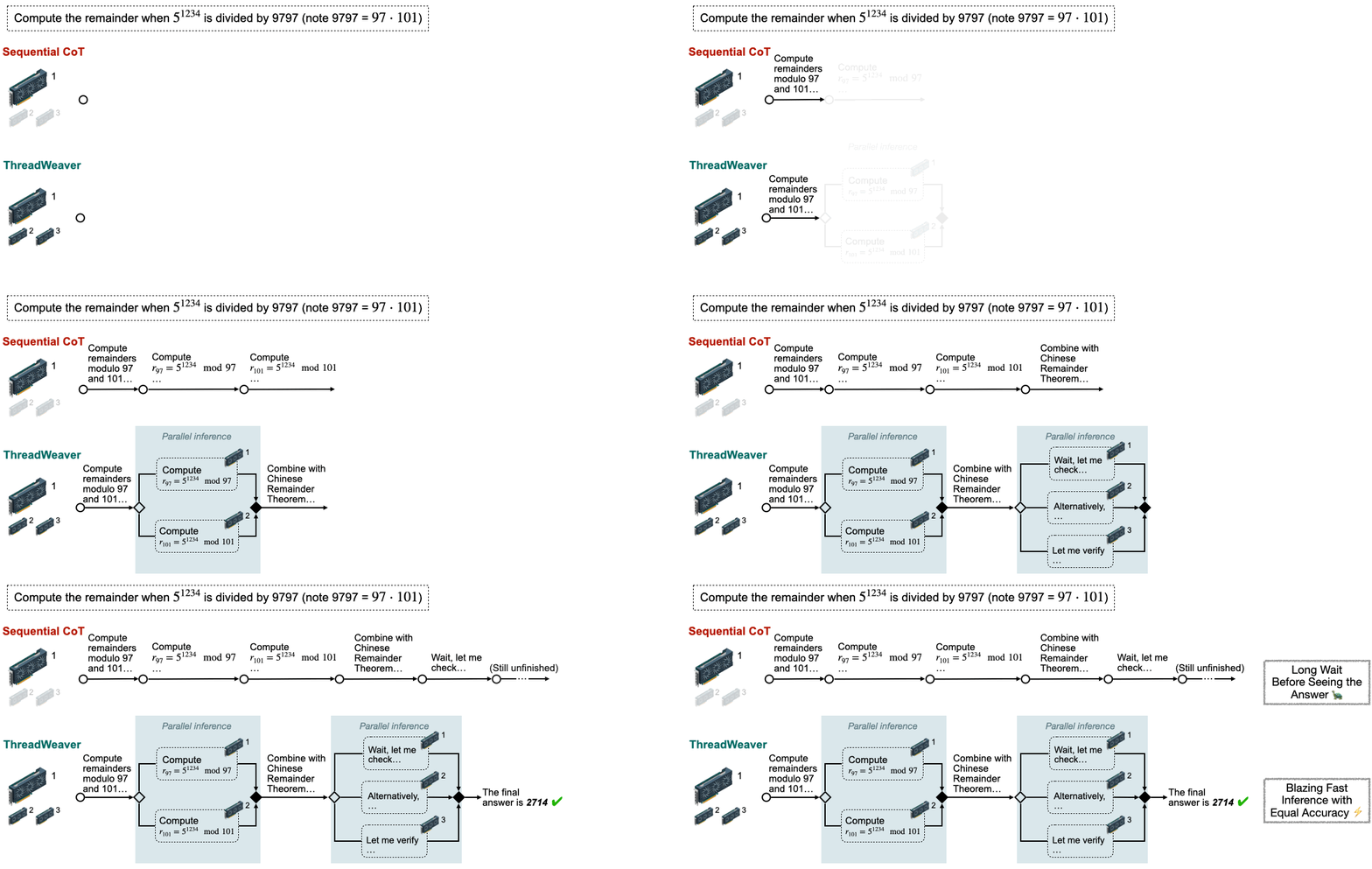
 Shared by @VictoriaLinML ↗
RL with verifiable rewards (RLVR) has emerged as a powerful paradigm for training LMs on tasks with well-defined success metrics, such as code generation and mathematical reasoning. However, current RLVR methods optimize only what can be objectively score
Shared by @dair_ai ↗arxiv.org14d agoMany everyday programming tasks resist clean rule-based implementation, such as alerting on important log lines, repairing malformed JSON, or ranking search results by intent, and are increasingly outsourced to large language model APIs at the cost of loc
arxiv.org14d agoThe LLM Jury, a Panel of LLM Evaluators (PoLL) reporting consensus scores, has become a practical alternative to single-judge LLM evaluation, yet its statistical behavior remains poorly understood. We formalize the LLM Jury under the Huber contamination m
Shared by @dair_ai ↗arxiv.org15d agoReinforcement learning (RL) has become a central component of post-training large language models (LLMs), yet little is understood about how RL adaptation is distributed across transformer layers. Existing approaches typically update all model parameters
arxiv.org15d ago