
























NASA's Chandra X-ray Observatory releases red, white and blue cosmic images for America's 250th anniversary
By
Brett Tingley
Summary
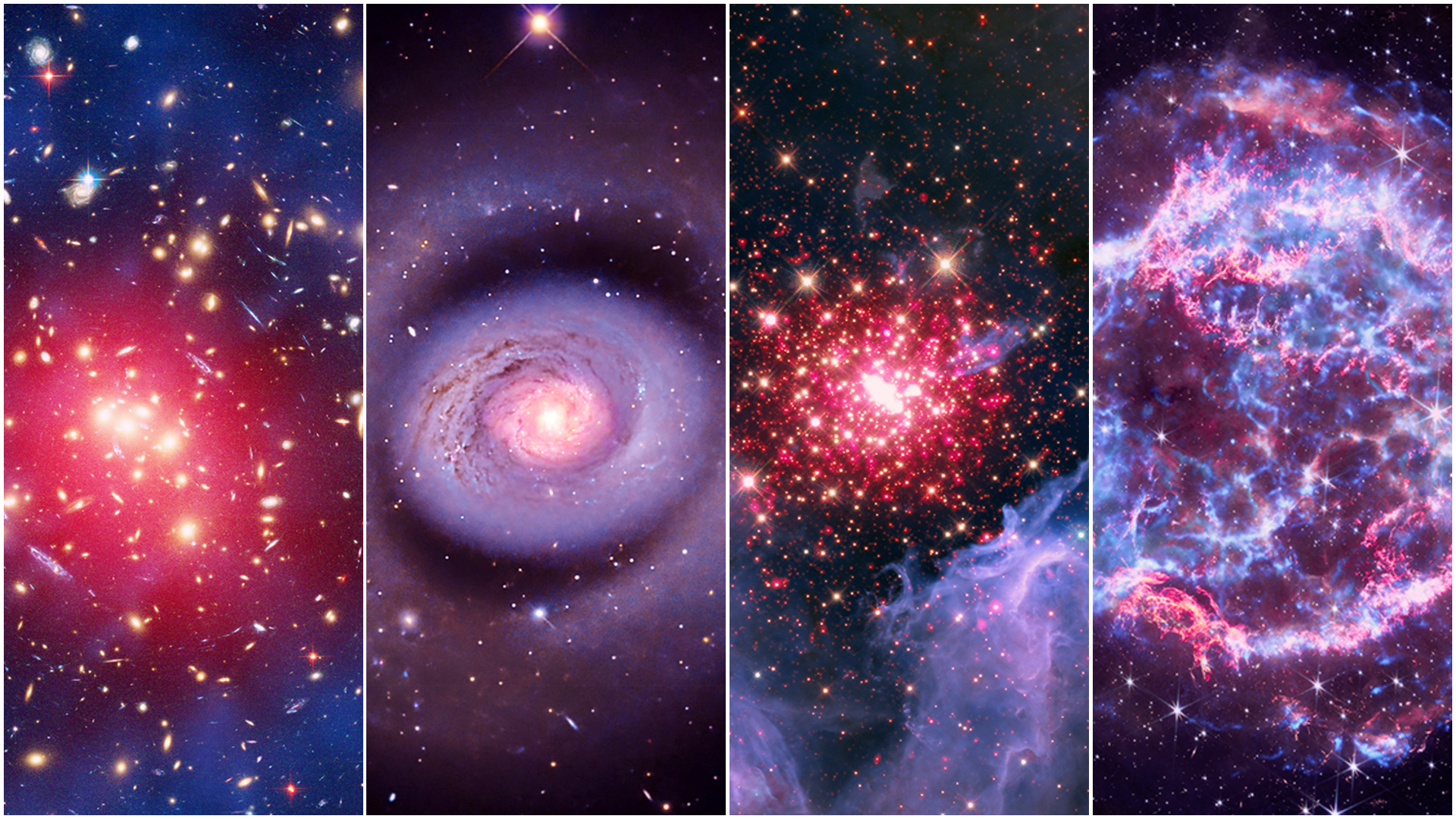
NASA's Chandra X-ray Observatory has released four new images of cosmic phenomena — a galaxy cluster, spiral galaxy Messier 94, a Milky Way nebula, and the Cassiopeia A supernova remnant — colored in red, white, and blue to celebrate the United States' 250th anniversary. The images were produced in collaboration with the Hubble Space Telescope and James Webb Space Telescope, showcasing the universe in patriotic hues while highlighting the scientific capabilities of these observatories.
Source
 Twitter / XNASA's Chandra X-ray Observatory releases red, white and blue cosmic images for America's 250th anniversaryspace.com
Key quotes
· 3 pulledThe four images reveal superheated gas in a distant galaxy cluster, the swirling spiral galaxy known as Messier 94, a glowing nebula found in our own Milky Way galaxy, and the Cassiopeia A supernova remnant, respectively.
NASA's Chandra X-ray Observatory has released four stunning images of cosmic wonders, depicted in red, white and blue to coincide with the United States' 250th anniversary on July 4.
NASA's Chandra X-ray observatory, Hubble Space Telescope and James Webb Space Telescope teamed up to produce these gorgeous cosmic fireworks.
You might also wanna read

NASA's Chandra Observatory Discovers Unexpected Brightness Changes in Supernova Remnants in Galaxy M83
Astronomers using NASA's Chandra X-ray Observatory studied the galaxy Messier 83 (M83) over a 14-year period and unexpectedly discovered tha
 science.nasa.gov·15d ago
Hubble Space Telescope Captures New Image of Crab Nebula, Supernova Witnessed in 1054 AD
The article discusses the Hubble Space Telescope's new image of the Crab Nebula, which originated from a supernova explosion witnessed by Ch
 nautil.us·3mo ago
Hubble Celebrates Nation’s 250th Birthday
Hubble Celebrates Nation’s 250th Birthday
NASA's Chandra X-ray Observatory detects supernova debris near Milky Way's supermassive black hole
NASA's Chandra X-ray spacecraft has detected supernova wreckage near Sagittarius A*, the supermassive black hole at the center of the Milky
 space.com·19d ago
NASA’s Hubble Spies Stellar Sparkler for July 4th
NASA’s Hubble Spies Stellar Sparkler for July 4th
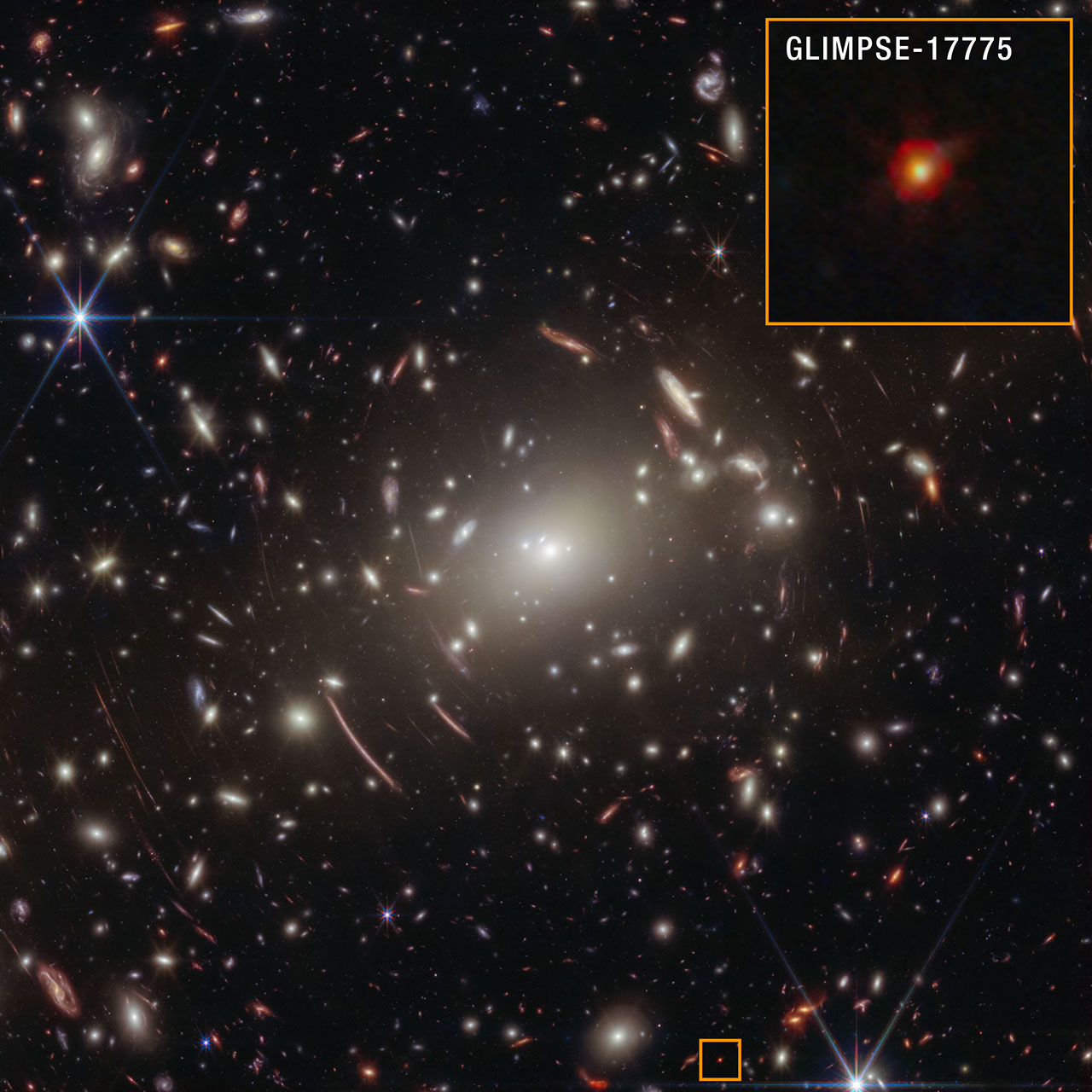
NASA's Webb Telescope Provides Strongest Evidence Yet for 'Black Hole Stars' in Early Universe
Astronomers using NASA's James Webb Space Telescope have identified a "little red dot" galaxy called GLIMPSE-17775, whose spectrum provides
science.nasa.gov·24d ago
Comments
Sign in to join the conversation.
No comments yet. Be the first.