





















NASA's Chandra Observatory Discovers Unexpected Brightness Changes in Supernova Remnants in Galaxy M83
By
lamohon

Front-window bakery material. Catches the eye, delivers the goods.
Summary
Astronomers using NASA's Chandra X-ray Observatory studied the galaxy Messier 83 (M83) over a 14-year period and unexpectedly discovered that about half of the supernova remnants (stellar explosion debris) show dramatic changes in brightness, resembling cosmic fireworks rather than the typical slowly fading clouds of hot gas. The findings were presented at the American Astronomical Society meeting and published in The Astrophysical Journal. M83, located about 15 million light-years from Earth, is a star-forming galaxy where these unusual X-ray sources were observed between 2000 and 2014.
Key quotes
· 3 pulledThe aftermath of a supernova, a stellar explosion, is usually a slowly fading cloud of hot gas.
When astronomers pointed NASA's Chandra X-ray Observatory at the nearby galaxy Messier 83 (M83), they did not expect to find a population of supernova remnants, or the debris from these explosions, showing dramatic changes in their brightness.
The galaxy M83, located about 15 million light-years from Earth, is forming stars at a high rate.
You might also wanna read

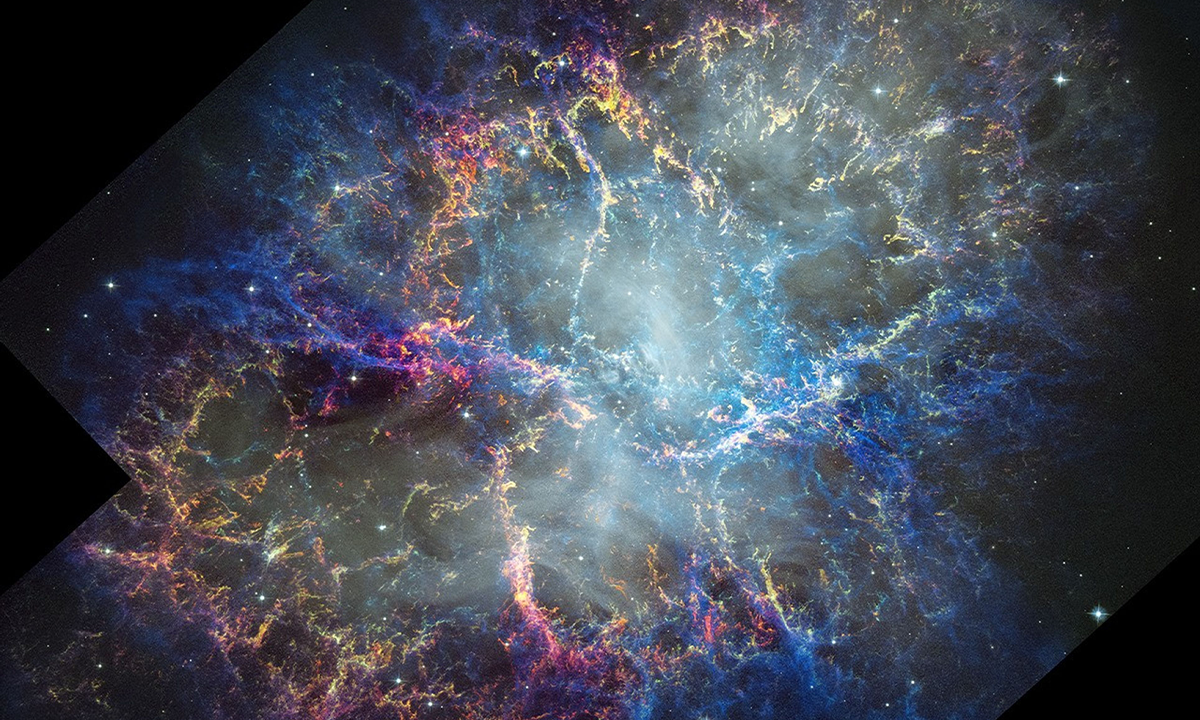
Hubble Space Telescope Captures New Image of Crab Nebula, Supernova Witnessed in 1054 AD
The article discusses the Hubble Space Telescope's new image of the Crab Nebula, which originated from a supernova explosion witnessed by Ch
 nautil.us·2mo ago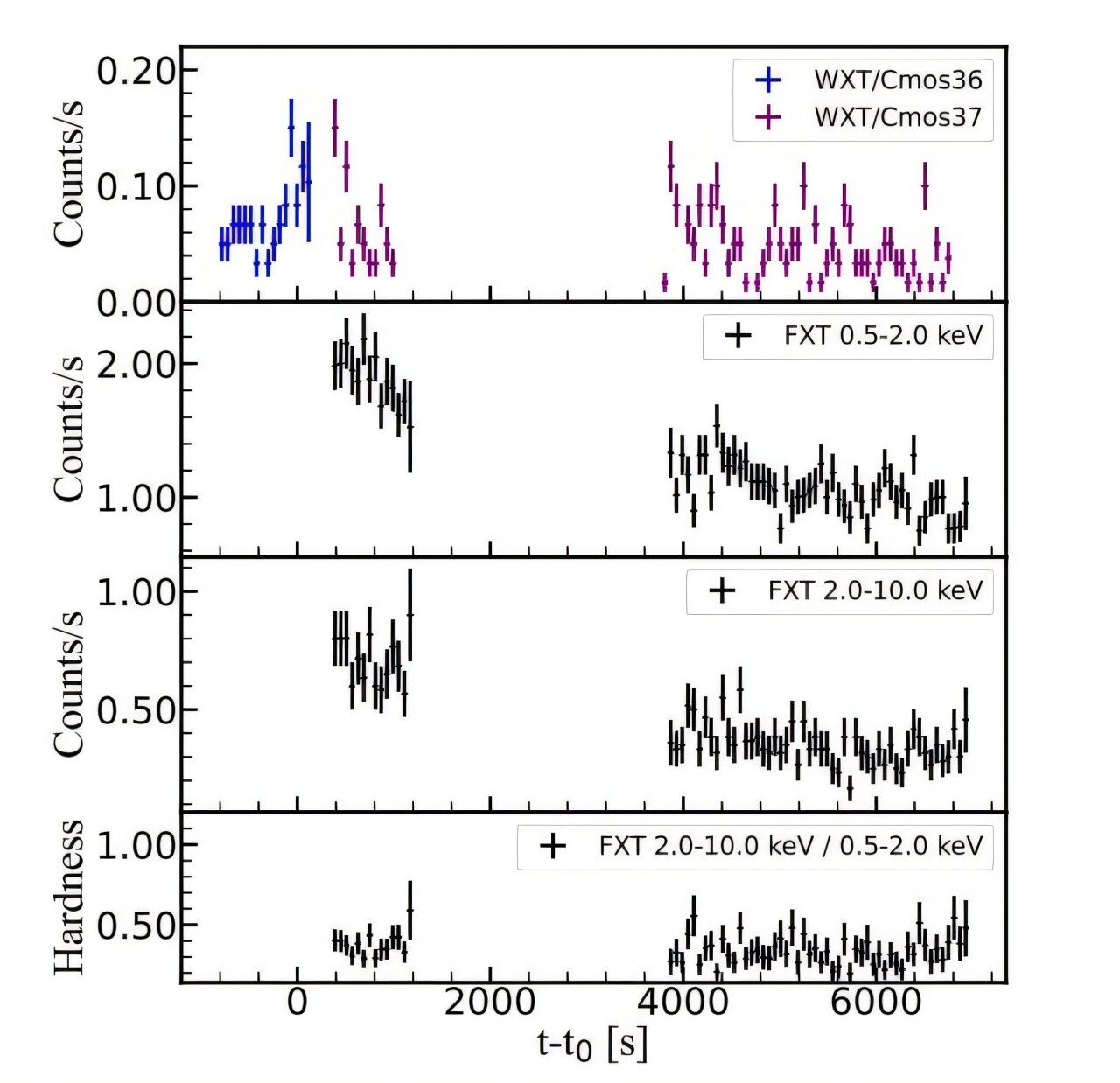
Einstein Probe Detects X-ray Flare from Nearby Star 150 Light Years Away
Astronomers using the Einstein Probe (EP) have detected a new X-ray transient event identified as an X-ray flare from the star PM J23221-030
 phys.org·5mo ago
VLT Study Reveals Dramatic Nickel Emission and CN Outgassing in Interstellar Comet 3I/ATLAS
Astronomers using the Very Large Telescope (VLT) have conducted spectroscopic observations of interstellar comet 3I/ATLAS (C/2025 N1) as it
 arxiv.org·9mo ago
Machine Learning Validates Unrecognized Transient Astronomical Phenomena in Historical Observatory Images
This research paper uses machine learning to validate the existence of previously unrecognized transient astronomical phenomena in historica
arxiv.org·1mo agoSpectroscopic Classification of ASASSN-25cm as a Classical Nova
Astronomers detect unusual repeating gamma-ray burst of unknown origin outside our galaxy
Astronomers have detected a mysterious gamma-ray explosion that repeated several times over the course of a day, an event unlike any previou
 eso.org·9mo ago