
























Spiral-Shaped Molecular Cloud Discovered 5,400 Light-Years Away in the Milky Way
By
Kerry Hensley
Summary
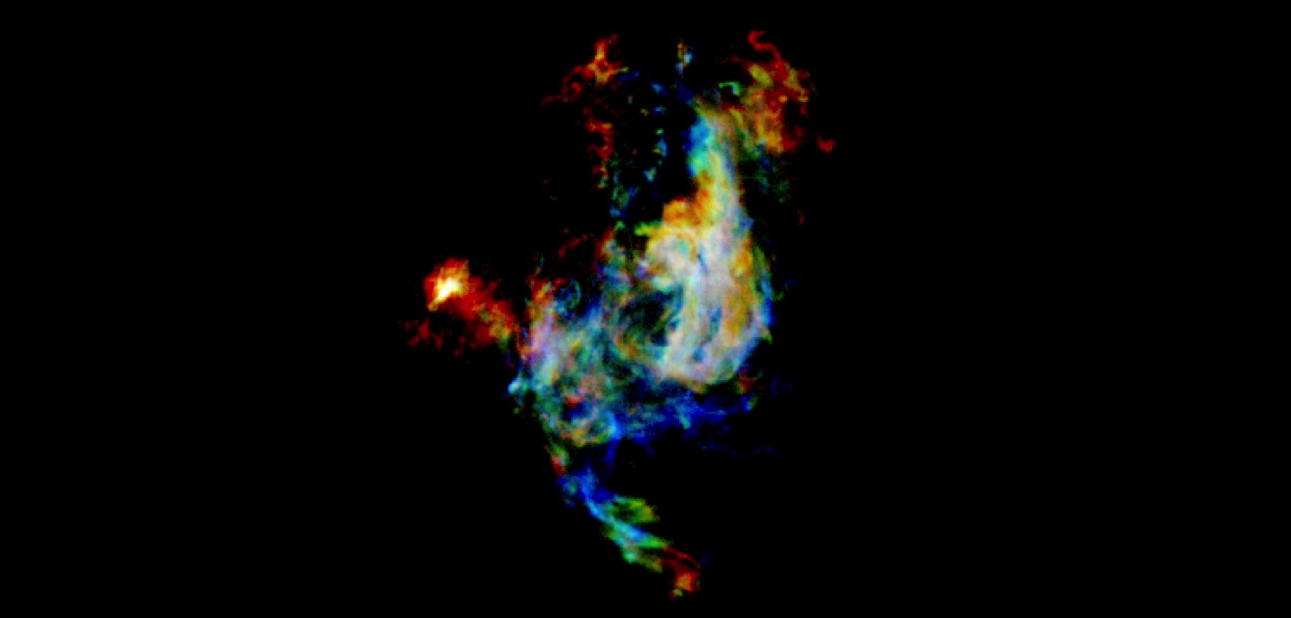
A newly discovered molecular cloud in the Milky Way, found through the Milky Way Imaging Scroll Painting project, displays a surprising spiral structure. Located roughly 5,400 light-years away in a region opposite the galactic center, the cloud spans 245 by 294 light-years and contains an estimated 80,000 solar masses. The discovery was made by Xuepeng Chen and collaborators using a 13.7-meter millimeter telescope survey data.
Source
 bskySpiral-Shaped Molecular Cloud Discovered 5,400 Light-Years Away in the Milky Wayaasnova.org
Key quotes
· 3 pulledThe image above shows a newly discovered molecular cloud.
This cloud was discovered through the Milky Way Imaging Scroll Painting project, which uses a 13.7-meter millimeter telescope to survey molecular clouds in our galaxy.
The newfound cloud is roughly 5,400 light-years away, spans an area of 245 by 294 light-years, and contains an estimated 80,000 solar masses.
You might also wanna read

Astronomers Pinpoint Edge of Milky Way's Star-Forming Disk at 40,000 Light-Years
Astronomers have identified the edge of the Milky Way's star-forming disk for the first time, determining that star formation is concentrate
 skyandtelescope.org·2mo ago
ESA's Euclid telescope captures largest, most detailed visible-light image of Milky Way's center with over 60 million stars
The European Space Agency's Euclid space telescope captured the largest and most detailed visible-light image of the Milky Way's center ever
 space.com·7h ago
ESA's Euclid telescope captures largest, most detailed visible-light image of Milky Way's center with over 60 million stars
The European Space Agency's Euclid space telescope captured the largest and most detailed visible-light image of the Milky Way's center ever
space.com·7h ago
James Webb Space Telescope peers deep into the heart of star formation in our Milky Way galaxy
 space.com·9mo ago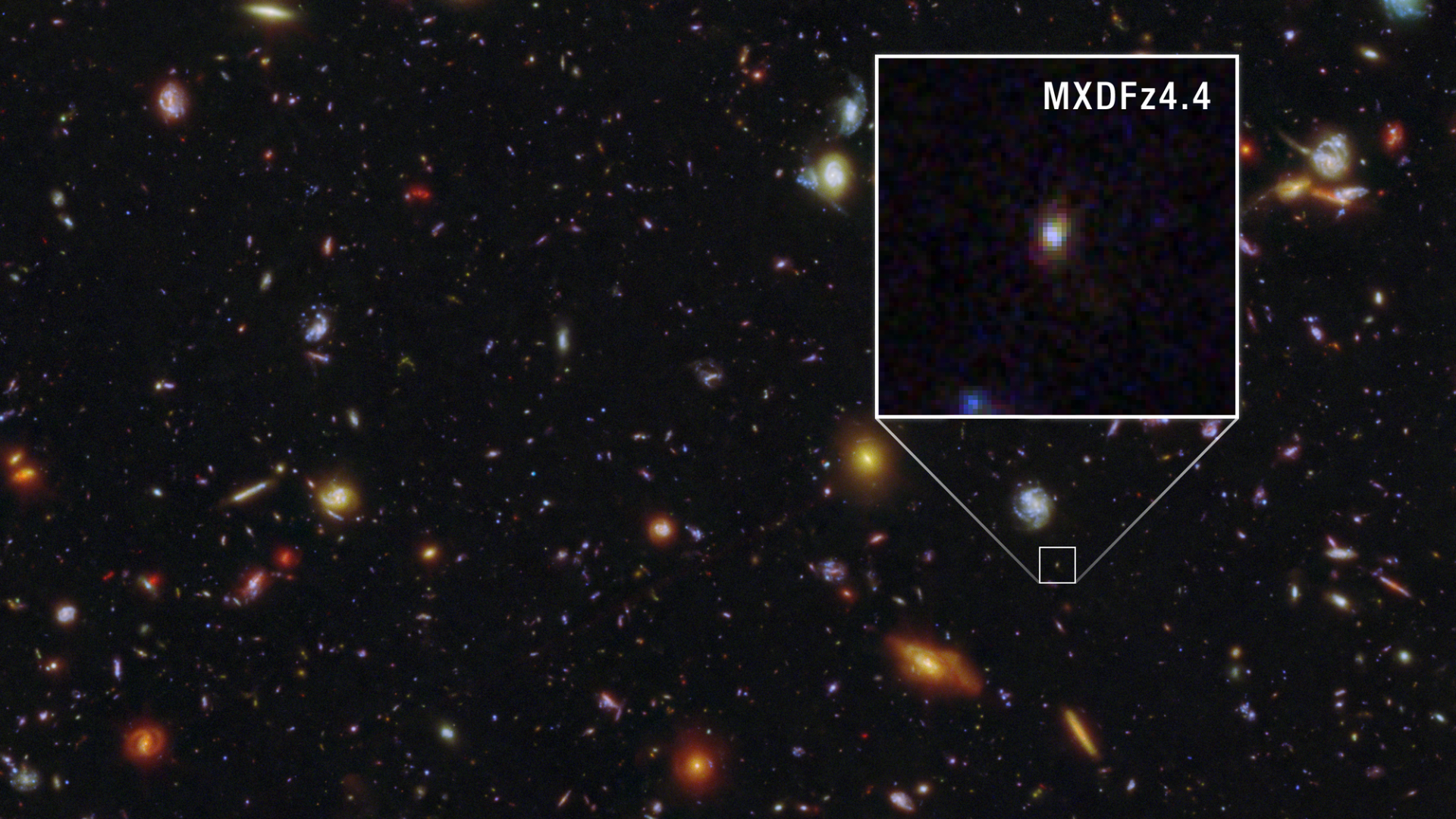
Hubble telescope images distant galaxy that helped clear the early universe's hydrogen fog
The Hubble Space Telescope has imaged a distant galaxy (MXDFz4.4) that existed 1.4 billion years after the Big Bang. This galaxy contains a
 space.com·18h ago
Hubble telescope images distant galaxy that helped clear the early universe's hydrogen fog
The Hubble Space Telescope has imaged a distant galaxy (MXDFz4.4) that existed 1.4 billion years after the Big Bang. This galaxy contains a
space.com·18h ago
Echo mapping technique reveals hints of dark matter clusters around supermassive black holes
Astronomers using a technique called echo mapping have found evidence suggesting that supermassive black holes, including Sagittarius A* at
 space.com·4d ago
New study keeps dark matter explanation alive for Milky Way's mysterious gamma-ray glow
New research on the Galactic Center Excess — a mysterious gamma-ray glow from the Milky Way's core — fails to rule out self-annihilating dar
space.com·3d agoComments
Sign in to join the conversation.
No comments yet. Be the first.