
























Free-Floating Neptunes May Not Be So Alone: Study Reveals Complex Planetary Family Histories
By
Ben Cassese
Summary
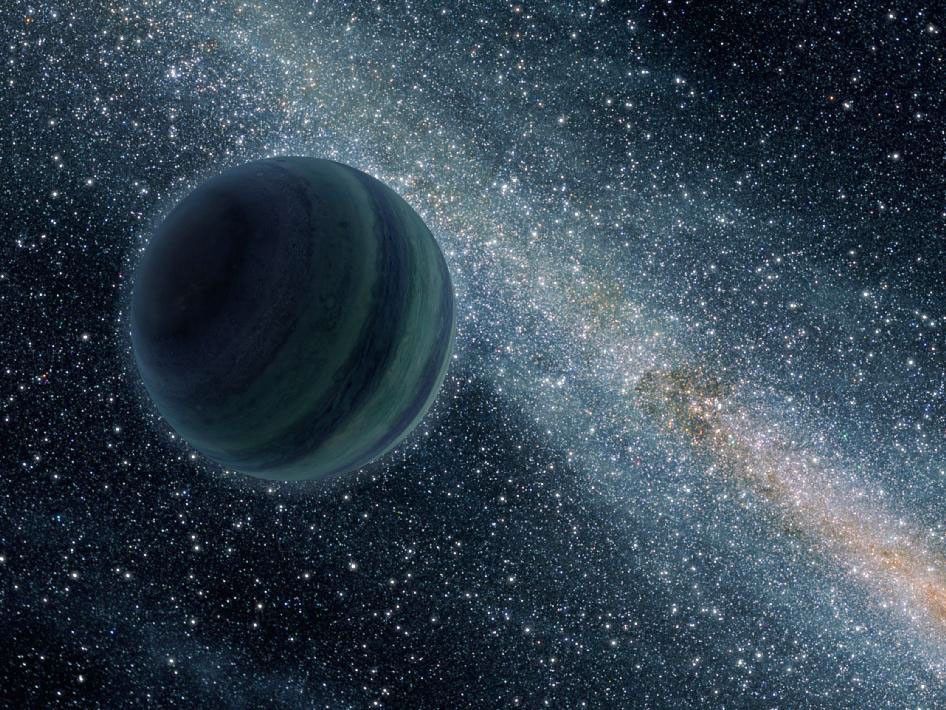
Gravitational microlensing surveys have revealed an unexpectedly high number of Neptune-sized exoplanets that appear to be free-floating, with no host star nearby. However, new research suggests these planets may not be truly isolated. Instead, they could have been ejected from their original planetary systems through gravitational interactions, or they might belong to distant, faint binary star systems that are difficult to detect. The study explores the complex family dynamics of planetary systems, suggesting that what looks like a lonely planet may actually have a complicated history involving planetary migration, scattering, and ejection events. This challenges the initial impression of a galaxy full of orphaned Neptunes and points to more intricate planetary system architectures.
Source
 bskyFree-Floating Neptunes May Not Be So Alone: Study Reveals Complex Planetary Family Historiesaasnova.org
Key quotes
· 3 pulledThere are simply too many Neptune-like exoplanets in our galaxy.
First impressions might be deceiving, however, and that at least some of these planets might not be so alone: they just have a complicated family history.
The galaxy seems to be full of free-range Neptunes, but a closer look reveals some complicated family dynamics in planetary systems.
You might also wanna read

NASA's TESS discovers unusual exoplanet system shaped by a brown dwarf
Scientists using NASA's TESS spacecraft have discovered an unusual exoplanet system called TOI-201, which is described as "improbable" due t
 space.com·3d ago
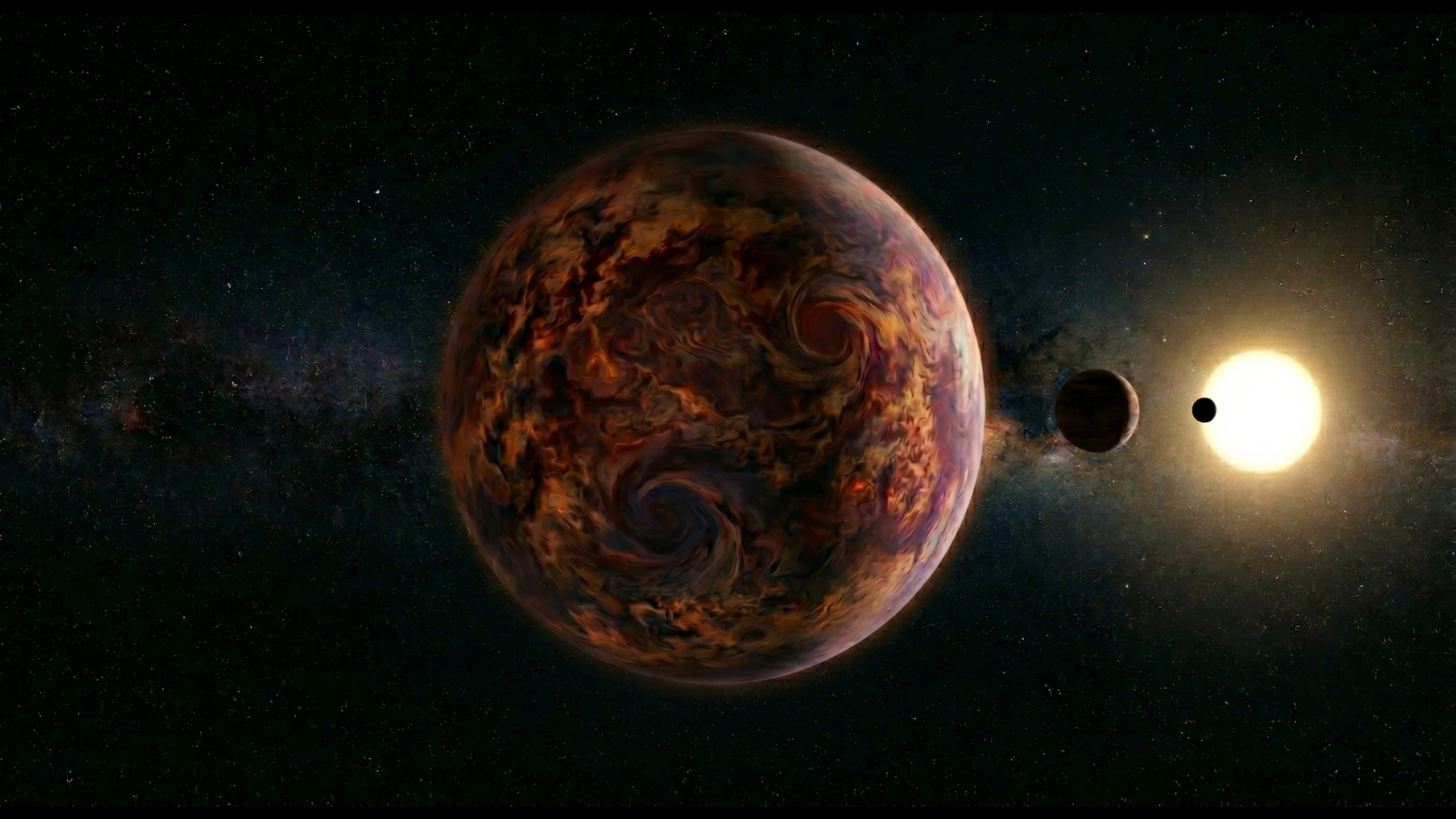
NASA's TESS discovers unusual exoplanet system shaped by a brown dwarf
Scientists using NASA's TESS spacecraft have discovered an unusual exoplanet system called TOI-201, which is described as "improbable" due t
space.com·3d ago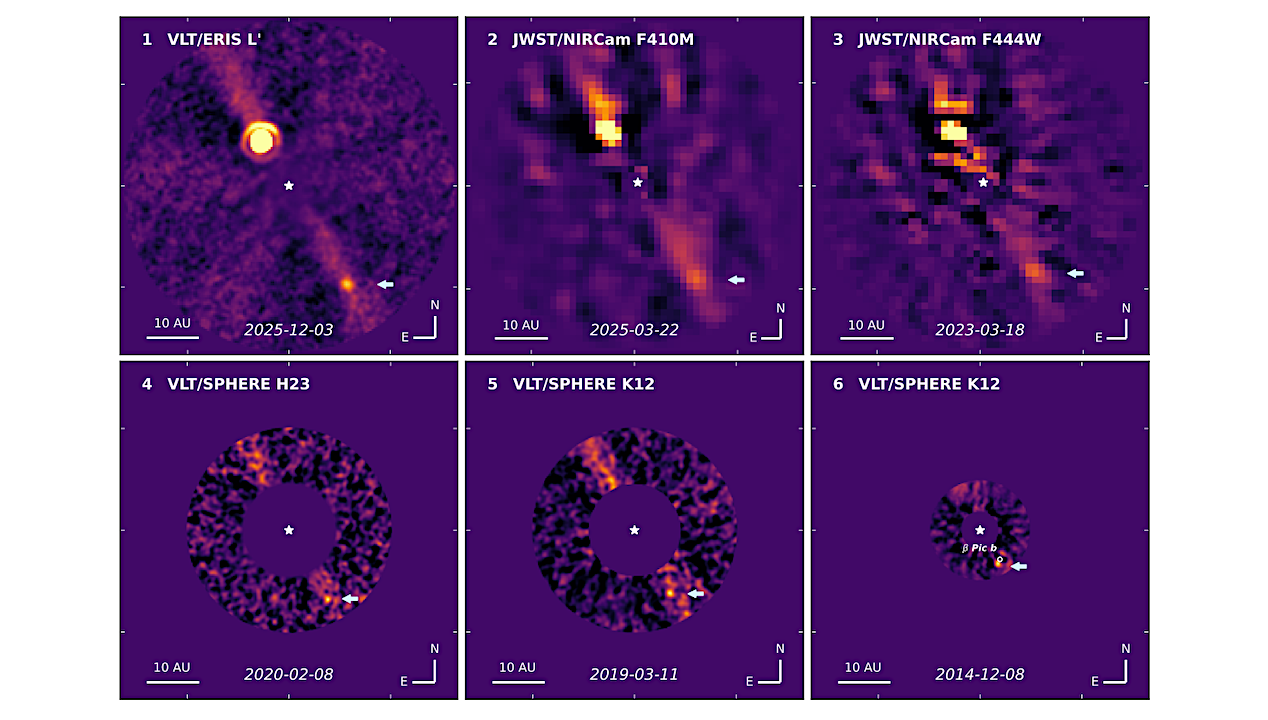
Astronomers Directly Image Third Giant Exoplanet in β Pictoris System
Astronomers report the direct imaging discovery of β Pictoris d, a third exoplanet in the β Pictoris system. The planet was detected using n
 astrobiology.com·2d ago
NASA's Backyard Worlds: Binaries Project Enlists Volunteers to Find Brown Dwarf-Star Pairs
NASA's Backyard Worlds: Binaries project invites volunteers to help discover brown dwarf-star pairs using images from the WISE space telesco
 go.nasa.gov·23h ago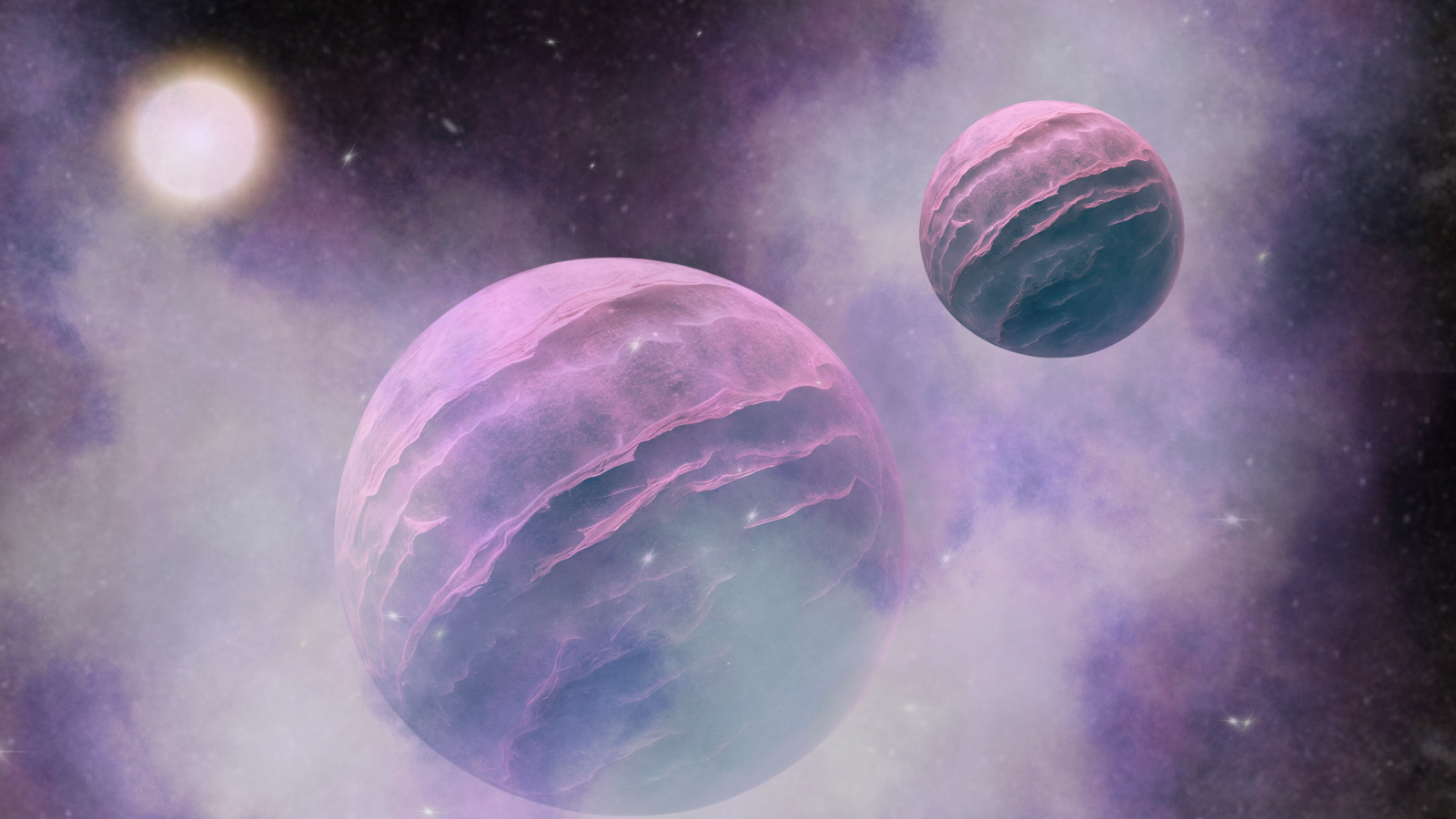
Astronomers discover two ultra-low-density 'super-puff' exoplanets orbiting dwarf star TOI-791
Astronomers have discovered two "super-puff" exoplanets, TOI-791 b and TOI-791 c, orbiting the dwarf star TOI-791. These are the lightest ga
 space.com·23h ago
Astronomers discover two ultra-low-density 'super-puff' exoplanets orbiting dwarf star TOI-791
Astronomers have discovered two "super-puff" exoplanets, TOI-791 b and TOI-791 c, orbiting the dwarf star TOI-791. These are the lightest ga
space.com·23h ago
Rare Object 2020 VN40 Found in Sync with Neptune
A rare object, 2020 VN40, has been discovered far beyond Neptune, moving in sync with the giant planet, providing insights into the behavior
pweb.cfa.harvard.edu·11mo ago
VLT Study Reveals Dramatic Nickel Emission and CN Outgassing in Interstellar Comet 3I/ATLAS
Astronomers using the Very Large Telescope (VLT) have conducted spectroscopic observations of interstellar comet 3I/ATLAS (C/2025 N1) as it
 arxiv.org·10mo ago
Comments
Sign in to join the conversation.
No comments yet. Be the first.