
























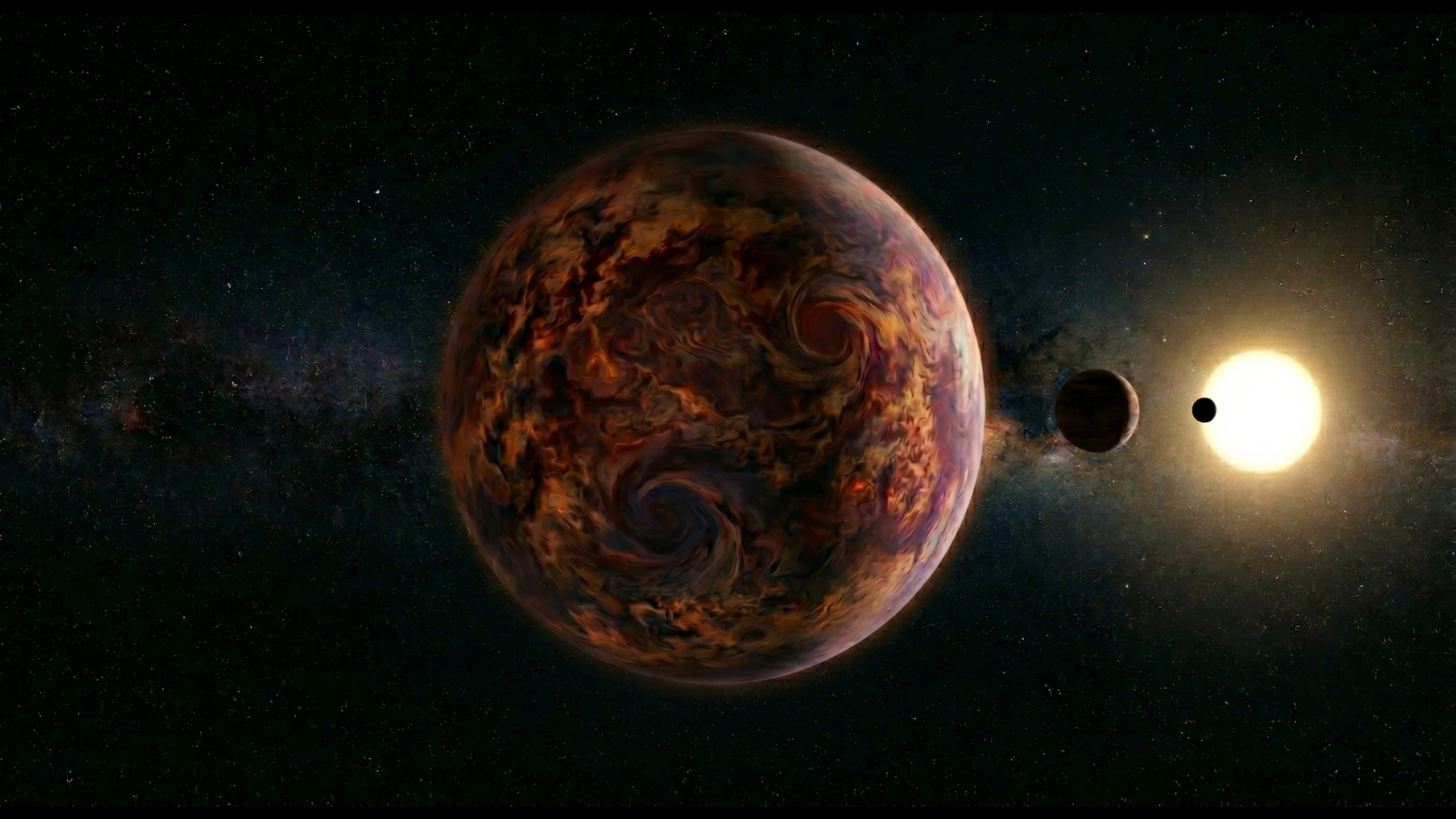
NASA's TESS discovers unusual exoplanet system shaped by a brown dwarf
By
Robert Lea
Summary
Scientists using NASA's TESS spacecraft have discovered an unusual exoplanet system called TOI-201, which is described as "improbable" due to its wonky arrangement. The system's strange configuration is caused by a brown dwarf (failed star) designated TOI-201 c, which formed from a collapsing cloud of gas and dust but failed to gather enough mass to trigger nuclear fusion. This discovery provides crucial insights into how planets can form even around massive, eccentric objects, potentially changing our understanding of planet formation mechanisms.
Source
 Twitter / XNASA's TESS discovers unusual exoplanet system shaped by a brown dwarfspace.com
Key quotes
· 3 pulledThis discovery provides a crucial insight into how planets form even around massive, eccentric objects.
Using NASA's exoplanet-hunting spacecraft TESS, scientists have discovered a planetary system that scientists are calling 'improbable.'
It could change how we think about the mechanisms behind planet formation.
You might also wanna read

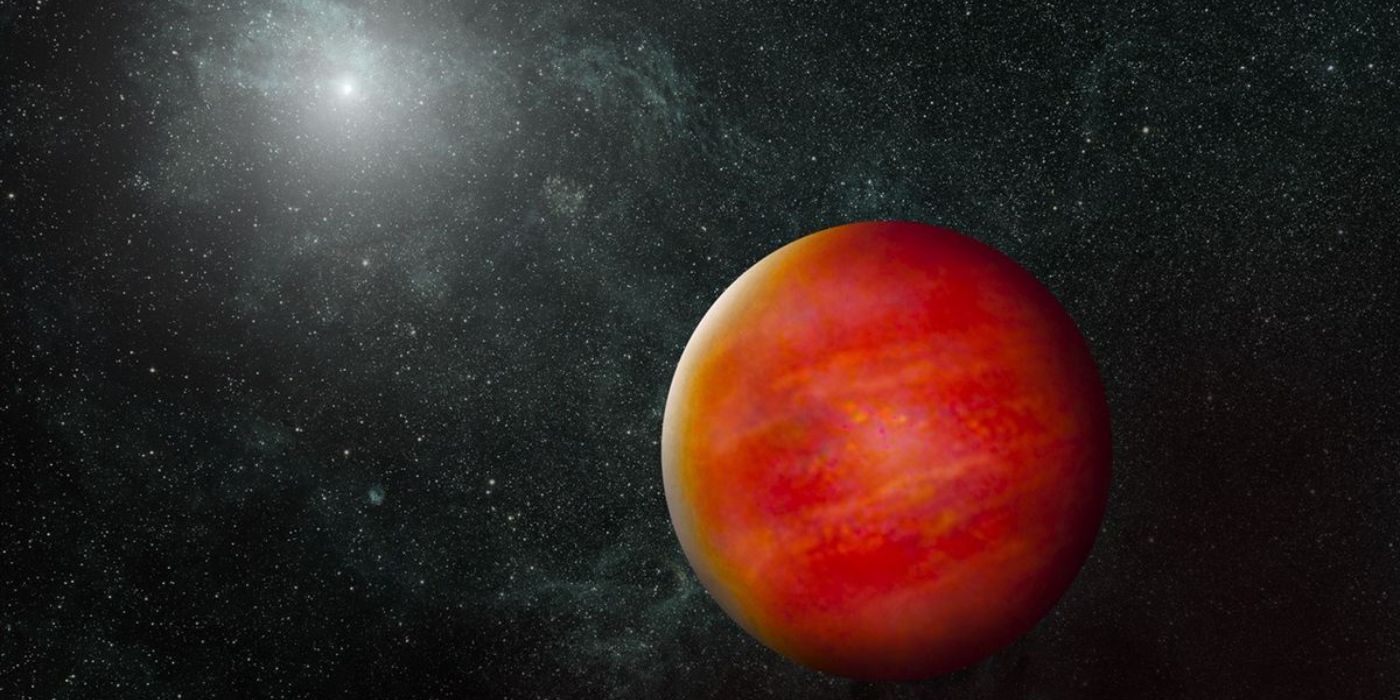
Brown Dwarfs: The Celestial Objects That Are Neither Stars Nor Planets
This article discusses brown dwarfs — celestial objects that blur the line between the lowest-mass stars and the largest gas giant planets.
 seti.org·5d ago
Isotopic Evidence for a Cold and Distant Origin of the Interstellar Object 3I/ATLAS
 arxiv.org·3mo ago
NASA Discovers Exoplanet HD 101581 b With Conditions That Could Support Rocks
NASA researchers announced the discovery of exoplanet HD 101581 b, which has conditions that could potentially support rocks. The planet's w
 The Onion·5mo ago
New imaging technique combines reference-star and angular differential imaging to reveal faint exoplanets and debris disks
This guest post by Elise Seaward explains a new high-contrast imaging technique that combines reference-star differential imaging (RDI) and
 astrobites.org·1d ago
NASA Discovers Sugars and Unique Compounds in Asteroid Bennu Samples
NASA's OSIRIS-REx mission has delivered asteroid Bennu samples containing three significant discoveries: sugars essential for biology, a pre
 nasa.gov·6mo ago
JWST Reveals WASP-39b Has Cloudy Mornings and Clear Evenings, Solving Longstanding Exoplanet Mystery
Astronomers using the James Webb Space Telescope (JWST) have developed a novel observation technique to study the exoplanet WASP-39b, a hot
 eos.org·8d ago
Comments
Sign in to join the conversation.
No comments yet. Be the first.