
























Arp 299: Black Holes in Colliding Galaxies
3d ago· 1 min readNews
Source
Twitter / XArp 299: Black Holes in Colliding Galaxiesunfolding.inArp 299: Black Holes in Colliding Galaxies Image Credit: NASA, JPL-Caltech, GSFC, Hubble, NuSTARExplanation: Deep in the cosmos, two galaxies are locked in a slow-motion cosmic demolition derby that has been raging for millions of years. Their dramatic clash has triggered a spectacular fireworks show of star formation and, at their hearts, two supermassive black holes are preparing for an eventual merger of epic proportions.This is Arp 299 — a chaotic pair of colliding galaxies where gravity is reshaping everything in its path. To unravel the mystery of the intense radiation blasting from the system, astronomers aimed two of NASA’s most powerful X-ray eyes at it: the NuSTAR and Chandra space telescopes. The result? A stunning multi-wavelength portrait that reveals the violent drama this image, Hubble’s crisp visible-light view shows the distorted spirals and tidal tails of the ongoing merger. Overlaid in dramatic false-color (red, green, and blue) is the high-energy X-ray glow captured by NuSTAR, highlighting where the real action is happening.The big surprise? Only one of the two central black holes is currently putting on a show. The right-hand galaxy’s black hole is greedily devouring surrounding gas and dust, heating it to millions of degrees and blasting out powerful X-rays just outside its event horizon. The other black hole remains relatively quiet for now. In roughly a billion years, these two galaxies will finally merge into one majestic giant, and their supermassive black holes will spiral together and coalesce in one of the most energetic events in the universe. But the story won’t end there — the newly formed galaxy will likely continue attracting new cosmic companions, keeping the cycle of galactic collisions alive.Arp 299 offers us a front-row seat to one of the universe’s most spectacular processes: how galaxies and their monstrous black holes grow and evolve through cosmic violence and gravitational dance.
You might also wanna read

NSF VLA Reveals Supermassive Black Holes Emit Radio "Burps" Years After Destroying Stars
Astronomers using the NSF Very Large Array have discovered that supermassive black holes continue to emit radio waves years after tearing ap
 public.nrao.edu·22d ago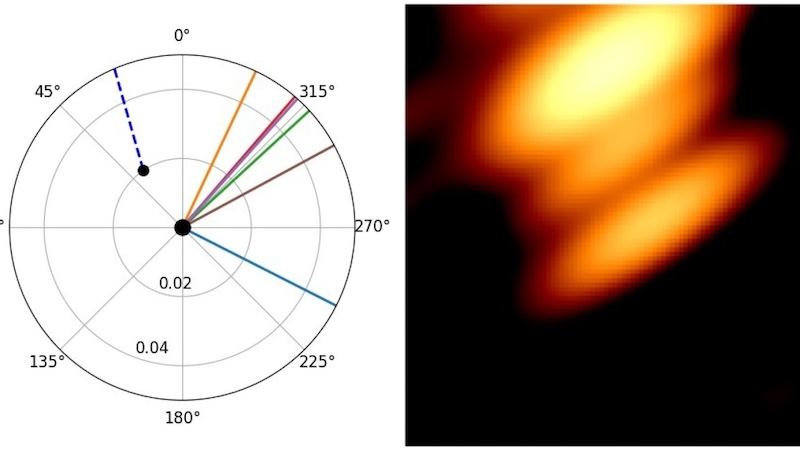
First Image Captured of Two Black Holes Orbiting Each Other in Distant Quasar
Scientists have captured the first confirmed image of two black holes orbiting each other in quasar OJ287, located five billion light-years
 helsinkitimes.fi·8mo ago
Black hole collisions may follow entropy law, offering simpler remnant predictions
Phys·8h ago

A nearby black hole as a window into the early universe
Phys·3d ago
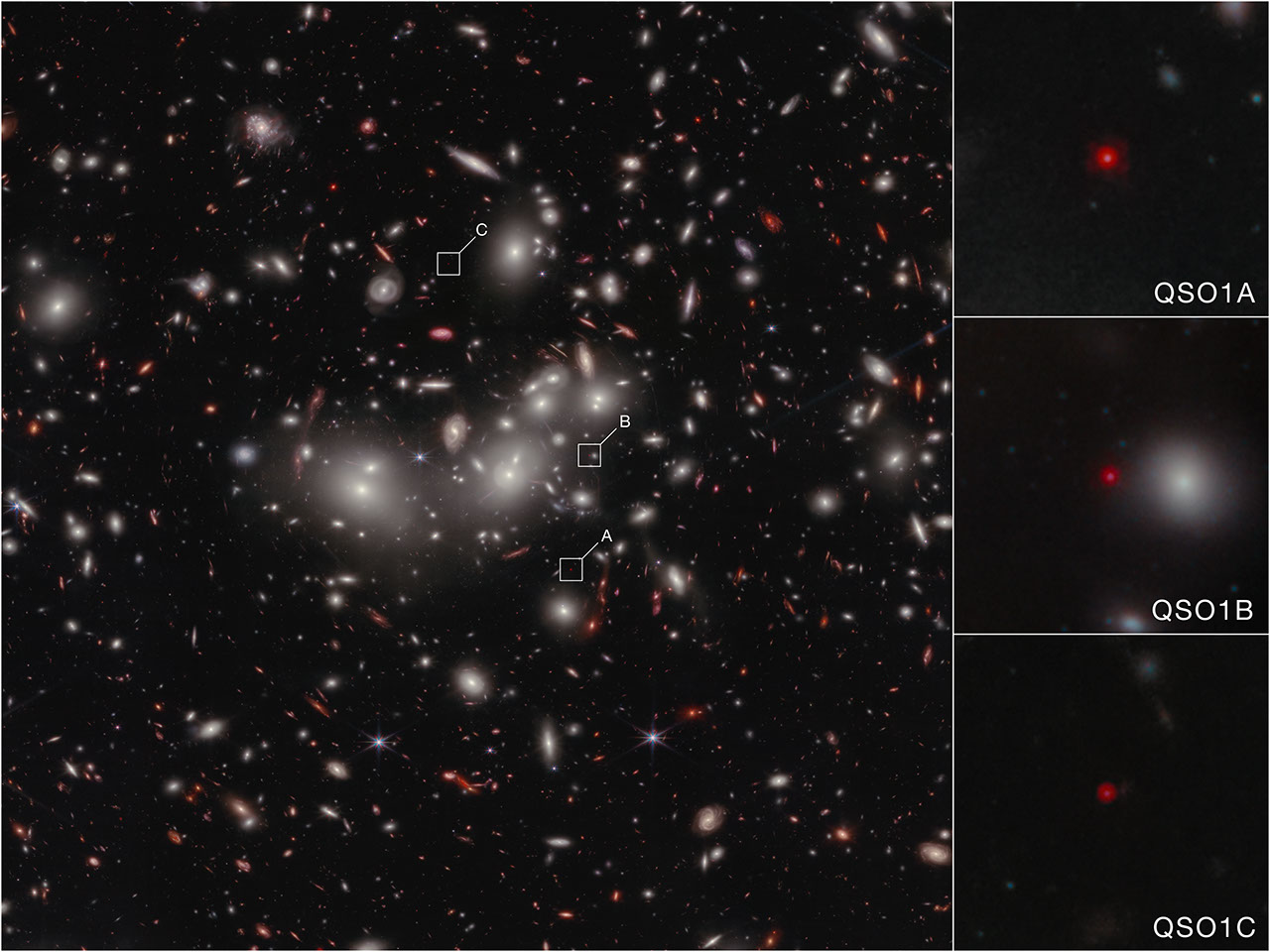
NASA's Webb Telescope Detects Black Hole That Formed Before Its Host Galaxy, Challenging Cosmic Evolution Theories
Researchers using NASA's James Webb Space Telescope have detected a massive black hole in the early universe that appears to have formed bef
 science.nasa.gov·1mo ago
Astronomers Discover Massive Black Hole Merger Defying Expectations
Astronomers detect the most colossal black hole merger known to date, producing a gigantic black hole about 225 times the mass of the Sun.
gizmodo.com·11mo ago
Comments
Sign in to join the conversation.
No comments yet. Be the first.