
























Black hole collisions may follow entropy law, offering simpler remnant predictions
7h agoen
Source
PhysBlack hole collisions may follow entropy law, offering simpler remnant predictionsphys.orgWhen two black holes orbit each other, they eventually spiral inward and collide in one of the most violent phenomena in the universe. The event is so energetic that it significantly distorts the universe around it. It emits gravitational waves—ripples in the fabric of spacetime—that are strong enough to be detected with precision instruments on Earth even when they originate billions of light-years away.
You might also wanna read
Black Holes From the crushing grip of gravity to the edge of known physics, black holes are the Universe’s most extreme objects. They warp spacetime, devour stars, launch cosmic jets, and challenge ou
itself.here·20d ago

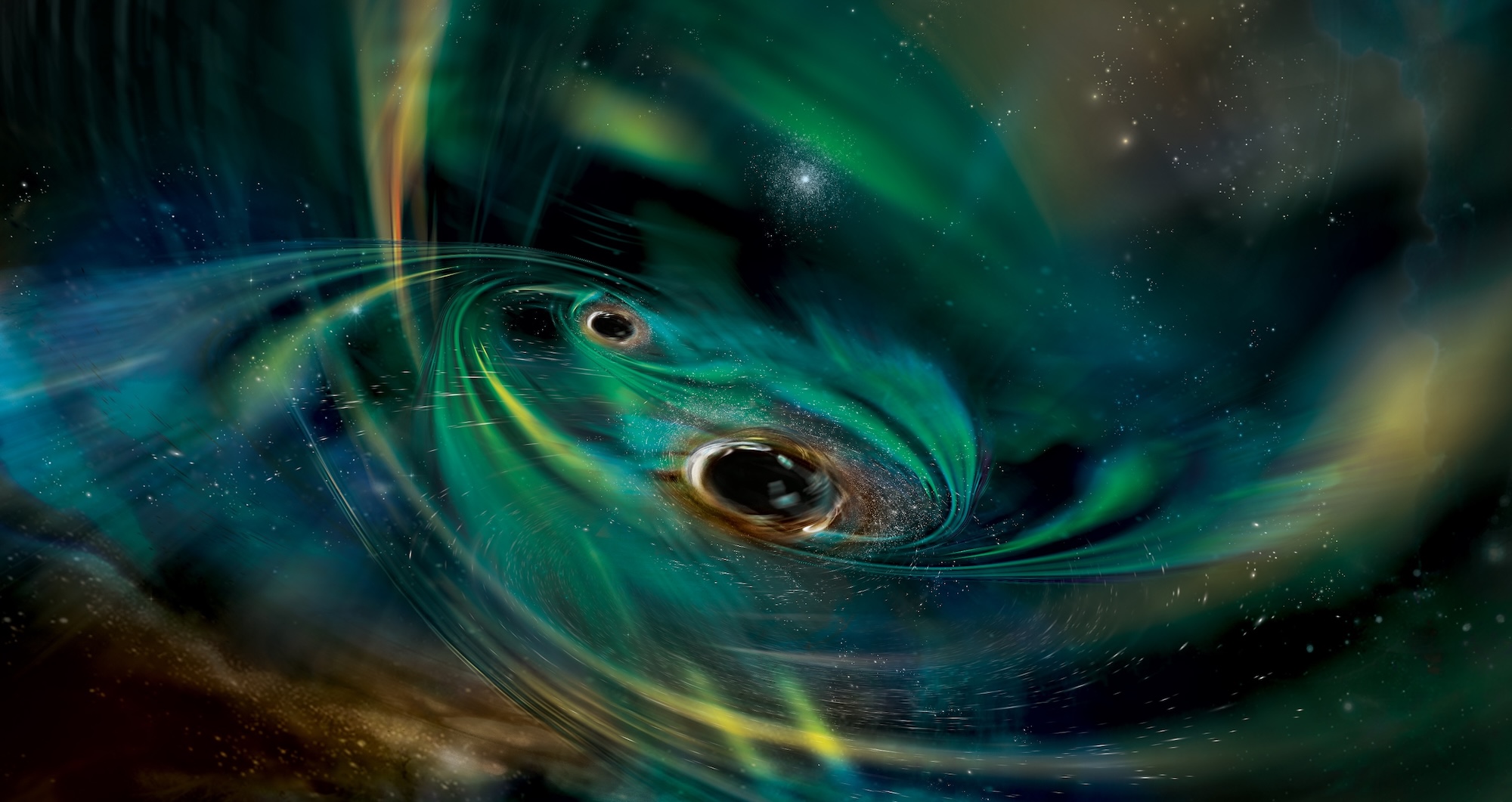
Study Suggests Most Black Hole Mergers Occur in Triple Star Systems
Recent research suggests that most stellar-mass black hole mergers occur in triple systems, where a close inner binary black hole pair is or
 aasnova.org·1mo ago
Astrophysicists Test Einstein's 'No-Hair Theorem' on Black Holes Using Collision Data
Astrophysicists are testing Einstein's 'no-hair theorem' which states that black holes are defined only by mass and spin, with no other dist
 quantamagazine.org·10mo ago
Arp 299: Black Holes in Colliding Galaxies
unfolding.in·3d ago
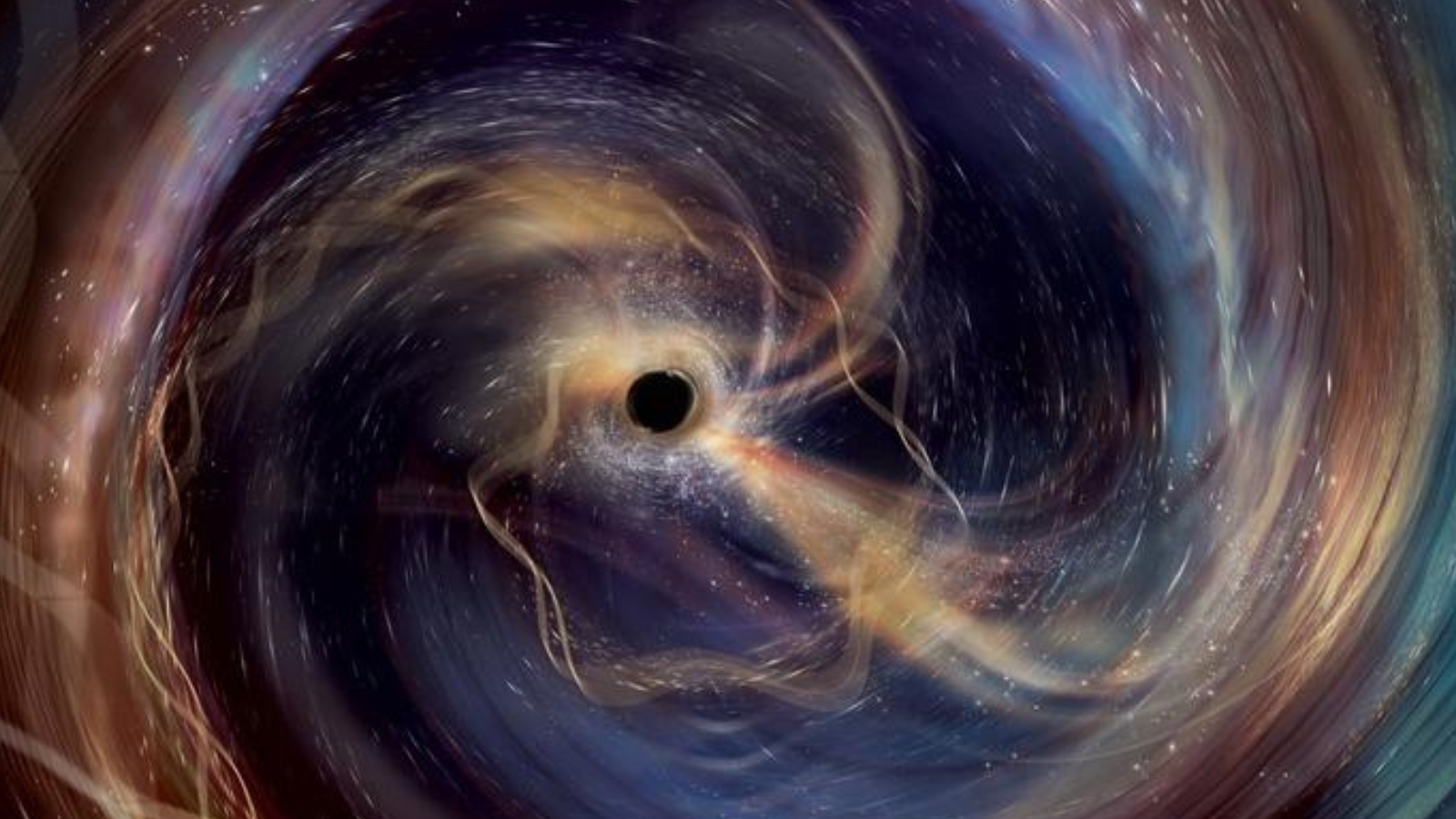
LIGO Gravitational Wave Detector Confirms Einstein and Hawking Theories Through Black Hole Collision Observations
The Laser Interferometer Gravitational-Wave Observatory (LIGO) has confirmed key predictions from Albert Einstein, Stephen Hawking, and Roy
 space.com·10mo ago
Exploring Cauchy horizons: The black hole boundary where physics breaks down and causality reverses
This article explores the concept of Cauchy horizons inside certain types of black holes. It explains how at this theoretical boundary, the
 newscientist.com·1mo ago
Comments
Sign in to join the conversation.
No comments yet. Be the first.