All Topics
All Topics
Technology
Technology
AI
AI
Business
Business
Entertainment
Entertainment
News
News
Programming
Programming
Security
Security
Science
Science
Design
Design
Environment
Environment
Finance
Finance
Crypto
Crypto
Politics
Politics
Sports
Sports
Education
Education
Gaming
Gaming
Art
Art
Music
Music
Health
Health
Books
Books
Food
Food
Travel
Travel
Personal
Personal
Bluesky
Twitter

Black Holes From the crushing grip of gravity to the edge of known physics, black holes are the Universe’s most extreme objects. They warp spacetime, devour stars, launch cosmic jets, and challenge ou

8d ago· 1 min readNews

Source

Twitter / XBlack Holes From the crushing grip of gravity to the edge of known physics, black holes are the Universe’s most extreme objects. They warp spacetime, devour stars, launch cosmic jets, and challenge ouitself.here
Snippet from the RSS feed
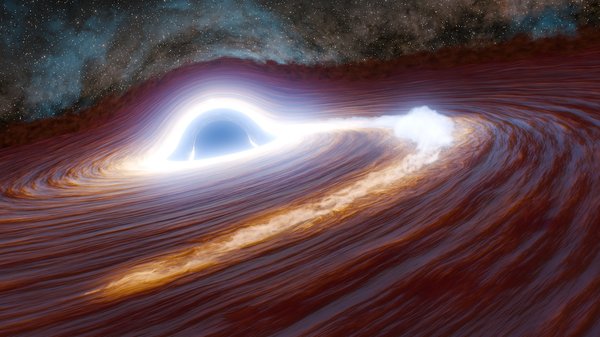
Black Holes From the crushing grip of gravity to the edge of known physics, black holes are the Universe’s most extreme objects. They warp spacetime, devour stars, launch cosmic jets, and challenge our understanding of reality your alphabetical tour through the cosmos’ darkest wonders:A — Accretion Disk A blazing, superheated whirlpool of gas and dust spiraling into a black hole. Friction makes it glow brighter than entire galaxies.B — Binary Black Holes Pairs that orbit each other and eventually merge in cataclysmic events, sending ripples through spacetime detected by LIGO/Virgo.C — Cygnus X-1 The first confirmed stellar-mass black hole, discovered in 1971. It’s about 15 times the Sun’s mass and devours material from a companion star.D — Doppler Boosting Material whipping around a black hole at near-light speed appears brighter on the side moving toward us due to relativistic effects.E — Event Horizon The point of no return. Once anything — even light — crosses this invisible boundary, it can never escape.F — Frame Dragging A spinning black hole drags spacetime around it like a cosmic whirlpool (the Lense-Thirring effect).G — Gravitational Waves Ripples in spacetime produced when black holes collide, first directly detected in 2015 — a triumph of Einstein’s predictions.H — Hawking Radiation Tiny black holes may slowly evaporate by emitting radiation named after Stephen Hawking. Larger ones do this incredibly slowly. — Intermediate-Mass Black Holes The elusive “missing link” between stellar and supermassive black holes, with masses of hundreds to thousands of Suns.J — Jets Powerful beams of particles and radiation blasted out at near-light speed from the poles of feeding black holes.K — Kerr Black Hole A realistic rotating black hole (named after Roy Kerr), featuring an ergosphere where spacetime is dragged so violently that nothing can stand still.L — LIGO Laser Interferometer Gravitational-Wave Observatory — the instrument that “hears” black hole mergers across the Universe.M — M87* The first black hole ever imaged (2019). Its supermassive shadow is 6.5 billion times the Sun’s mass, 55 million light-years N — No-Hair Theorem Black holes are described by just three properties: Mass, Spin, and Charge. Everything else (“hair”) disappears.O — Observational Evidence We now have direct images, gravitational waves, orbiting stars, and X-ray data proving black holes are real.P — Photon Sphere A region outside the event horizon where light can orbit the black hole in unstable circles.Q — Quasars The ultra-bright cores of distant galaxies powered by supermassive black holes consuming enormous amounts of material.R — Relativity Einstein’s general theory of relativity predicts black holes and has been spectacularly confirmed by them.S — Singularity The infinitely dense core at the center where our current physics breaks down. A point of zero volume and infinite curvature. T — Tidal Forces / Spaghettification The extreme stretching that tears objects apart near a black hole — you’d be stretched into a long, thin noodle.U — Ultramassive Black Holes The giants like TON 618, weighing up to 66 billion solar masses — some of the largest objects in the known Universe.V — Virtual Particles Quantum pairs near the event horizon that can lead to Hawking radiation when one falls in and the other escapes.W — Wormholes Theoretical tunnels through spacetime (possibly connecting black holes), though none have been observed and they may not be stable.X — X-rays Emitted by superheated gas in accretion disks — how many black holes were first detected.Y — Youthful Mergers Black holes formed early in the Universe that grew rapidly, challenging models of how supermassive ones formed so quickly.Z — Zenith of Gravity Where gravity reaches its absolute extreme — the ultimate triumph of curvature over everything else in the cosmos.

You might also wanna read

Astronomers Discover Most Distant and Powerful Black Hole Flare from Star Destruction

Astronomers have discovered the most powerful and distant flare of energy ever recorded from a supermassive black hole, likely caused by a m

caltech.edu·7mo ago

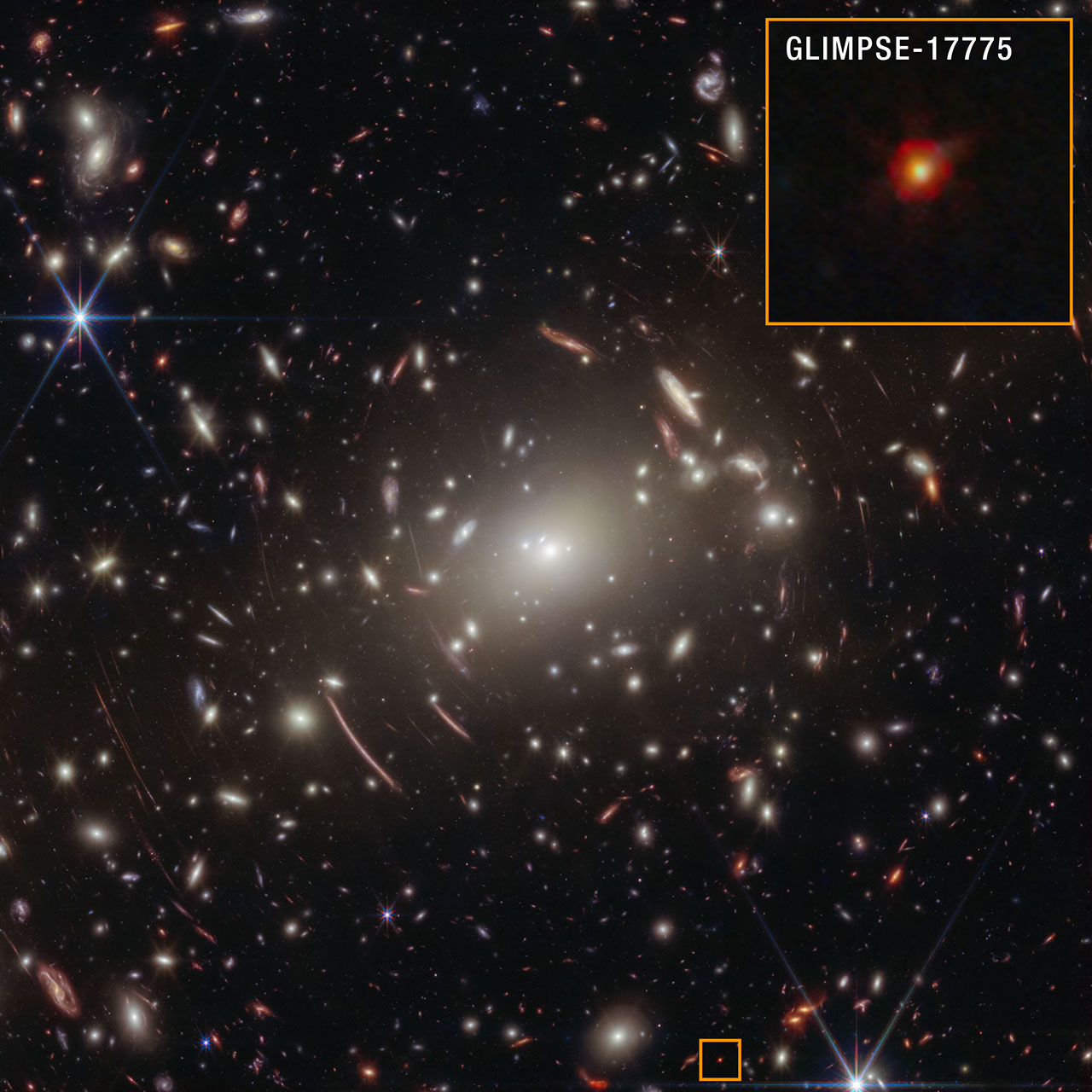
NASA's Webb Telescope Provides Strongest Evidence Yet for 'Black Hole Stars' in Early Universe

Astronomers using NASA's James Webb Space Telescope have identified a "little red dot" galaxy called GLIMPSE-17775, whose spectrum provides

science.nasa.gov·15d ago

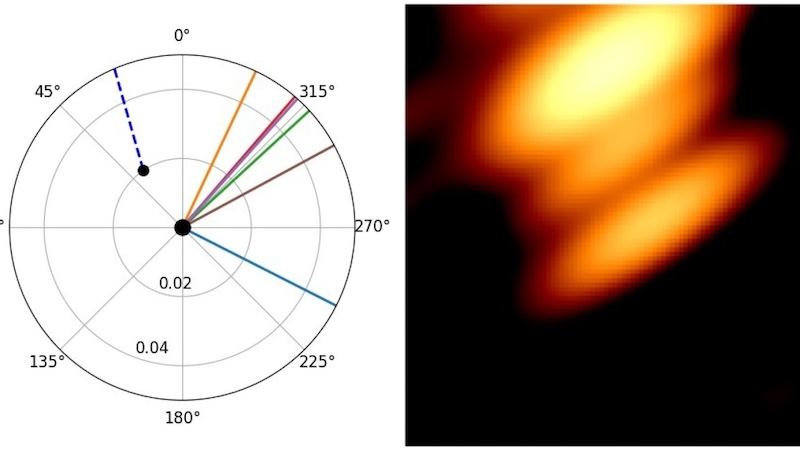
First Image Captured of Two Black Holes Orbiting Each Other in Distant Quasar

Scientists have captured the first confirmed image of two black holes orbiting each other in quasar OJ287, located five billion light-years

helsinkitimes.fi·8mo ago

NASA's Webb Telescope Detects Black Hole That Formed Before Its Host Galaxy, Challenging Cosmic Evolution Theories

Researchers using NASA's James Webb Space Telescope have detected a massive black hole in the early universe that appears to have formed bef

science.nasa.gov·23d ago

Astronomers Discover Massive Black Hole Merger Defying Expectations

Astronomers detect the most colossal black hole merger known to date, producing a gigantic black hole about 225 times the mass of the Sun.

gizmodo.com·11mo ago
Astrophysicists Test Einstein's 'No-Hair Theorem' on Black Holes Using Collision Data

Astrophysicists are testing Einstein's 'no-hair theorem' which states that black holes are defined only by mass and spin, with no other dist

quantamagazine.org·10mo ago

Comments

Sign in to join the conversation.

No comments yet. Be the first.