





















NASA's Webb Telescope Detects Black Hole That Formed Before Its Host Galaxy, Challenging Cosmic Evolution Theories
By
Marty McCoy

Pulled from the oven just right. Trustworthy, fact-dense, deeply satisfying.
Summary
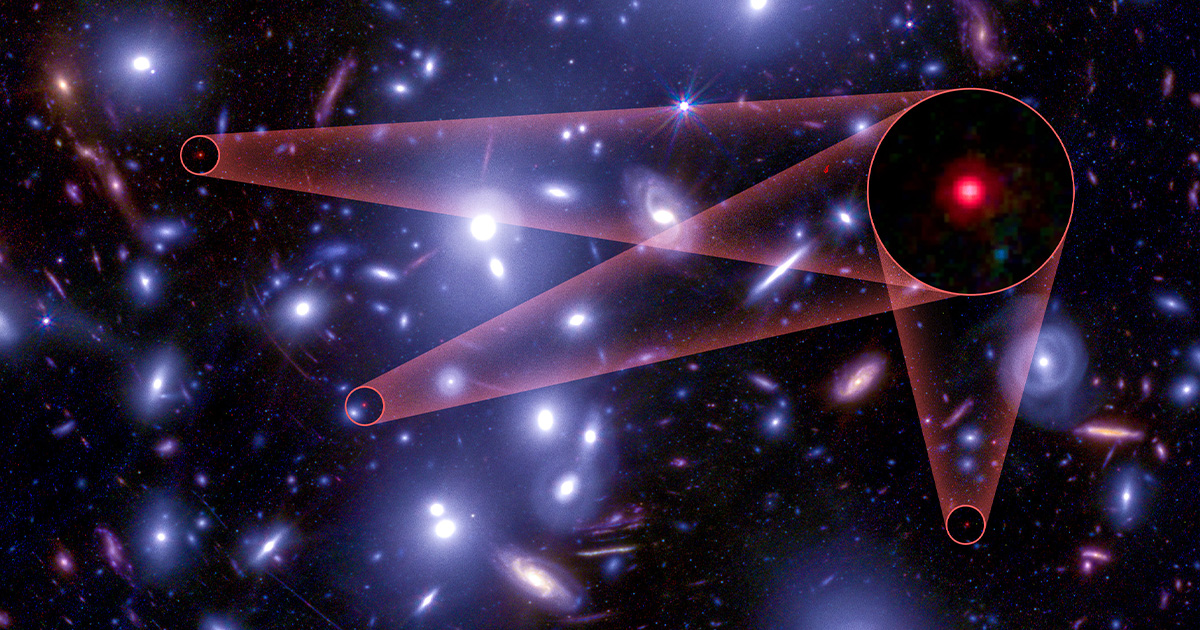
Researchers using NASA's James Webb Space Telescope have detected a massive black hole in the early universe that appears to have formed before its host galaxy. This challenges the long-held scientific assumption that galaxies form first, with black holes emerging later from collapsing stars within them. The discovery suggests black holes may have played a more fundamental role in shaping early galaxies than previously understood, potentially growing from primordial seeds rather than stellar collapse.
Key quotes
· 3 pulledWhich comes first, the galaxy or the black hole? We don't know, but scientists have long thought it could be the galaxy
It's hard to figure out how black holes millions to billions of times the mass of the Sun, thousands of which have now been detected in the early universe, could have grown so quickly from such small seeds
Now, researchers using NASA's James Webb Space Telescope have detected...
You might also wanna read

James Webb Telescope Discovers Massive Isolated Black Hole in Early Universe
The James Webb Space Telescope has discovered an enormous 'naked' black hole in the early universe that weighs 50 million solar masses and a
 quantamagazine.org·8mo ago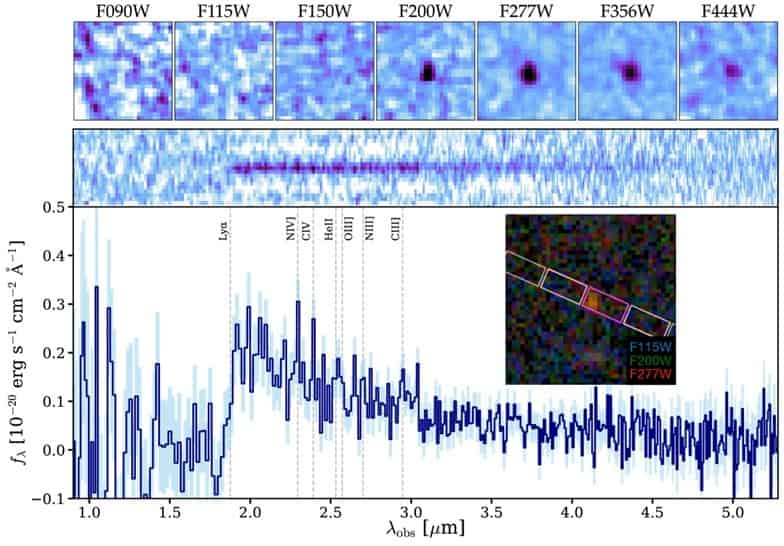
JWST Confirms Discovery of Exceptionally Luminous Galaxy at z=14.44, 280 Million Years After Big Bang
The James Webb Space Telescope has confirmed the discovery of MoM-z14, an exceptionally luminous galaxy that existed just 280 million years
 astro.theoj.org·3mo ago
Discovery of a 36 Billion Solar Mass Black Hole in the Cosmic Horseshoe Gravitational Lens
The article discusses the discovery of a supermassive black hole (SMBH) with a mass of 36 billion solar masses at the center of the Cosmic H
 academic.oup.com·9mo ago