
























Why generative AI struggles with static malware analysis: scale and adversarial limits
A new paper argues that static malware analysis — examining a program's contents on disk to determine if it's malicious — remains one of the hardest domains for generative AI to work effectively. The article highlights the scale problem: a single malware sample can contain more data than entire benchmark datasets like ImageNet. It explores the technical and adversarial limits slowing real-world adoption of AI in cybersecurity, noting that despite vendors shipping AI features, results inside security teams tell a quieter story of stalled progress.
Key quotes
A new paper argues that static analysis of software, the job of deciding whether a program is malicious by examining its contents on disk, remains one of the hardest places to make generative AI work.
Standard datasets in other fields look small next to a single security sample.
ImageNet, the benchmark that helped launch deep learning in compute
From the article
You might also wanna read


Comparative Analysis of Generative AI Image Models: Evaluating Prompt Adherence and Performance
This article presents a comparative analysis of state-of-the-art generative AI image models, evaluating their performance on specific prompt
 genai-showdown.specr.net·8mo ago
Comparative Analysis of State-of-the-Art Generative AI Image Models
This article presents a comparative analysis of state-of-the-art generative AI image models, evaluating their performance on specific prompt
genai-showdown.specr.net·8mo ago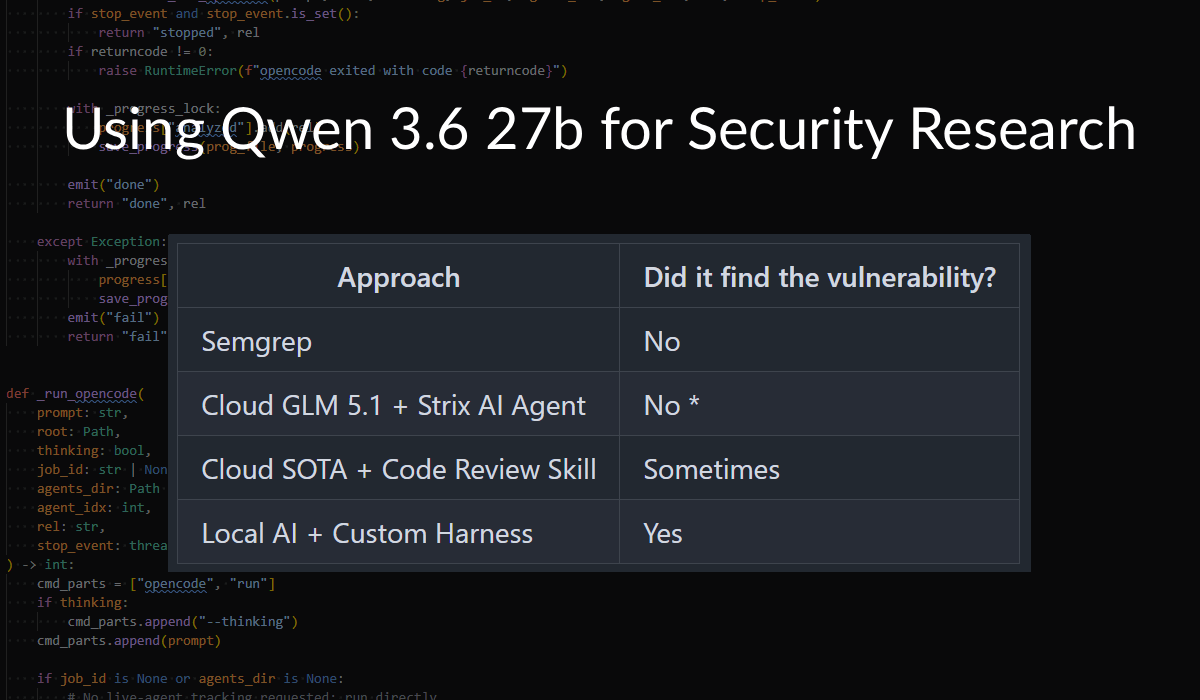
Benchmarking Local AI Models for Cybersecurity Vulnerability Detection
The article evaluates the effectiveness of local AI models for cybersecurity penetration testing and vulnerability research. The author benc
 projectblack.io·10d ago
Critical Assessment: Generative AI's Current Limitations and Unfulfilled Promises
The article presents a critical assessment of generative AI's current state, arguing that large language models (LLMs) cannot be trusted, re
 garymarcus.substack.com·5mo ago
An investigation into code injection vulnerabilities caused by generative AI
Understanding the Mathematical Principles of Generative Adversarial Networks
This article provides a technical explanation of Generative Adversarial Networks (GANs), focusing on the mathematical principles behind thes
Comments
Sign in to join the conversation.
No comments yet. Be the first.