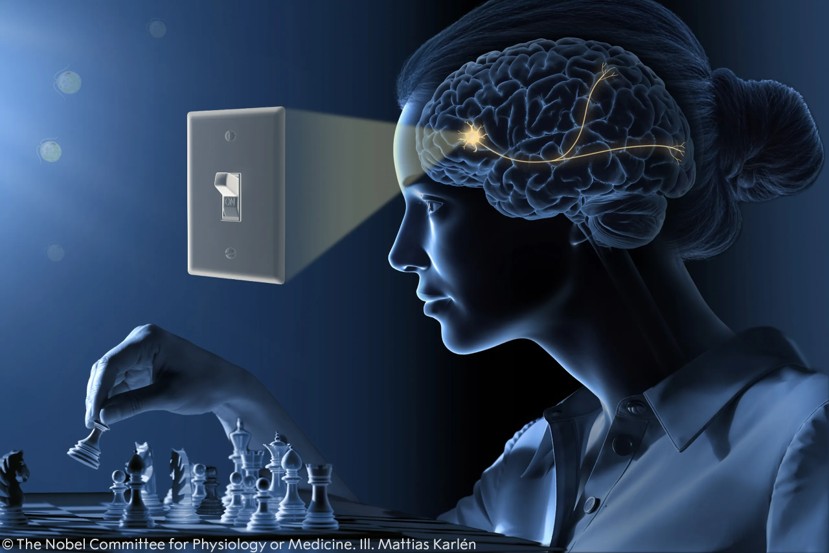
The Conversation frames the Nobel as the payoff for a long arc of innovation: first scientists visualized the brain, then measured it, and now they can control it with light. The piece emphasizes what optogenetics means for future treatments.
scienceTuesday, October 6
Optogenetics wins the 2026 Nobel Prize
The 2026 Nobel Prize in Physiology or Medicine went to optogenetics, the technique that lets scientists control neurons with light. It's a rare moment where a single discovery reshapes an entire field's future. The rest of today's science news feels like quiet work by comparison.
Nobel announcement
The day's biggest story is the Nobel Prize, and it's a big one for basic science.
A more technical account of the prize, naming Peter Hegemann and Georg Nagel for discovering channelrhodopsin in algae. It's the foundational work that made optogenetics possible.
Tech and infrastructure
Beyond the prize, the day's stories track how science is quietly reshaping navigation, energy, and materials.
Quantum gyroscopes and miniaturized atomic clocks could replace GPS for navigation in autonomous vehicles and defense. The argument is that quantum sensing is finally becoming practical.
The SeaEly project is testing whether seawater and brackish water can feed electrolyzers directly, bypassing the costly purification step. If it works, it could lower the bar for green hydrogen production.
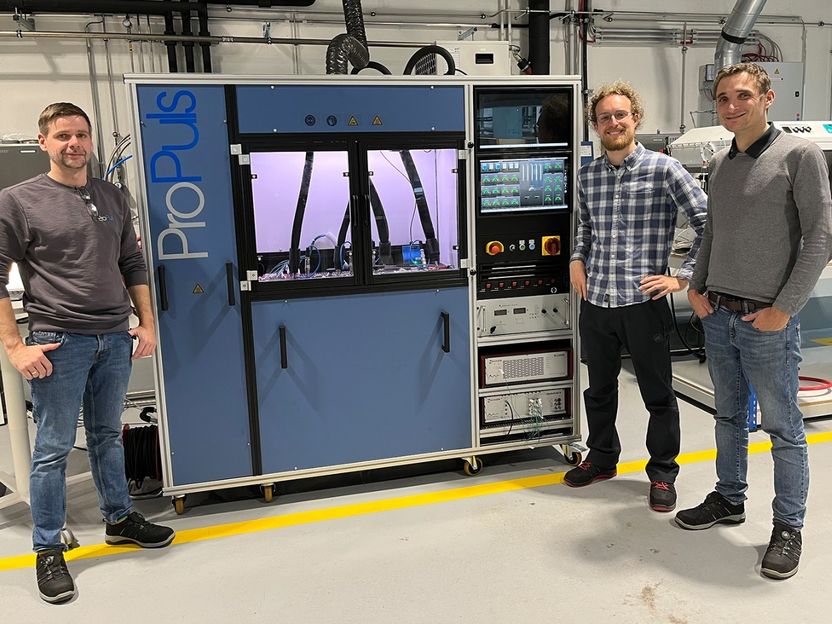
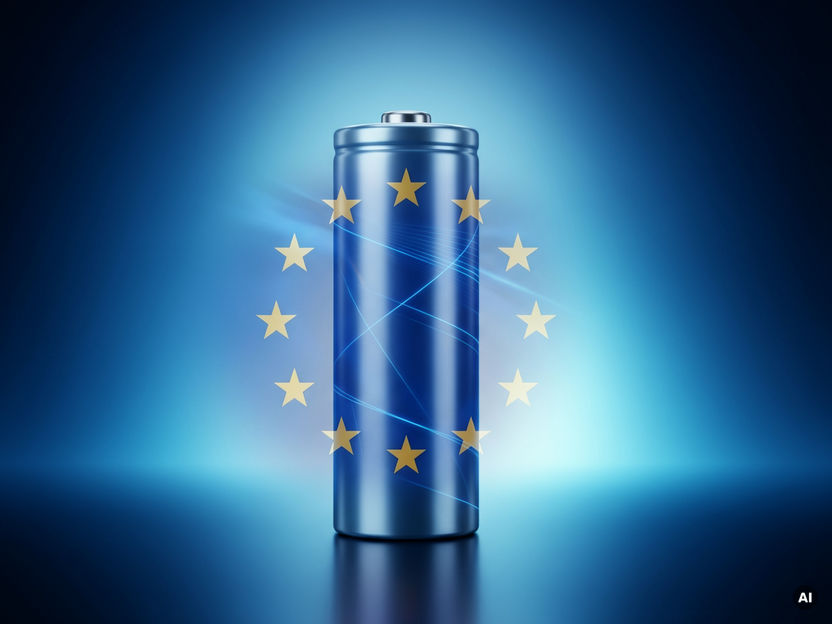
Europe's battery industry is trying to reposition itself amid global competition, leaning on laser manufacturing expertise. The piece reports on a September symposium in Aachen that laid out the strategy.
Brain and behavior
Two other pieces examine how technology interacts with human cognition, for better and worse.
A study shows parents miss children's social cues nearly six times more often when checking phones or smartwatches. The 'technoference' effect is small but cumulative, and may affect language development.
Researchers propose using LLMs to help build cognitive models by treating algorithm discovery as a program refinement problem. The hybrid approach catches mismatches between human hypotheses and behavioral data.
Also today13
The AI Risk Observatory: What Can We Learn from AI Disclosures in Annual Reports About Societal Resilience?arxiv.org
APOD: 2026 October 6 – A Complete Auroral Oval from SMILEscience.nasa.gov
The Beaver Brown Waters of Rupert Bayscience.nasa.gov
“Every project is controversial in some form:” Ceremonial sod turn marks Marinus Link construction ramp upreneweconomy.com.au
Giga-scale Pilbara wind and solar project seeks to pass final planning hurdlereneweconomy.com.au
A Brazilian highway gains worldwide attention as it crosses the rainforest on viaducts 70 metres highwww.yourweather.co.uk
Liquid-Crystal Metalens Switching Enables Dual Bright-Field and Synthesized Edge-Enhancement Modeswww.azom.com
Researchers have proposed a liquid-crystal-integrated polarization-multiplexed metalens that electrically selects two bright-field states and an interference-synthesized edge-enhanced state.
Zinc Oxide Nanoparticle Mazes Demonstrate Path Correlations in Multiple Light Scatteringwww.azom.com
When light travels through a strongly scattering material, such as biological tissue or other disordered opaque media, it follows many different paths and produces a seemingly random speckle pattern.
Top cancer success stories of the past 50 years: A statistical overviewthemondonews.com
9 Source: The post Top cancer success stories of the past 50 years: A statistical overview appeared first on Mondo News .
Astronomers Confirm Discovery of Youngest Exoplanet Ever Knownthemondonews.com
7 ARTICLE: Exploring the Youngest Exoplanet: Elias 2-24b How are planets born and how do they grow? This fundamental question in astronomy has researchers turning their gaze towards “young planets.” In a universe where all the planets in our solar system are approximately 4.6 bil
Then and Now: Sohini Ramachandran Traces Human Genetic History With Biobankswww.the-scientist.com
Population geneticist Sohini Ramachandran uses computational approaches and develops new techniques to explore human genetic variation and diversity.
Postdoc Portrait: Manuel Marte Uses Computational Models to Predict Stroke Recoverywww.the-scientist.com
This postdoctoral researcher uses machine learning and naturalistic speech measures to predict language recovery after stroke.
October's Full Moon 2026: Peak date, city-wise timings and viewing tips for Hunter's Moonstarlust.org
The Hunter Moon will light up the night sky on October 26, peaking at 12:11 a.m. EDT.
More roundups today