
























Cambridge researchers identify NANOG as master gene controlling human embryonic development
By
Michael Le Page
Summary
Researchers at the University of Cambridge have identified NANOG as the master gene that controls embryonic development in humans. Using CRISPR base editing to make precise changes to fertilized eggs, they discovered that NANOG acts as a switch that initiates the developmental program for cells to form a human body. The discovery could improve IVF success rates and advance stem cell research and regenerative medicine.
Source

 bskyCambridge researchers identify NANOG as master gene controlling human embryonic developmentnewscientist.com
Key quotes
· 2 pulledThe other reason we study these early stages of human development is that it has really profound importance for stem cell biology
A better understanding will help stem cell research and regenerative medicine
You might also wanna read

IRCM researchers discover genetic brake proteins that control limb development in mouse embryos
Medical professor Marie Kmita and her team at the IRCM have discovered how "genetic brakes" — specific proteins that switch off certain gene
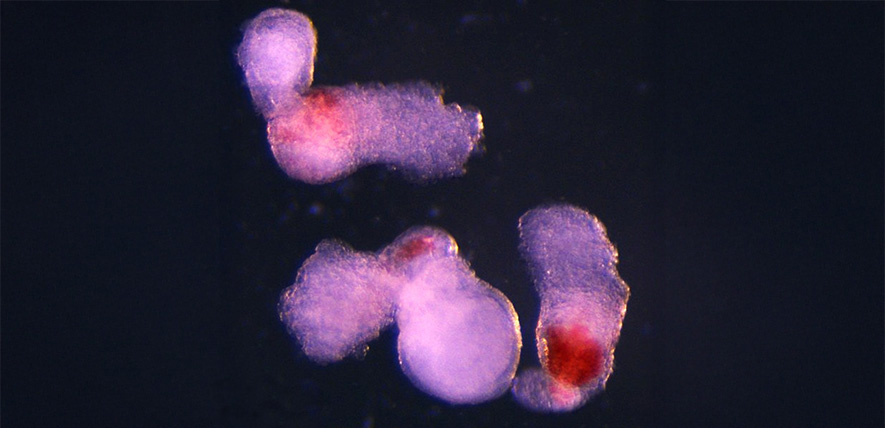
Cambridge Scientists Create Lab-Grown Embryo Models That Produce Blood Cells
University of Cambridge researchers have successfully created three-dimensional embryo-like structures called 'hematoids' from human stem ce
 cam.ac.uk·8mo ago
First In-Vivo Gene-Editing Therapy Successfully Saves Newborn's Life in 2025
In 2025, doctors and scientists in the U.S. successfully performed the world's first custom gene-editing therapy inside a living person—a ne
 popularmechanics.com·6mo ago
CRISPR takes a bold leap toward silencing Down syndrome's extra chromosome

DARPA's Generative Optogenetics Program Aims to Revolutionize DNA/RNA Synthesis Using Light
DARPA's Generative Optogenetics (GO) program aims to revolutionize DNA and RNA synthesis by using light to direct their creation directly wi
 darpa.mil·6mo ago
DNA Sugar Gel Shows Promise for Hair Regrowth in Mouse Study
In 2024, researchers at the University of Sheffield and COMSATS University in Pakistan discovered that deoxyribose, a naturally occurring su
 sciencealert.com·6d ago
Comments
Sign in to join the conversation.
No comments yet. Be the first.