
























University of Houston engineers develop semiconductor cooling method that triples heat dissipation efficiency for AI data centers
By
Samantha Ketterer
Summary
University of Houston engineers, led by Professor Hadi Ghasemi, have developed a semiconductor cooling method that dissipates heat three times more efficiently than current approaches. This breakthrough addresses the growing energy demands of AI data centers, which require massive amounts of electricity and water for cooling. The research tackles the broader "energy trilemma" of making energy affordable, reliable, and sustainable. As AI infrastructure expands across Texas, this innovation could significantly reduce both energy consumption and water usage in data centers.
Source

 bskyUniversity of Houston engineers develop semiconductor cooling method that triples heat dissipation efficiency for AI data centershoustonchronicle.com
Key quotes
· 2 pulledHadi Ghasemi is among researchers at the University of Houston who are trying to tackle the energy 'trilemma': the challenge to make energy affordable, reliable and sustainable.
UH engineers have discovered a way to cool semiconductors and release heat three times more efficiently — a breakthrough they say could cut energy and water usage as new AI data centers spread across Texas.
You might also wanna read


Google Presents Liquid Cooling Solutions for AI Datacenters at Hot Chips 2025
Google presented on liquid cooling technology for datacenters at Hot Chips 2025, highlighting how water's superior thermal conductivity (400
 chipsandcheese.com·10mo ago
Stanford's Diamond Thermal Conductivity Breakthrough for Advanced Chip Cooling
The article discusses the critical challenge of heat management in modern computing as transistors become smaller and more densely packed. I
 spectrum.ieee.org·8mo ago
Nvidia claims liquid-cooled Rubin data center design cuts energy use and nearly eliminates water consumption
Nvidia is promoting its Rubin generation reference design for fully liquid-cooled AI data centers, claiming it significantly reduces power u
 The Verge·12d ago
Microsoft Develops Microfluidic Cooling Technology for More Efficient Data Centers
Microsoft is developing a microfluidic cooling technology that uses liquid coolant flowing directly into silicon chips to improve heat dissi
The Verge·9mo ago
Computer scientists are rushing to tame AI's voracious appetite for energy
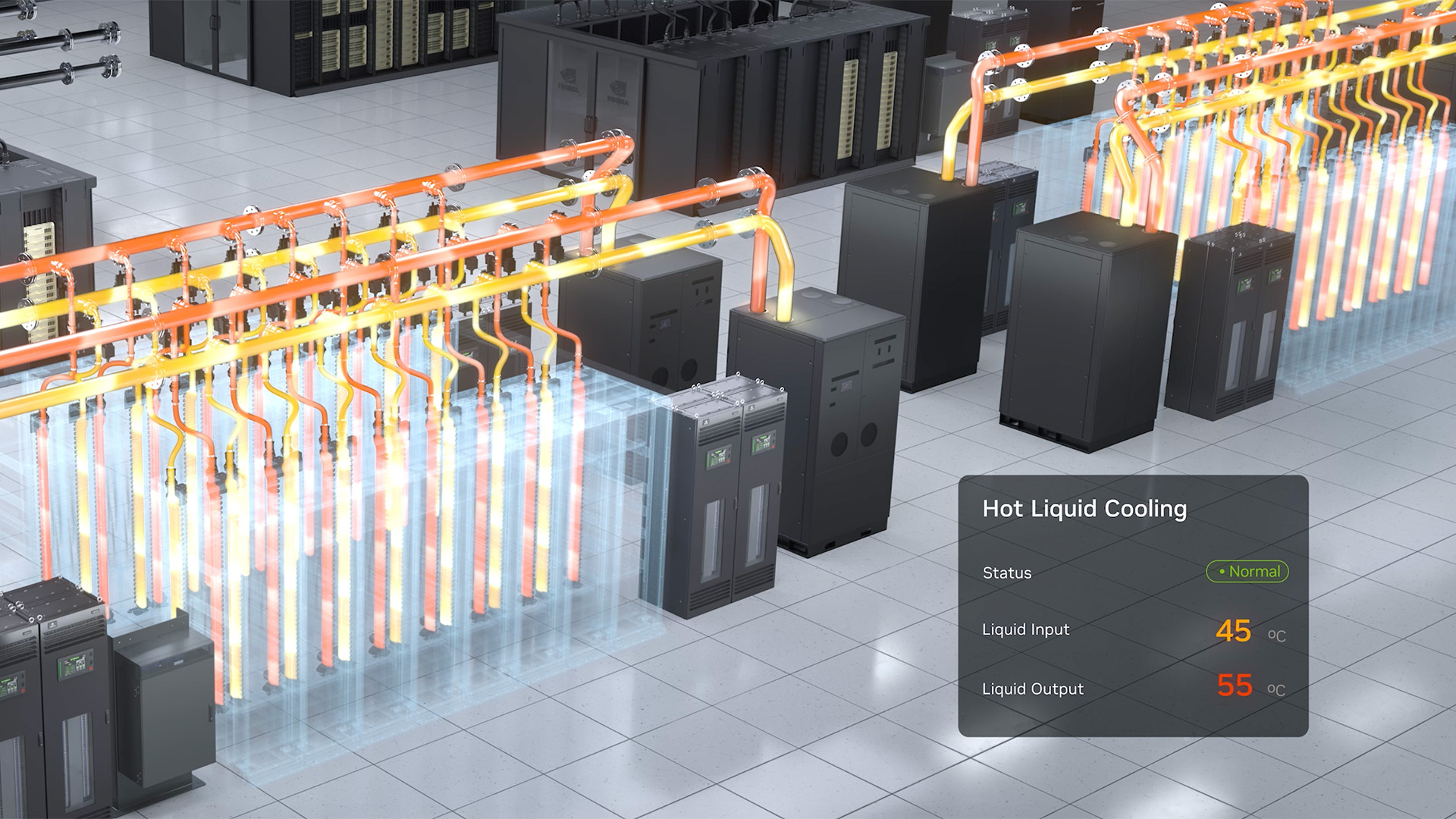
NVIDIA's Rubin AI Servers Use 45°C Liquid Cooling for Greater Energy Efficiency
NVIDIA's new Rubin generation AI servers achieve 100% liquid cooling with coolant running at up to 45°C (113°F) — hotter than a typical hot
NVIDIA's Rubin AI Servers Use 45°C Liquid Cooling for Greater Energy Efficiency
NVIDIA's new Rubin generation AI servers achieve 100% liquid cooling with coolant running at up to 45°C (113°F) — hotter than a typical hot
Comments
Sign in to join the conversation.
No comments yet. Be the first.