





















Microsoft Develops Microfluidic Cooling Technology for More Efficient Data Centers
By
Justine Calma

Toasted golden, schmeared with insight. Top of the rack.
Summary
Microsoft is developing a microfluidic cooling technology that uses liquid coolant flowing directly into silicon chips to improve heat dissipation. The company's lab tests show this method can remove heat up to three times more effectively than current cold plate systems used in data centers. Microsoft successfully tested the technology on a server running simulated Microsoft Teams meetings, demonstrating potential for more powerful chips and energy-efficient data centers.
Key quotes
· 3 pulledMicrosoft found that this strategy can remove heat up to three times better than cold plates currently used in data centers today
It's a method called microfluidics that involves liquid coolant flowing directly into the silicon
Microsoft announced this week that it was able to develop a microfluidic cooling system for a server running core services for a simulated Microsoft Teams meeting
You might also wanna read

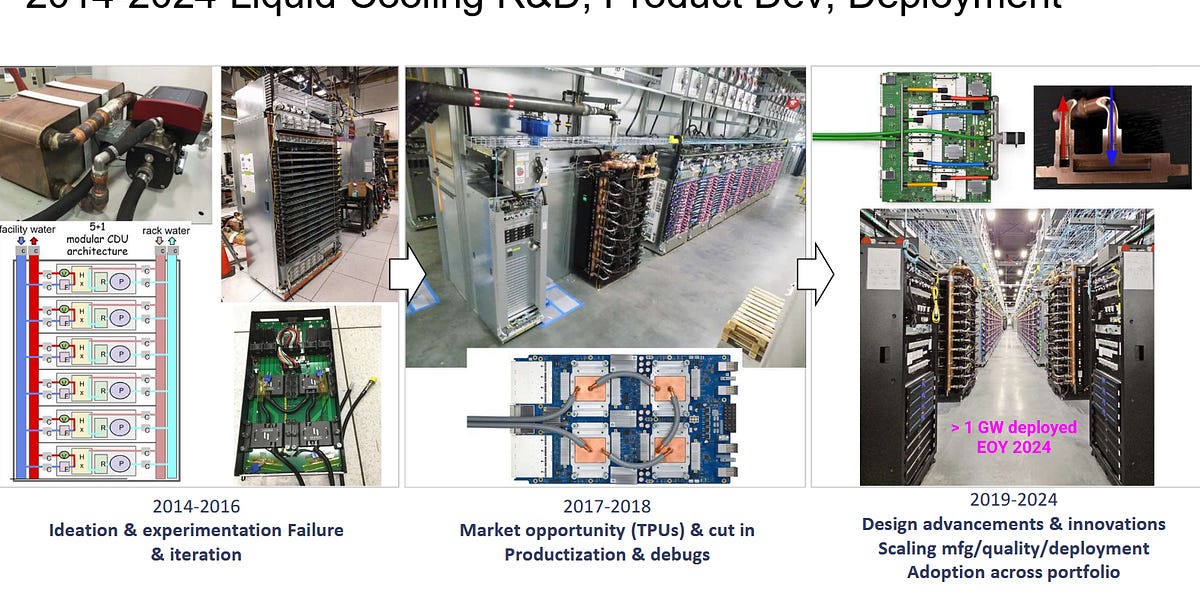
Google Presents Liquid Cooling Solutions for AI Datacenters at Hot Chips 2025
Google presented on liquid cooling technology for datacenters at Hot Chips 2025, highlighting how water's superior thermal conductivity (400
 chipsandcheese.com·9mo ago
3D-printed copper cooling plates could reduce data center energy use by 90%
Scientists at the University of Illinois Urbana-Champaign have developed a 3D-printed pure copper cooling plate technology that could reduce
 newatlas.com·4d ago
Stanford's Diamond Thermal Conductivity Breakthrough for Advanced Chip Cooling
The article discusses the critical challenge of heat management in modern computing as transistors become smaller and more densely packed. I
 spectrum.ieee.org·7mo ago
Microsoft, Google, Amazon, and Meta join Elemental Impact to test climate technologies in data centers
Microsoft, Google, Amazon, and Meta are partnering with nonprofit investor Elemental Impact to accelerate new climate technologies by using
 axios.com·2d ago
Samsung and Johns Hopkins Develop Refrigerant-Free Peltier Cooling Technology
Samsung Electronics and Johns Hopkins University APL collaborated on next-generation Peltier cooling technology, achieving refrigerant-free
news.samsung.com·10mo ago