





















Understanding Transformer Circuits: A Mechanistic Interpretability Perspective
By
cjamsonhn

Front-window bakery material. Catches the eye, delivers the goods.
Summary
This article explores mechanistic interpretability of transformer neural networks, focusing on understanding how transformers work mathematically by examining the residual stream and attention mechanisms. The author shares insights gained from studying 'A Mathematical Framework for Transformer Circuits' and working through mechanistic interpretability exercises, aiming to develop intuition about transformer circuits and help others understand complex concepts in the field.
Key quotes
· 4 pulledMy goal is to describe my current intuition for the paper, especially parts I was confused about so that perhaps my take can help others gain clarity on these areas as well.
First, a br
In a previous post on language modeling, I implemented a GPT-style transformer. Lately I've been learning mechanistic interpretability to go deeper and understand why the transformer works on a mathematical level.
This post is a brain dump of what I've learned so far after reading A Mathematical Framework for Transformer Circuits (herein: 'Framework') and working through the Intro to Mech Interp section on ARENA.
You might also wanna read

Chroma Context-1: A 20B Parameter Agentic Search Model for Multi-Hop Retrieval
Chroma Context-1 is a 20B parameter agentic search model designed to improve retrieval-augmented generation (RAG) systems. Unlike traditiona
 trychroma.com·2mo ago
ATLAS: Adaptive Test-time Learning System Achieves 74.6% Code Benchmark Performance with Frozen 14B Model
ATLAS (Adaptive Test-time Learning and Autonomous Specialization) is a system that wraps a frozen smaller language model (14B parameters) wi
 github.com·2mo ago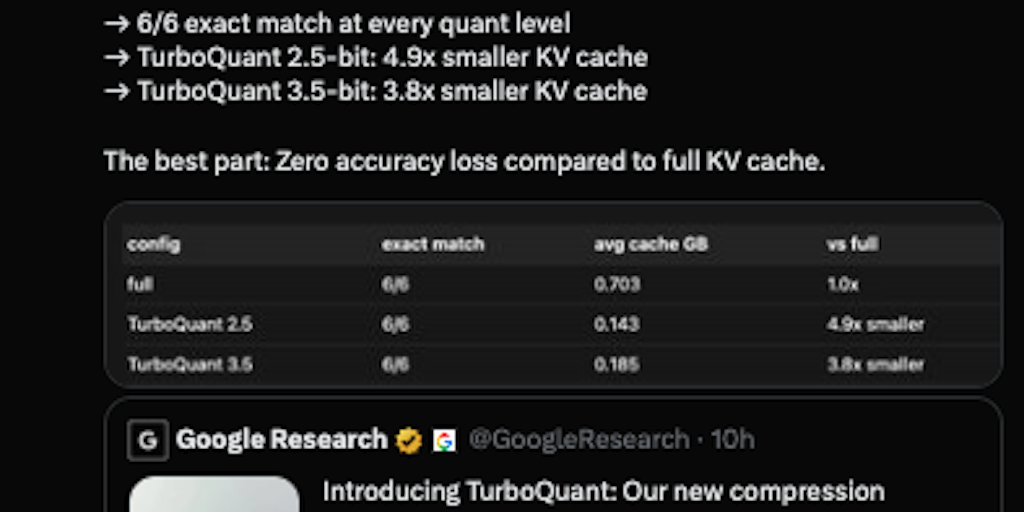
Google Introduces TurboQuant: Advanced LLM Compression Algorithm for Efficient AI Model Deployment
Google has developed TurboQuant, a new LLM compression algorithm that uses advanced theoretically grounded quantization techniques to enable
 Product Hunt·2mo ago
Achieving Top Position on HuggingFace LLM Leaderboard Through Model Analysis and Optimization Techniques
The article describes how the author achieved the #1 position on the HuggingFace Open LLM Leaderboard without training or modifying any mode
 dnhkng.github.io·2mo ago
Phi-4 Reasoning: Small Open-Weight AI Models with Strong Math and Science Capabilities
Phi-4 Reasoning is a small open-weight language model (3.8B/14B parameters) that delivers powerful reasoning capabilities for math, science,
Product Hunt·2mo ago
Unsloth Releases Dynamic 2.0 GGUFs for Improved LLM Quantization
Unsloth has released Dynamic 2.0 GGUFs, a major upgrade to their quantization method for large language models. The new version outperforms
 unsloth.ai·3mo ago