





















Chroma Context-1: A 20B Parameter Agentic Search Model for Multi-Hop Retrieval
By
philip1209

Front-window bakery material. Catches the eye, delivers the goods.
Summary
Chroma Context-1 is a 20B parameter agentic search model designed to improve retrieval-augmented generation (RAG) systems. Unlike traditional single-pass retrieval pipelines, it performs multi-hop search by decomposing queries into subqueries, iteratively searching a corpus, and selectively editing its own context. The model achieves retrieval performance comparable to frontier-scale LLMs but at a fraction of the cost and up to 10x faster inference speed, making it suitable as a subagent alongside frontier reasoning models.
Key quotes
· 4 pulledThis approach, broadly known as retrieval-augmented-generation (RAG), has traditionally relied on single-stage retrieval pipelines composed of vector search, lexical search, or regular expression matching, optionally followed by a learned reranker.
In practice, many real-world queries require multi-hop retrieval, in which the output of one search informs the next.
We introduce Chroma Context-1, a 20B parameter agentic search model derived from gpt-oss-20B that achieves retrieval performance comparable to frontier-scale LLMs at a fraction of the cost and up to 10x faster inference speed.
The model is trained to decompose queries into subqueries, iteratively search a corpus, and selectively edit its own context to free capacity for further exploration.
You might also wanna read

ATLAS: Adaptive Test-time Learning System Achieves 74.6% Code Benchmark Performance with Frozen 14B Model
ATLAS (Adaptive Test-time Learning and Autonomous Specialization) is a system that wraps a frozen smaller language model (14B parameters) wi
 github.com·2mo ago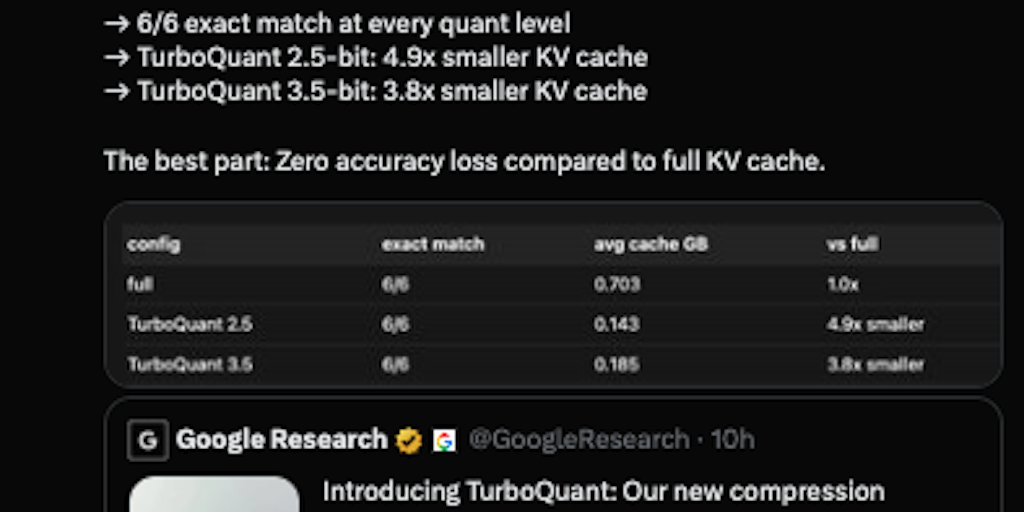
Google Introduces TurboQuant: Advanced LLM Compression Algorithm for Efficient AI Model Deployment
Google has developed TurboQuant, a new LLM compression algorithm that uses advanced theoretically grounded quantization techniques to enable
 Product Hunt·2mo ago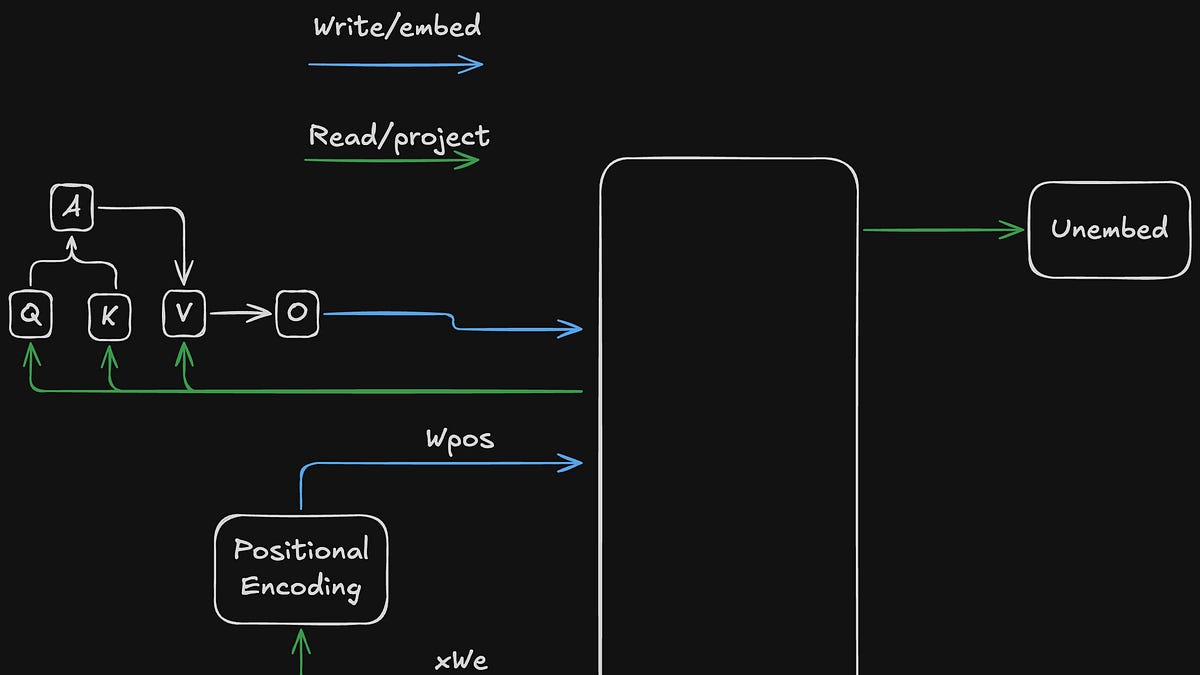
Understanding Transformer Circuits: A Mechanistic Interpretability Perspective
This article explores mechanistic interpretability of transformer neural networks, focusing on understanding how transformers work mathemati
 connorjdavis.com·2mo ago
Achieving Top Position on HuggingFace LLM Leaderboard Through Model Analysis and Optimization Techniques
The article describes how the author achieved the #1 position on the HuggingFace Open LLM Leaderboard without training or modifying any mode
 dnhkng.github.io·2mo ago
Phi-4 Reasoning: Small Open-Weight AI Models with Strong Math and Science Capabilities
Phi-4 Reasoning is a small open-weight language model (3.8B/14B parameters) that delivers powerful reasoning capabilities for math, science,
Product Hunt·2mo ago
Unsloth Releases Dynamic 2.0 GGUFs for Improved LLM Quantization
Unsloth has released Dynamic 2.0 GGUFs, a major upgrade to their quantization method for large language models. The new version outperforms
 unsloth.ai·3mo ago