
























How the brain actively reconstructs speech — and why we sometimes mishear it
This article explores the phenomenon of mondegreens (misheard phrases) as a window into how the brain processes speech. It explains that hearing is not a passive act of receiving sound, but an active process of reconstruction and interpretation shaped by expectation, context, and prior knowledge. The brain fills in gaps, smooths over ambiguities, and sometimes gets it wrong — leading to humorous mishearings like Jimi Hendrix's "kiss this guy" instead of "kiss the sky." The piece uses cognitive science and linguistics to illustrate how our perceptual system turns messy acoustic signals into coherent meaning.
Key quotes
'Scuse me while I kiss this guy.
Mondegreens are often humorous, but they highlight something fundamental about language: we don't simply hear speech, we also interpret it.
Interpretation, as it turns out, is deeply shaped by expectation.
From the article
You might also wanna read


Study finds brain processes complex language during general anesthesia
Baylor College of Medicine researchers have discovered that the human brain can process sophisticated language while under general anesthesi
 BCM·2mo ago
Study Shows Unconscious Brain Can Process Language Under Anesthesia
A new study from Baylor College of Medicine challenges the assumption that consciousness is required for the brain to process complex langua
 singularityhub.com·1mo ago
Listening in on the human brain cells that produce speech

Neuroscience breakthrough uses AI to uncover the cellular building blocks of human speech

Human hippocampal ripples coordinate planning sequences and compositional representations in neocortex - Nature Neuroscience
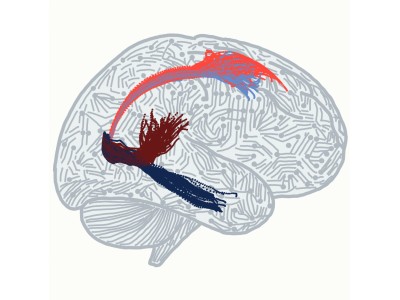
Neuroscientist challenges decades-old model of how vision and thinking work in the brain
Neuroscientist Nuttida Rungratsameetaweemana is challenging the long-held conventional view that vision is a passive, feed-forward process w
 engineering.columbia.edu·5d ago
Neuroscientist challenges decades-old model of how vision and thinking work in the brain
Neuroscientist Nuttida Rungratsameetaweemana is challenging the long-held conventional view that vision is a passive, feed-forward process w
engineering.columbia.edu·5d ago
Comments
Sign in to join the conversation.
No comments yet. Be the first.