
























Neuroscientist challenges decades-old model of how vision and thinking work in the brain
By
Grant Currin
Summary
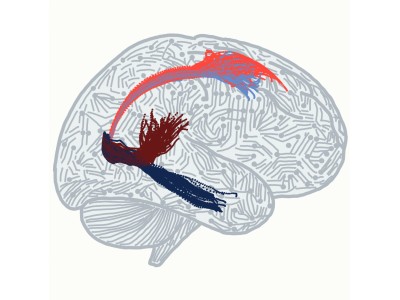
Neuroscientist Nuttida Rungratsameetaweemana is challenging the long-held conventional view that vision is a passive, feed-forward process where raw visual data travels from the eyes through waystations to the cortex for higher-level thinking. Her team's fMRI research reveals unexpected activity in the earliest visual areas of the brain, suggesting that perception and cognition are more deeply intertwined than previously thought. The work is reshaping the understanding of the brain's circuitry and its remarkable efficiency.
Source
 Hacker NewsNeuroscientist challenges decades-old model of how vision and thinking work in the brainengineering.columbia.edu
Key quotes
· 4 pulledNuttida Rungratsameetaweemana is challenging a story neuroscience has told for decades.
According to the conventional account, our eyes collect raw information and relay it through a series of nerves and waystations that lead deep into the brain, eventually reaching the cortex.
Her group's work is complicating that account.
Last year, the team published fMRI scans showing unexpected levels of activity in the earliest visual areas of
You might also wanna read

How psychedelics may unlock new forms of consciousness by altering the brain's visual imagination
A cognitive neuroscientist explores how studying the brain's visual representations—both of the real world and of imagined scenes (memories,
 popularmechanics.com·7d ago
A neurobiological account of conscious and nonconscious thought in decision-making
This Perspective article proposes an operational neurobiological account of thought, arguing that thoughts are neural representations of pro
 pnas.org·1mo ago
Neuroscience Struggles to Locate Consciousness in the Brain Despite Decades of Research
The article challenges the long-held neuroscientific assumption that consciousness can be physically located within the brain. Despite decad
 dualisticunity.com·22d ago
How psychedelics may reveal the brain's mechanisms for generating consciousness
A cognitive neuroscientist explores how studying the brain's visual representations—both of the real world and imagined ones (memories, dayd
popularmechanics.com·8d ago
Neuroscience suggests real intelligence emerges between minds, not in isolation
This article explores the paradox that while AI systems excel at individual cognitive tasks like translation, protein folding, and chess, th
 psychologytoday.com·26d ago
Comments
Sign in to join the conversation.
No comments yet. Be the first.