
























How psychedelics may reveal the brain's mechanisms for generating consciousness
By
Ashley Stimpson
Summary
A cognitive neuroscientist explores how studying the brain's visual representations—both of the real world and imagined ones (memories, daydreams, future plans)—can provide insight into the neurological functions underlying consciousness. The research focuses on how psychedelics may alter consciousness by opening the "mind's eye," potentially revealing new forms of conscious experience and shedding light on the hard problem of consciousness.
Source
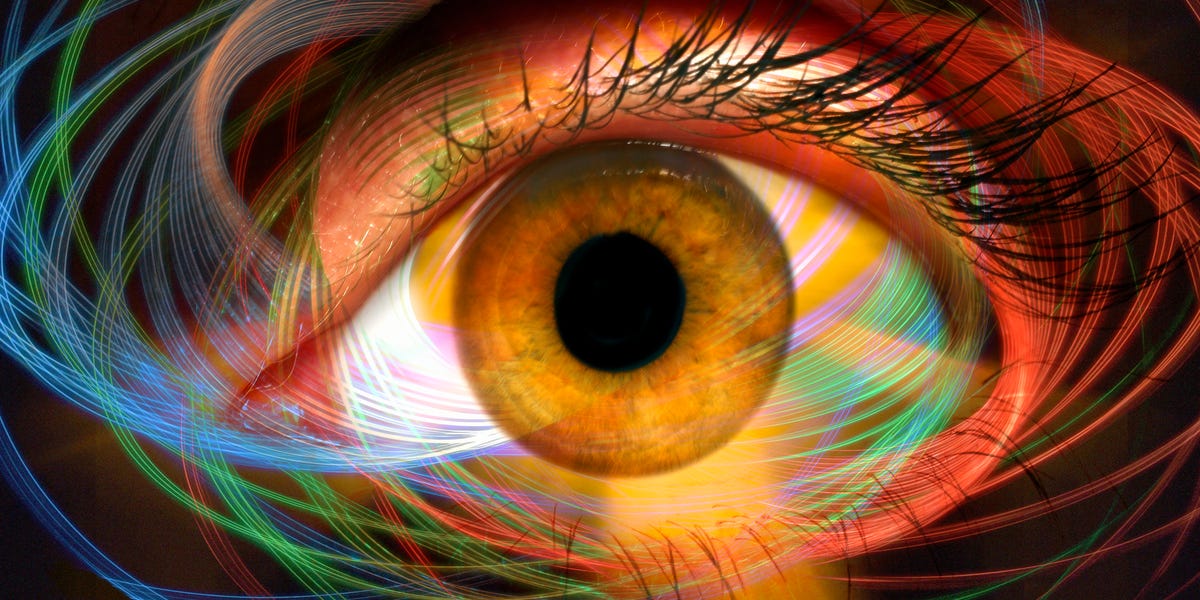
 Twitter / XHow psychedelics may reveal the brain's mechanisms for generating consciousnesspopularmechanics.com
Key quotes
· 4 pulledAs a cognitive neuroscientist, part of my research involves studying how the brain creates visual representations of the world—both the real world and the world that exists only in our imaginations: made up of memories, daydreams, or future plans.
I'm interested in what David Chalmers calls the 'hard problem of consciousness,' how brain activity leads to conscious, subjective experiences.
Observing the brain as it perceives or creates mental imagery, I believe, can give us insight into the neurological functions that give rise to consciousness.
As a neuroscientist, I'm encouraged that this could be a window into how your brain generates consciousness through your lived reality.
You might also wanna read


A neurobiological account of conscious and nonconscious thought in decision-making
This Perspective article proposes an operational neurobiological account of thought, arguing that thoughts are neural representations of pro
 pnas.org·22d ago
DMT Alters Brain Criticality Dynamics, Correlating with Self-Dissolution Experiences
This scientific research study investigates how the psychedelic substance DMT affects brain dynamics and subjective experience. The study fi
 jneurosci.org·6mo ago
Neuroscience Struggles to Locate Consciousness in the Brain Despite Decades of Research
The article challenges the long-held neuroscientific assumption that consciousness can be physically located within the brain. Despite decad
 dualisticunity.com·14d ago
Aphantasia and Hyperphantasia: How the Absence or Vividness of Mental Imagery Shapes Memory and Identity
This article explores aphantasia (the inability to visualize mental images) and hyperphantasia (extremely vivid mental imagery), examining h
 newyorker.com·7mo ago
The Philosophical Mystery of Consciousness: Why Physical Brain States Produce Subjective Experience
The article explores the philosophical mystery of consciousness, examining why physical brain states are associated with subjective experien
 Defector·1mo ago
Brain 'Flight Simulator' Model Reveals Learning Mechanisms and Mental Processing Errors
Researchers have developed a 'flight simulator' computer model for the brain that reveals how learning occurs and why mental processes somet
 now.tufts.edu·8mo ago
Comments
Sign in to join the conversation.
No comments yet. Be the first.