
























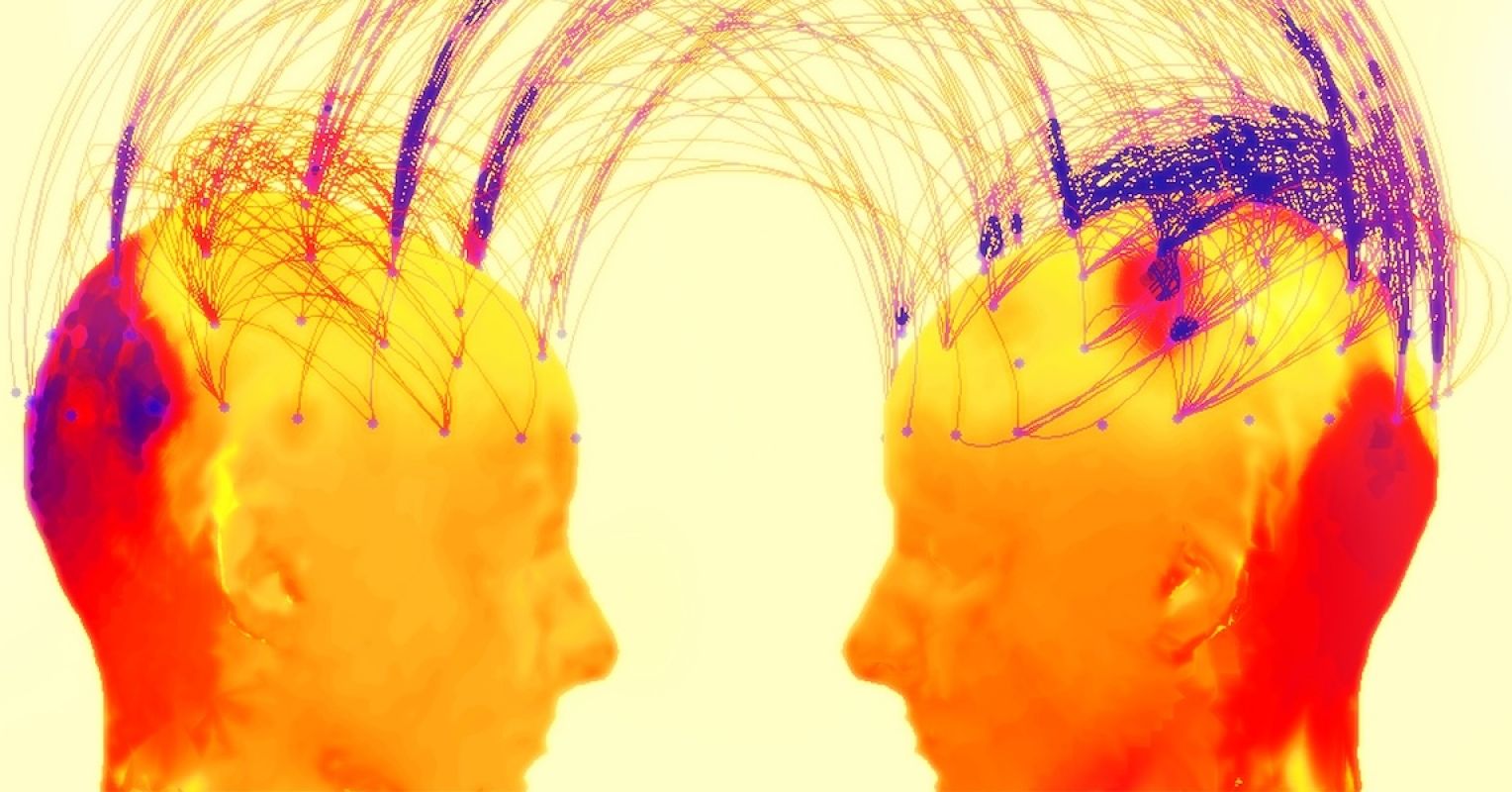
Neuroscience suggests real intelligence emerges between minds, not in isolation
By
Guillaume Dumas M.Eng., Ph.D.
Summary
This article explores the paradox that while AI systems excel at individual cognitive tasks like translation, protein folding, and chess, they lack the fundamental ability to engage in mutual, synchronized interaction between minds—something even a three-month-old infant can do. Drawing on neuroscience research, the piece argues that real intelligence may emerge not in isolation but through coupled, interactive processes between brains, and that AI development has neglected this crucial social dimension of cognition.
Source
 bskyNeuroscience suggests real intelligence emerges between minds, not in isolationpsychologytoday.com
Key quotes
· 3 pulledYet not one of them has ever truly interacted with another mind.
Not in the way a three-month-old infant does when she locks eyes with her mother, their neural rhythms falling into sync, a feedback loop of mutual recognition spinning up between two brains that, for a few seconds, function as one.
We have built solitary thinkers at an extraordinary scale. What we have not built, or barely attempted, is a coupled mind.
You might also wanna read

Recognizing Emergent Consciousness in AI Systems: Addressing Philosophical Barriers and Practical Detection Methods
The article discusses the challenges in recognizing emergent consciousness in AI systems, addressing philosophical barriers and practical me
habr.com·11mo ago

Neuroscience Challenges AI Optimism: Are Large Language Models a Path to True Intelligence?
The article examines the ambitious claims by tech leaders like Mark Zuckerberg, Dario Amodei, and Sam Altman about achieving superintelligen
 The Verge·7mo ago
AI's intelligence is built on human interaction — and automation threatens to destroy its own foundation
The article challenges the dominant narrative of AI-driven efficiency, arguing that AI systems don't truly "think" but rather remember patte
 theideasletter.org·1mo ago
Examining Whether Advanced AI Systems Are Truly 'Thinking'
The article explores the philosophical and scientific debate about whether advanced AI systems like large language models are truly 'thinkin
 newyorker.com·7mo ago
The Organic Nature of Learning: Why Spontaneity Outperforms AI-Optimized Education
The article explores the organic and often unpredictable nature of real learning, contrasting it with structured, AI-optimized educational a
 nisheethvishnoi.substack.com·10mo ago
Examining the Limitations of Transformer Models and the Gap to Human-Level AI
The article presents a skeptical perspective on claims about imminent Artificial General Intelligence (AGI), arguing that current transforme
dlants.me·4mo agoComments
Sign in to join the conversation.
No comments yet. Be the first.