
























Building a Perceptron from Scratch in Python: A Beginner's Guide
By
Devarsh Ranpara
Summary
A perceptron is the simplest neural network building block: one input, one binary output. This article explains how to build a perceptron from scratch in Python, covering weights, bias, decision boundaries, epochs, learning rate, and data normalization. Written from a beginner's perspective by someone learning the field, it uses interactive demos and avoids heavy math or large libraries.
Source

 Hacker NewsBuilding a Perceptron from Scratch in Python: A Beginner's Guideranpara.net
Key quotes
· 4 pulledA perceptron is the smallest brain you can build. One number goes in. One yes-or-no answer comes out.
This tiny idea is the seed of every neural network running today.
I will explain it the way I needed someone to explain it to me. Slowly, and from the ground up.
No heavy math. No big libraries. Just a weight, a bias, and a loop.
You might also wanna read

Emergent Hebbian Dynamics in Regularized Learning: A Theoretical Analysis
This research paper investigates whether observed Hebbian/anti-Hebbian plasticity in synaptic updates necessarily implies an underlying Hebb
 arxiv.org·22d ago
Build your own GPT model from scratch using NumPy
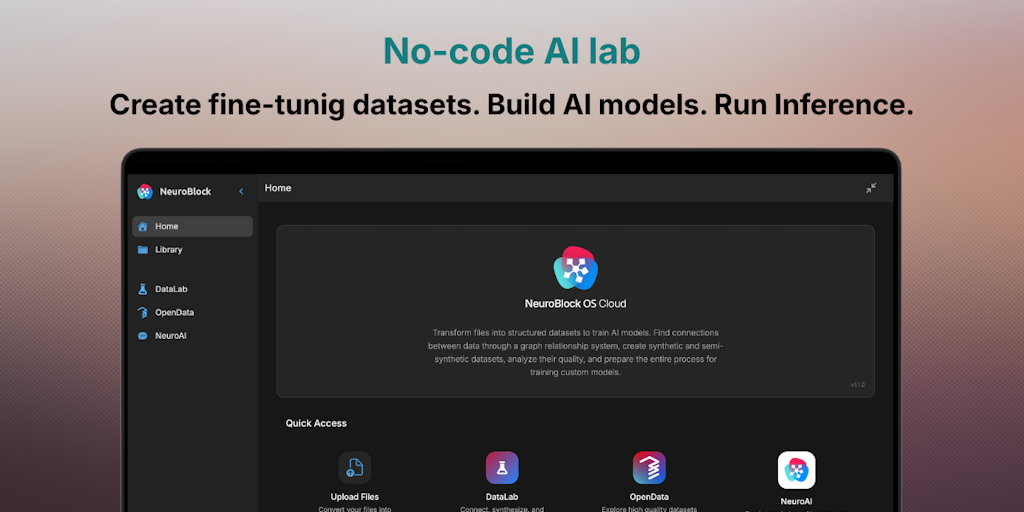
NeuroBlock OS: No-Code AI Platform for Training Custom Models with Your Own Data
NeuroBlock OS is a no-code AI platform that enables users to train custom AI models with their own data. The integrated ecosystem allows use
 Product Hunt·4mo ago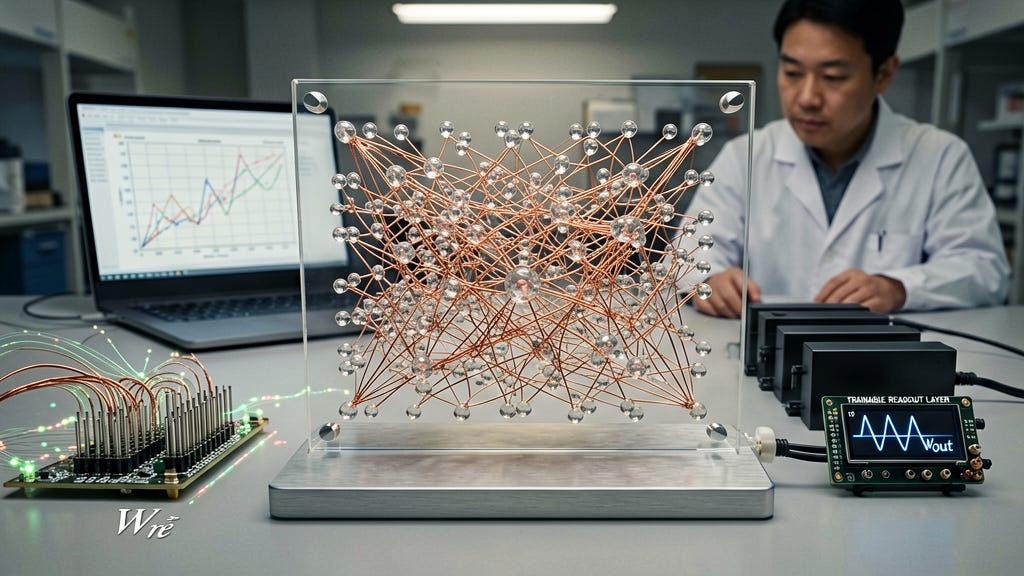
Researchers Work to Decode the "Black Box" of Reservoir Computing and Brain-Inspired AI
This article explores Reservoir Computing (RC), a specialized form of recurrent neural networks (RNNs) that mimics biological brain processe
 akmaier.substack.com·23d ago
Wider Neural Networks with Fewer Parameters Improve Performance by Reducing Feature Interference
This research paper demonstrates that increasing the number of neurons in a neural network without increasing the number of non-zero paramet
arxiv.org·23d ago
Building a Minimal RAG System from Scratch: PDF to Highlighted Answers in ~100 Lines of Python
A hands-on tutorial that builds the smallest functional RAG (Retrieval-Augmented Generation) system from scratch using about 100 lines of Py
 towardsdatascience.com·24d ago
Comments
Sign in to join the conversation.
No comments yet. Be the first.