
























The Pair Instability Mass Gap: Why Some Stars Are Too Massive to Form Black Holes
This newsletter edition discusses the upper mass limit for stellar-mass black holes formed via supernovae, specifically the "pair instability mass gap." It explains how very massive stars (130-260 solar masses) can undergo pair-instability supernovae that completely disrupt the star, leaving no black hole remnant, creating a gap in black hole masses between roughly 50 and 130 solar masses. The article builds on a previous discussion about the lower mass gap between neutron stars and black holes.
Key quotes
Last month we talked about how core-collapse supernovae can create black holes, but usually not below a certain mass (about five solar masses), leaving a so-called mass gap between the heaviest neutron stars and the lightest black holes.
This gap, you may remember, is caused by the timing of the supernova explosion.
Some stars are too big to make black holes.
From the article
You might also wanna read

Astronomers Discover Massive Black Hole Merger Defying Expectations
Astronomers detect the most colossal black hole merger known to date, producing a gigantic black hole about 225 times the mass of the Sun.
gizmodo.com·11mo agoJWST's 'overmassive' early black holes may not be so massive after all

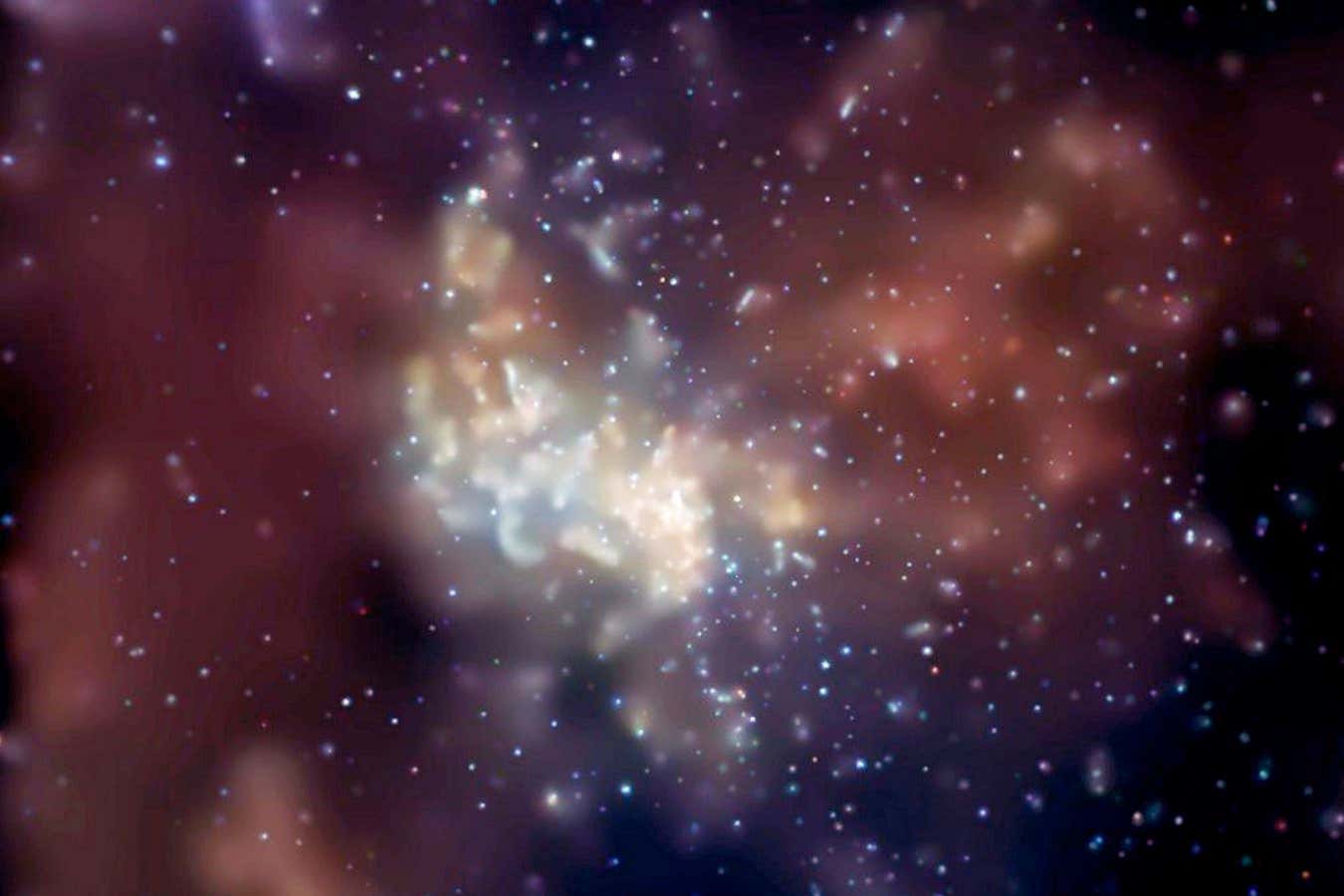
Intermediate-mass black hole may explain unusual star populations near Sagittarius A*
Researchers have proposed a model suggesting that an intermediate-mass black hole hidden near Sagittarius A* could explain the three distinc
 newscientist.com·12d ago
Discovery of a 36 Billion Solar Mass Black Hole in the Cosmic Horseshoe Gravitational Lens
The article discusses the discovery of a supermassive black hole (SMBH) with a mass of 36 billion solar masses at the center of the Cosmic H
 academic.oup.com·11mo ago
Comments
Sign in to join the conversation.
No comments yet. Be the first.