
























Why Users Keep Filling Out Form Fields Incorrectly — and How to Fix It
By
Peter Makeshoff
Summary
This article examines why certain form fields consistently cause user errors, arguing that the problem is not user laziness but poor design. It identifies common problematic fields (state dropdowns, phone number inputs) and promises to explain how to identify, fix, and prevent such friction-causing fields. The piece is a short UX/design tip article focused on form usability.
Source

 Designer DailyWhy Users Keep Filling Out Form Fields Incorrectly — and How to Fix Itdesigner-daily.com
Key quotes
· 3 pulledEvery form has one. A field that users consistently misunderstand, skip, or fill out incorrectly.
The field is not broken because users are lazy. It is broken because the design is broken.
Here is how to identify, fix, and prevent the form fields that cause the most friction.
You might also wanna read

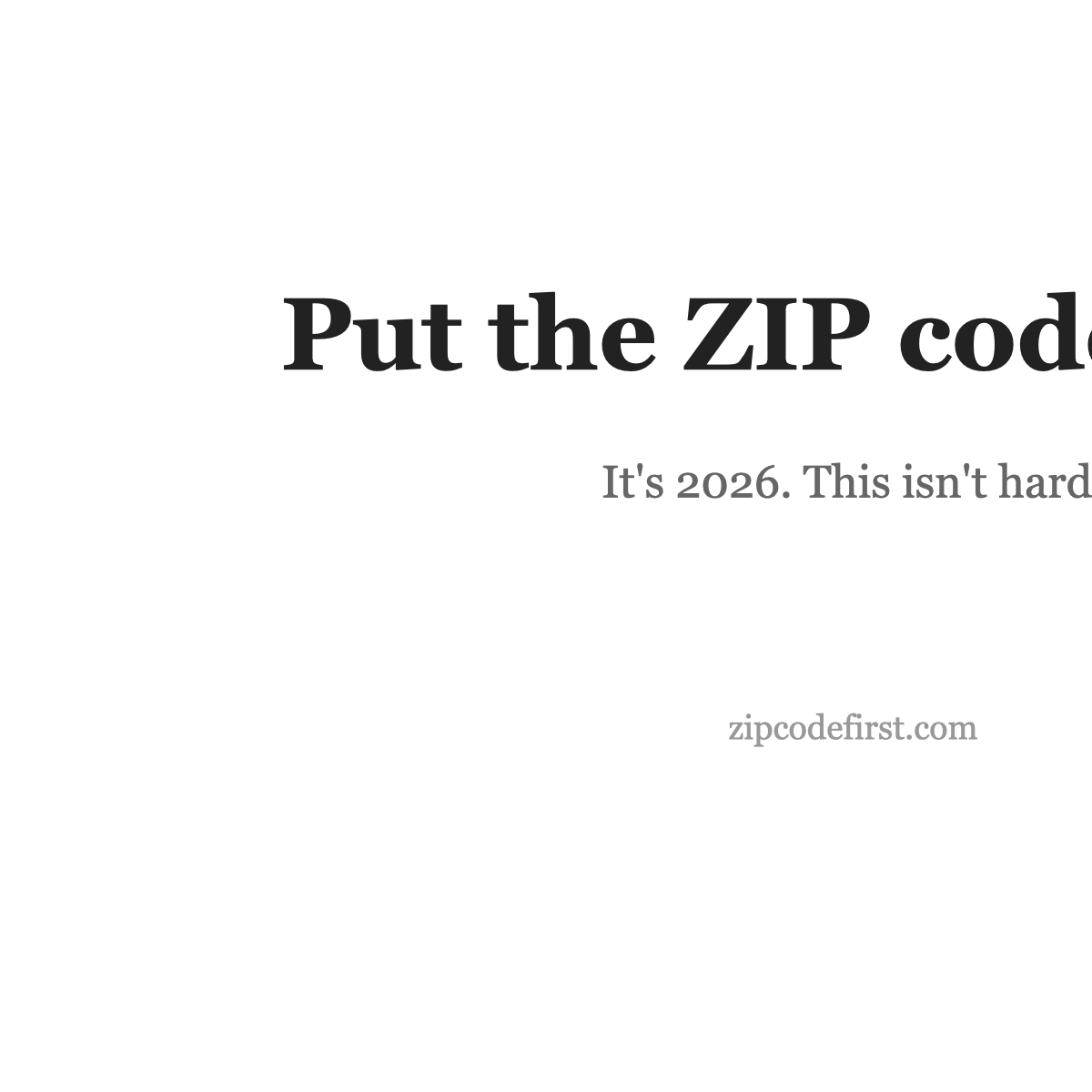
Streamlining Address Forms: Why ZIP Codes Should Come First to Auto-Fill City, State, and Country
The article criticizes the poor design of online address forms that require users to manually input multiple fields (street, city, state, co

Drop-Down Menu Guide: Design, UX, Accessibility, and Implementation for Better Data Quality
This article discusses the problem of inconsistent data entry in spreadsheets (e.g., the same customer name entered in different formats) wh
 electe.net·14d ago
Improving Country Selection UX in Web Forms: Moving Beyond Standard Dropdowns
This article critiques the standard country dropdown implementation used in web forms, highlighting its limitations including lack of filter
 talysto.com·3mo ago
16 logic-driven UI design tips for improving user interfaces: a case study
A seasoned product designer with over 20 years of experience shares 16 logic-driven UI design tips through a step-by-step case study that fi
 adhamdannaway.com·12d ago
Why bad UX is often a business decision, not a design failure
This article explores how poor user experience (UX) in digital products is often the result of deliberate business decisions rather than des
 uxdesign.cc·10d ago
The Structural Flaws in Applicant Tracking Systems: Why HR Technology Fails Job Seekers
The article analyzes the structural flaws in applicant tracking systems (ATS), explaining how decades of misaligned incentives between HR bu
 saj.ad·4mo ago
Comments
Sign in to join the conversation.
No comments yet. Be the first.