
























Why bad UX is often a business decision, not a design failure
By
Arun Bakirathan
Summary
This article explores how poor user experience (UX) in digital products is often the result of deliberate business decisions rather than design failures. It uses the example of subscription cancellation flows that are intentionally made difficult — showing users what they'll lose, hiding the cancel button, and adding friction — to maximize retention and revenue. The piece argues that these "dark patterns" prioritize business metrics over user needs, and that designers are often forced to implement them despite ethical concerns.
Source
 bskyWhy bad UX is often a business decision, not a design failureuxdesign.cc
Key quotes
· 3 pulledThere's a screen most people have seen at least once.
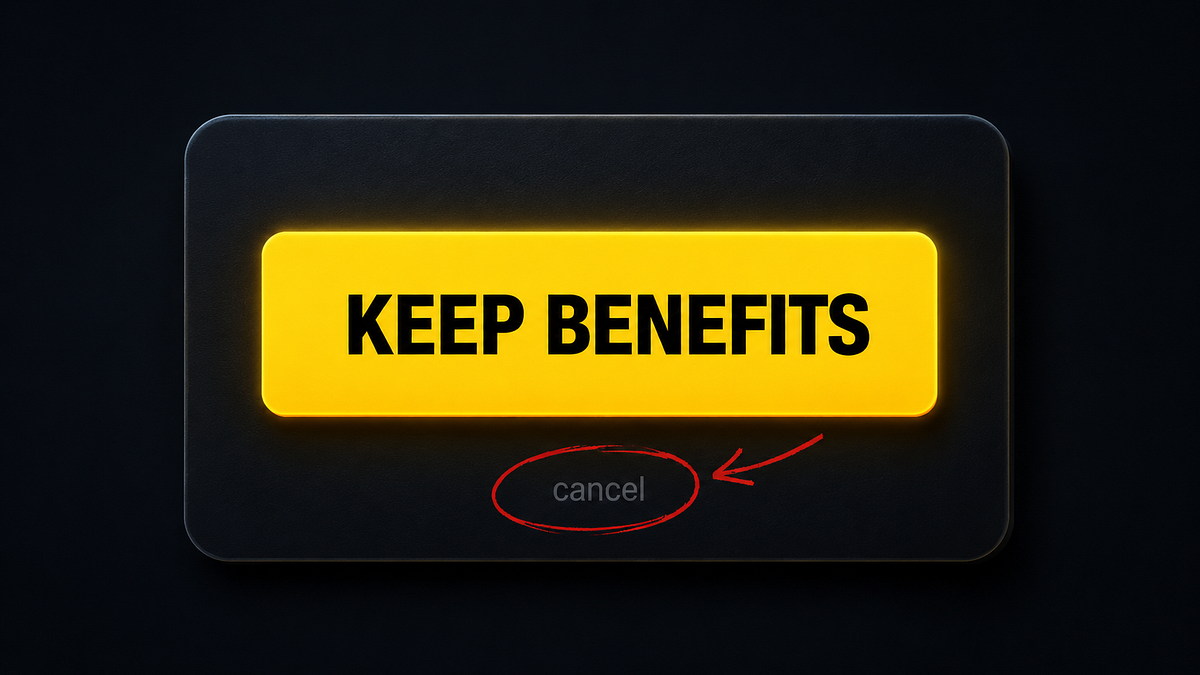
You're trying to cancel a subscription. You've made up your mind. You click the button that looks like it starts the process.
And somewhere at the bottom, small, grey, easy to miss, the option to actually cancel.
You might also wanna read


The Role of Good UX in Protecting Older Users From Digital Scams
The article explores whether good user experience (UX) design can act as a defense against digital scams, especially for older, less tech-sa
 Smashing Magazine·1y ago
Deutsche Bahn's Dark Patterns: How Subscription Practices Cost Customers
The article criticizes Deutsche Bahn's subscription practices, specifically focusing on dark patterns used in their Bahncard purchasing proc
 ketzu.net·8mo ago
Design Guidelines for Improving Notification UX: Timing, Relevance, and User Control
This article explores best practices for improving notification UX in digital products. It discusses how high notification frequency leads t
Smashing Magazine·11mo ago
Why AI-Driven Synthetic User Testing Fails: A Case for Real UX Research
The article argues against the growing trend of companies using AI-driven "synthetic" user testing as a replacement for real UX research wit
Smashing Magazine·1y ago
UX Design Strategies for Effective Real-Time Dashboards
This article explores UX design strategies for real-time dashboards, emphasizing their role as decision-making tools rather than passive dat
Smashing Magazine·9mo ago
Practical Guidelines for Improving UX in Legacy Systems
This article provides practical guidelines for improving user experience (UX) in legacy systems within organizations. It addresses the chall
Smashing Magazine·2mo ago
Comments
Sign in to join the conversation.
No comments yet. Be the first.