
























Developmental Topographical Disorientation: The neurological condition that makes navigating familiar places impossible
By
Judith Schomaker
Summary
This article explores Developmental Topographical Disorientation (DTD), a neurological condition that impairs a person's ability to navigate even familiar environments, including their own home. It explains how DTD differs from simply being bad with directions, describes the symptoms and experiences of those affected, and discusses what researchers have learned about this condition. The article highlights that up to 1 in 30 people may be affected, and contrasts normal navigational struggles with the persistent, debilitating disorientation experienced by those with DTD.
Source
 bskyDevelopmental Topographical Disorientation: The neurological condition that makes navigating familiar places impossibletheconversation.com
Key quotes
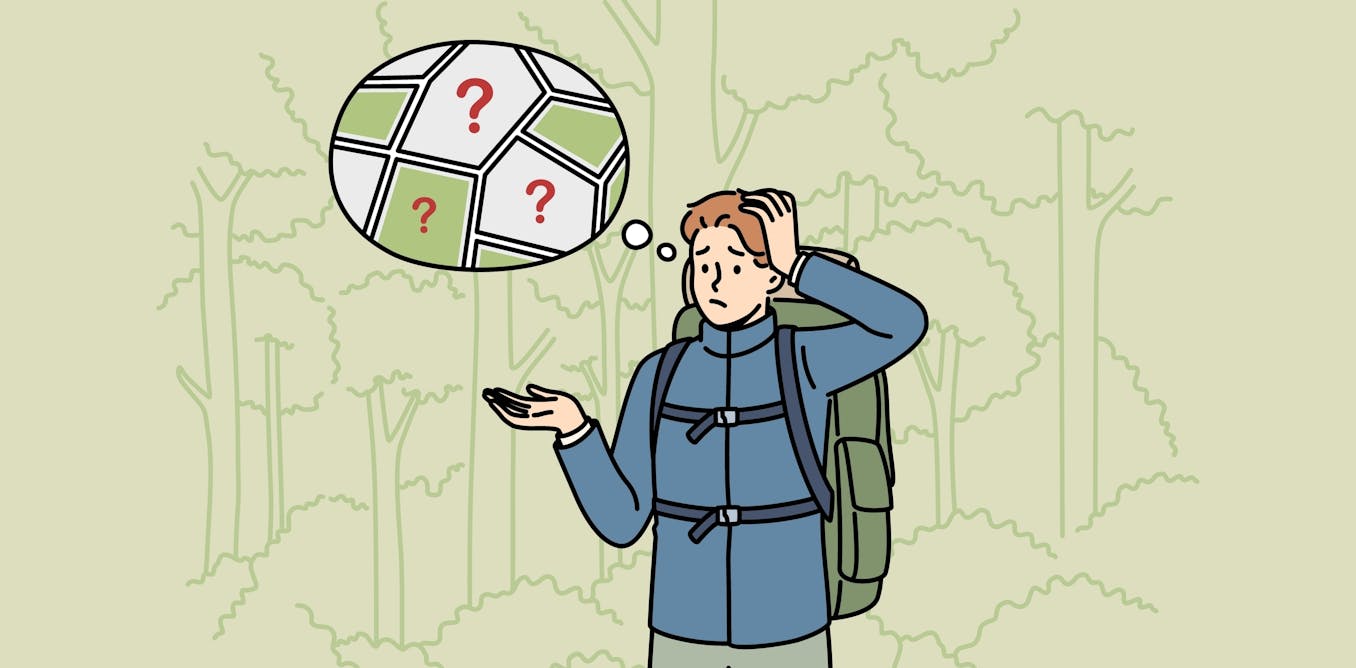
· 3 pulledFor some people, though, this feeling of getting lost doesn't go away. It can even occur when navigating their own home.
Some estimates suggest up to one in 30 people may be affected by developmental topographical disorientation (DTD).
The condition is more than merely being bad with directions.
You might also wanna read


Designing Inclusive Web Experiences for Neurodivergent Users
This article argues that neurodivergent users are often treated as "edge cases" in web design, when in fact they represent diverse ways of t
 Smashing Magazine·1y ago
Neurodivergent Thinking as an Asset in System Design and Problem-Solving
The article explores how neurodivergent thinking patterns, often seen as defects in social contexts, can be valuable assets in system design
 blog.drjoshcsimmons.com·5mo ago
Why neuroscience is not ready to guide brain-based policymaking
This article critically examines the growing trend of policymakers turning to neuroscience to inform laws and policies, arguing that the sci
 newscientist.com·3d ago
Why neuroscience is not ready to guide brain-based policymaking
This article critically examines the growing trend of policymakers turning to neuroscience to inform laws and policies, arguing that the sci
newscientist.com·3d ago
Living with Undiagnosed ADHD: Task Paralysis, Career Hopping, and the Search for Novelty
The article explores the author's personal struggle with undiagnosed ADHD and task paralysis, describing how they change roles every 2-3 yea
g5t.de·1mo ago
Aphantasia and Hyperphantasia: How the Absence or Vividness of Mental Imagery Shapes Memory and Identity
This article explores aphantasia (the inability to visualize mental images) and hyperphantasia (extremely vivid mental imagery), examining h
 newyorker.com·8mo ago
How Time-Space Synesthesia Lets Some People Visually Perceive Time
This article explores synesthesia, a neurological phenomenon where senses blend together, with a focus on time-space synesthesia — a rare fo
 popular-mechanics.visitlink.me·8d ago
Comments
Sign in to join the conversation.
No comments yet. Be the first.