
























Solar on the Shortest Day: Why Your Panels ‘Love’ the Winter Chill
Unknown ([email protected])6mo ago
From the article
It’s December 21st—the Winter Solstice . If you are a solar owner, you know the feeling. You look at your monitoring app. The days are short. The sun is hanging low on the horizon, casting long shadows by 4:00 PM. The common assumption? "My solar system must be hibernating." It is easy to equate "blazing heat" with "maximum power." But if you talk to a solar engineer, they will tell you the exact opposite: Solar panels hate heat. While the quantity of sunlight is lower today, the quality of energy conversion is at its annual peak. Today, Volt Roam goes deep into the physics of the Temperature Coefficient , explains the "Inverter Clipping" phenomenon, and breaks down how solar performs differently across India. Cold weather minimizes atomic resistance, allowing electrons to flow freely. The Physics: Why Solar Cells Crave the Cold To understand why winter isn't the enemy, we have to look at how a solar cell behaves at the atomic level. In High Heat (Summer): The silicon atoms vibrate aggressively. This "atomic noise" creates resistance, making it harder for electrons to flow efficiently. This causes a massive drop in Voltage (V) . In the Cold (Winter): The atomic structure is calm. Electrons flow with minimal resistance. While the current (Amps) might drop slightly due to lower light intensity, the voltage surges . Decoding the Datasheet: The "Temperature Coefficient" Every solar panel is tested at a "Standard Test Condition" (STC) of 25°C . The Temperature Coefficient of Pmax tells you how much power you lose for every degree above that baseline. Technology Temp Coefficient Verdict P-Type PERC -0.34% to -0.40% The "Heat Victim." Loses 15% power at 65°C. N-Type TOPCon -0.29% to -0.31% The "Balanced Choice." The 2025 standard for value. Heterojunction (HJT) -0.24% to -0.26% The "Heat Master." Expensive, but unbeatable in Rajasthan. The "Inverter Clipping" Phenomenon Have you ever looked at your generation graph in January and seen a flat line at the top? That is called Inverter Clipping . How it works: Imagine a 5kW Inverter with 6kW of Panels . Summer: Heat loss reduces your 6kW array to ~4.8kW. Inverter is happy. Winter: Cold boosts efficiency. Your array pushes 6.2kW . The Clip: Your inverter limits output to 5kW, "wasting" the extra 1.2kW. Volt Roam Pro Tip: Don't panic. This is normal. Sizing for the rare winter peak would mean overpaying for an inverter you barely use in summer. Regional Analysis: How Winter Affects Your City 1. The Polluted Plains (Delhi NCR, UP) It’s not the cold; it’s the Smog . Fog and pollution scatter sunlight, causing drops of 40-50%. Keep your panels clean! 2. The Sunny South & West (Mumbai, Bangalore, Gujarat) The Goldilocks Zone . Clear skies + moderate temps (20°C) = record-breaking daily efficiency. 3. The Frozen North (Ladakh, Himachal) Superconductivity. Panels operate above rated wattage due to extreme cold. However, snow cover must be managed with high-tilt racking. Frequently Asked Questions (FAQ) Q: Do solar panels work in the snow? Yes, if light can hit the glass. White snow actually reflects light (albedo), boosting power. But thick snow cover stops generation. Q: Is HJT worth the extra cost? In 2025, yes. The price gap is small, and the efficiency gain in Indian heat is significant. 👋 Thank You for Reading! We appreciate your time and interest in renewable energy, EVs, and cutting-edge tech. Your curiosity helps drive a sustainable future forward. 📱 Follow Us on Social Media: 🌐 Visit our website
Continue reading on omkarmhatre.inYou might also wanna read

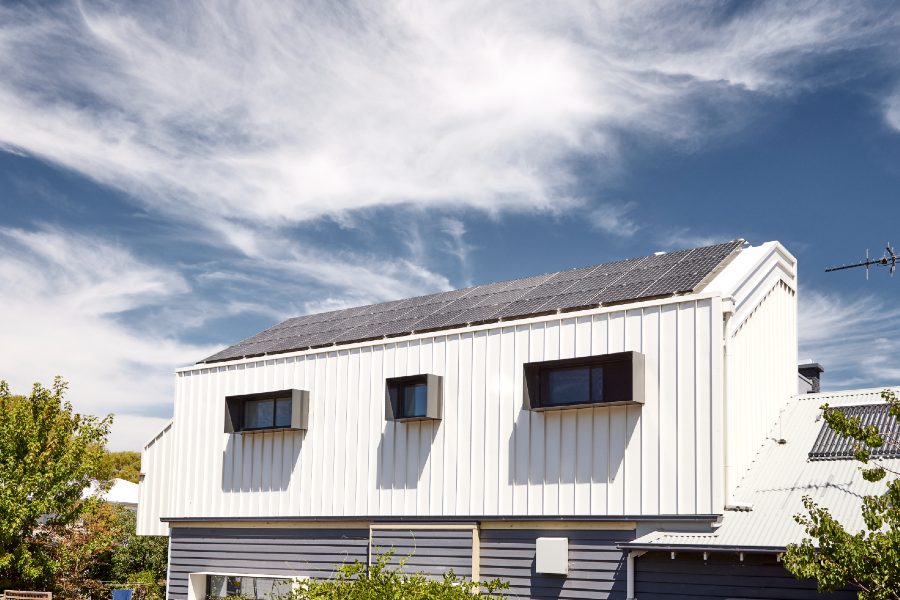
Winter solar panel performance in Australia: How cold weather affects energy generation
Solar panels work in winter because they rely on daylight, not heat. While winter output is generally lower than summer due to shorter days
 racv.com.au·1mo ago
Super El Nino May Trigger Nearly 18 TWh Power Generation Gap in India: Study
Saur Energy·1d ago
Europe's heatwave drives solar surge, causing negative power prices but no relief for consumers
Europe's first major heatwave of the season has driven record May temperatures in the UK and France, causing a surge in solar power output t
 euronews.com·1mo ago
64 GW Midday Drop Highlights India's Growing Storage Need
Saur Energy·21h ago

Do solar panels perform better in a heatwave? An expert explains
The Independent·19h ago

Pakistan’s solar revolution: phase-two in full swing
Business Recorder·2h ago
Comments
Sign in to join the conversation.
No comments yet. Be the first.