
























Study: Frog-Derived Gut Bacterium Eliminates Colorectal Tumors in 100% of Treated Mice
By
Nicolas Hulscher, MPH
Summary
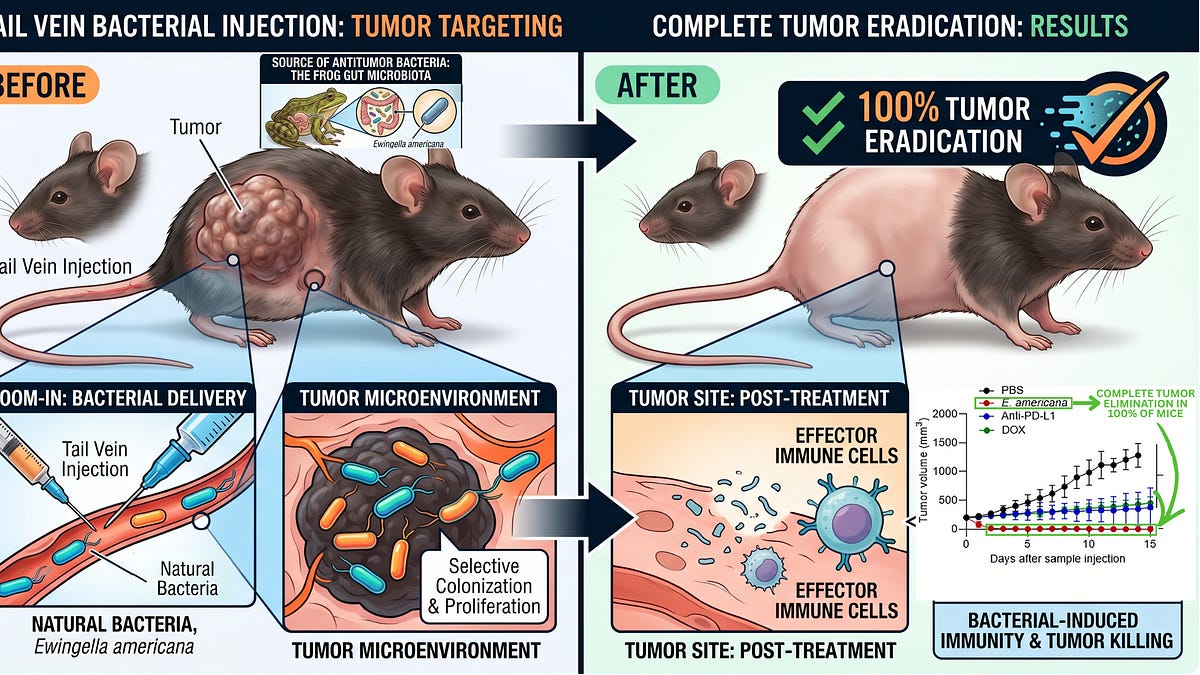
A newly published peer-reviewed study in Gut Microbes reports that Ewingella americana, a bacterium isolated from amphibian and reptile gut microbiomes, completely eliminated colorectal tumors in 100% of treated immunocompetent mice after a single intravenous dose. The treatment outperformed chemotherapy (doxorubicin) and immunotherapy, showed no detectable toxicity, and provided durable immune protection with no tumor recurrence upon re-exposure to cancer cells. The findings suggest a novel approach to cancer treatment derived from non-mammalian gut microbiomes.
Source
 Hacker NewsStudy: Frog-Derived Gut Bacterium Eliminates Colorectal Tumors in 100% of Treated Micethefocalpoints.com
Key quotes
· 3 pulledA single intravenous dose of Ewingella americana led to complete tumor elimination in 100% of treated animals, with no recurrence upon re-exposure to cancer cells—suggesting durable, long-term immune protection.
The bacterium outperformed both chemotherapy (doxorubicin) and immunotherapy.
delivering results that exceeded modern oncology treatments
You might also wanna read


Gut microbiome composition predicts melanoma recurrence risk in patients on immunotherapy, large trial finds
This study analyzed stool samples from 674 patients with resected high-risk melanoma enrolled in the phase 3 CheckMate 915 clinical trial to

The gut microbiome and cancer: from tumorigenesis to therapy - Nature Metabolism
Gut Bacterium Faecalibacterium prausnitzii Reverses Lupus Symptoms in Mice by Restoring Fiber Digestion
Researchers at UT Health San Antonio discovered that Faecalibacterium prausnitzii, a key gut bacterium that breaks down fiber, is notably ab
 scienceblog.com·4d ago
Dietary soy promotes gut bacteria that cooperatively induce immune responses and protect against Salmonella in mice
This study demonstrates that dietary soy shapes the gut microbiome in weaning mice by promoting the expansion of two commensal bacterial spe

Medical exposure rapidly restructures gut microbiomes in remote Amazonian Indigenous communities
This study examines microbiome changes in remote Amazonian Indigenous communities (335 Amerindians across multiple villages) during the intr

Johns Hopkins Study Finds Anti-Parasitic Drug Slows Pancreatic Cancer in Mice
Johns Hopkins Medicine researchers have discovered that an anti-parasitic drug can prevent the initiation, progression, and metastasis of pa
 hopkinsmedicine.org·9d ago
Comments
Sign in to join the conversation.
No comments yet. Be the first.