





















Dietary soy promotes gut bacteria that cooperatively induce immune responses and protect against Salmonella in mice
By
Daisuke Takahashi1,8 Send email to [email protected]

Baker's choice. Dense with flavour, light on filler.
Summary
This study demonstrates that dietary soy shapes the gut microbiome in weaning mice by promoting the expansion of two commensal bacterial species, Limosilactobacillus reuteri and Muribaculum intestinale. These bacteria work cooperatively: L. reuteri provides antigens for T follicular helper (Tfh) cell activation, while M. intestinale acts as an adjuvant by promoting IL-1β production. This leads to robust Tfh cell and IgA antibody responses in Peyer's patches, which helps maintain gut microbiota homeostasis and provides protection against Salmonella infection.
Key quotes
· 5 pulledDietary soy elicits a robust Tfh cell and IgA response in Peyer's patches of weaning mice.
L. reuteri provides cognate antigens for Tfh cell activation, while M. intestinale functions as an adjuvant by promoting IL-1β production.
This polyreactive IgA maintains gut microbiota homeostasis and confers protection against Salmonella infection.
Diet impacts gut microbes and, subsequently, host immunity, but our understanding of the mechanisms driving this axis remains incomplete.
Soy feeding promotes the expansion of two principal commensal bacterial species, Limosilactobacillus reuteri and Muribaculum intestinale.
You might also wanna read

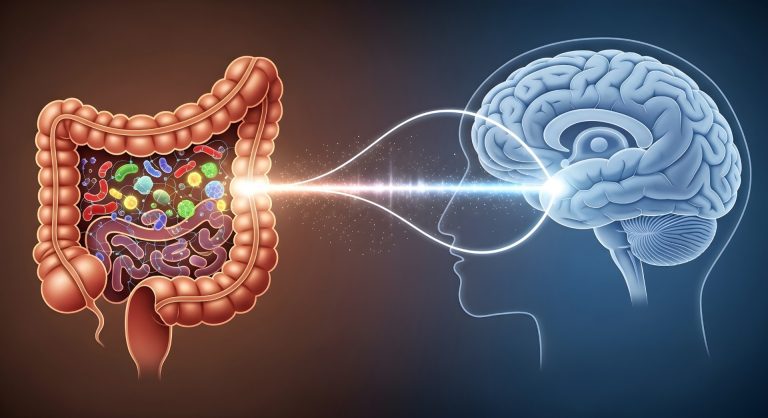
Stanford Study: Restoring Gut-Brain Communication Reverses Cognitive Decline in Aging Mice
Stanford Medicine researchers discovered that aging-related changes in gut bacteria composition trigger an inflammatory response that impair
 med.stanford.edu·3mo ago
Japanese Researchers Discover Frog Gut Bacteria with Potent Anticancer Properties
Japanese researchers at JAIST have discovered that Ewingella americana bacteria from Japanese tree frog intestines shows potent anticancer a
 jaist.ac.jp·5mo ago
Personal Experiment: Testing BioGaia Prodentis Oral Probiotic's Effect on Oral Microbiome
The article describes a personal experiment with BioGaia Prodentis, a direct-to-consumer oral probiotic. The author purchased the product on

Study reveals coffee shapes gut microbiome and influences mood through gut-brain axis
Researchers at APC Microbiome Ireland, University College Cork, published a study in Nature Communications examining how coffee interacts wi

Gut Bacteria Molecule Linked to Atherosclerosis, Major Cause of Heart Disease
Spanish scientists discovered that gut bacteria produce a molecule leading to atherosclerosis, a major cause of heart attacks and strokes. T
english.elpais.com·10mo ago
Fecal transplants show promise in reducing autism symptoms as research moves to Phase 3 trials
This article discusses the emerging scientific connection between gut microbiome health and autism spectrum disorder. It highlights new rese
 refractor.io·25d ago