
























First reported by Phys
More than 90% of key nutrients degrading the Mar Menor lagoon come from recirculated underground flows
Sediment Recirculation Found to Drive Nutrient Pollution in Mar Menor Lagoon
From the article
More than 90% of the key nutrients degrading the Mar Menor, such as ammonium, phosphorus, and silica, do not come from streams or continental groundwater, but rather through a mechanism that has so far been overlooked: water from the lagoon itself infiltrates the sediments and re-emerges loaded with nutrients that have accumulated over years. This is the conclusion of a recent study carried out by the Institute of Environmental Science and Technology of the Universitat Autònoma de Barcelona (ICTA-UAB), Spain, which questions the current restoration strategies for the Mar Menor, as they do not take this pathway of contamination into account.
Continue reading on ecomagazine.comYou might also wanna read
More than 90% of key nutrients degrading the Mar Menor lagoon come from recirculated underground flows
Phys·1d ago


Landscape water velocities drive divergent evolution of nitrogen cycling in global ecosystems
This scientific article examines how nitrogen cycling evolves differently across landscapes based on water velocity gradients. It argues tha
 science.org·27d ago
DAILY DIGEST, 7/7: Could dredging invasive clams boost fish food in Suisun Marsh?; Can restoration save the Delta smelt?; Why are berries everywhere, in every season? Driscoll’s.; Scientists propose draining Lake Powell to preserve water in Lake Mead; and
mavensnotebook.com·1d ago
High Levels of Pollutants Found in Sediment in Guánica Bay
ncei.noaa.gov·12y ago
Three Newly Published Studies Reveal Florida Red Tide Blooms Are Becoming More Persistent and Severe with Warming Waters and Nutrient Inputs
Mote Marine Laboratory & Aquarium·3mo ago
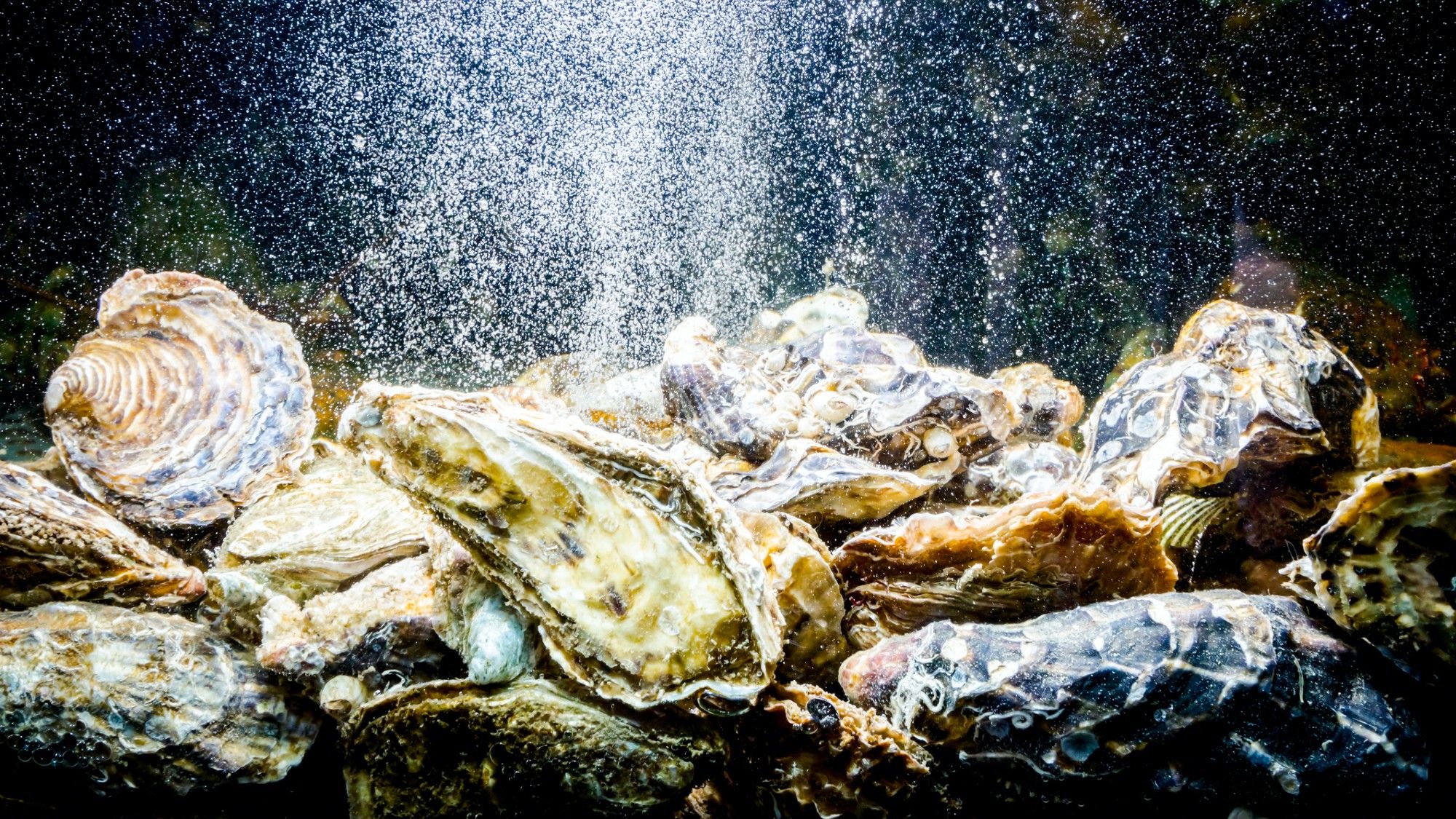
Researchers explore oyster-based water filtration for future space missions
Engineers at Harrisburg University and Monolith Space are researching the use of oysters and other "biogenerative" life support systems — li
 space.com·11d ago
Researchers explore oyster-based water filtration for future space missions
Engineers at Harrisburg University and Monolith Space are researching the use of oysters and other "biogenerative" life support systems — li
space.com·11d ago
Comments
Sign in to join the conversation.
No comments yet. Be the first.