
























More than 90% of key nutrients degrading the Mar Menor lagoon come from recirculated underground flows
6h agoen
Source
PhysMore than 90% of key nutrients degrading the Mar Menor lagoon come from recirculated underground flowsphys.orgMore than 90% of the key nutrients degrading the Mar Menor, such as ammonium, phosphorus and silica, do not come from streams or continental groundwater, but rather through a mechanism that has so far been overlooked: Water from the lagoon itself infiltrates the sediments and re-emerges loaded with nutrients that have accumulated over years. This is the conclusion of a recent study carried out by the Institute of Environmental Science and Technology of the Universitat Autònoma de Barcelona (ICTA-UAB), Spain, which questions the current restoration strategies for the Mar Menor because they do not take this pathway of contamination into account.
You might also wanna read


Landscape water velocities drive divergent evolution of nitrogen cycling in global ecosystems
This scientific article examines how nitrogen cycling evolves differently across landscapes based on water velocity gradients. It argues tha
 science.org·26d ago
Embalses España 7 de julio: reserva de agua bajó -1,71 %
Infobae·1d ago
New Zealand study maps how rising seas are pushing salt into coastal freshwater aquifers
A new national study in New Zealand has mapped how rising seas are pushing saltwater into coastal freshwater aquifers through seawater intru
 earth.com·28d ago
DAILY DIGEST, 7/7: Could dredging invasive clams boost fish food in Suisun Marsh?; Can restoration save the Delta smelt?; Why are berries everywhere, in every season? Driscoll’s.; Scientists propose draining Lake Powell to preserve water in Lake Mead; and
mavensnotebook.com·1d ago

Atún en agua o atún en aceite: cuál usar según la receta que quieras preparar
Infobae·1d ago
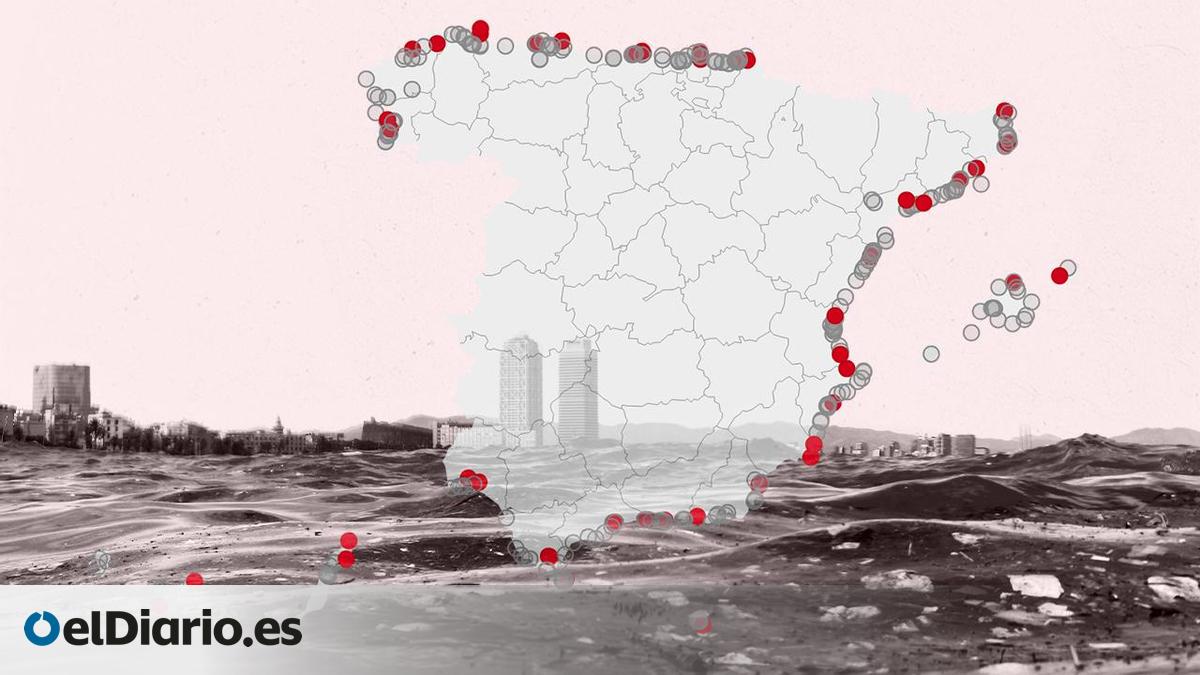
Ecologistas en Acción señala 48 playas con bandera negra por contaminación y mala gestión en la costa española
El informe anual de Ecologistas en Acción identifica 48 puntos críticos en las costas españolas (banderas negras) donde la contaminación, la
 eldiario.es·5d ago
Comments
Sign in to join the conversation.
No comments yet. Be the first.