
























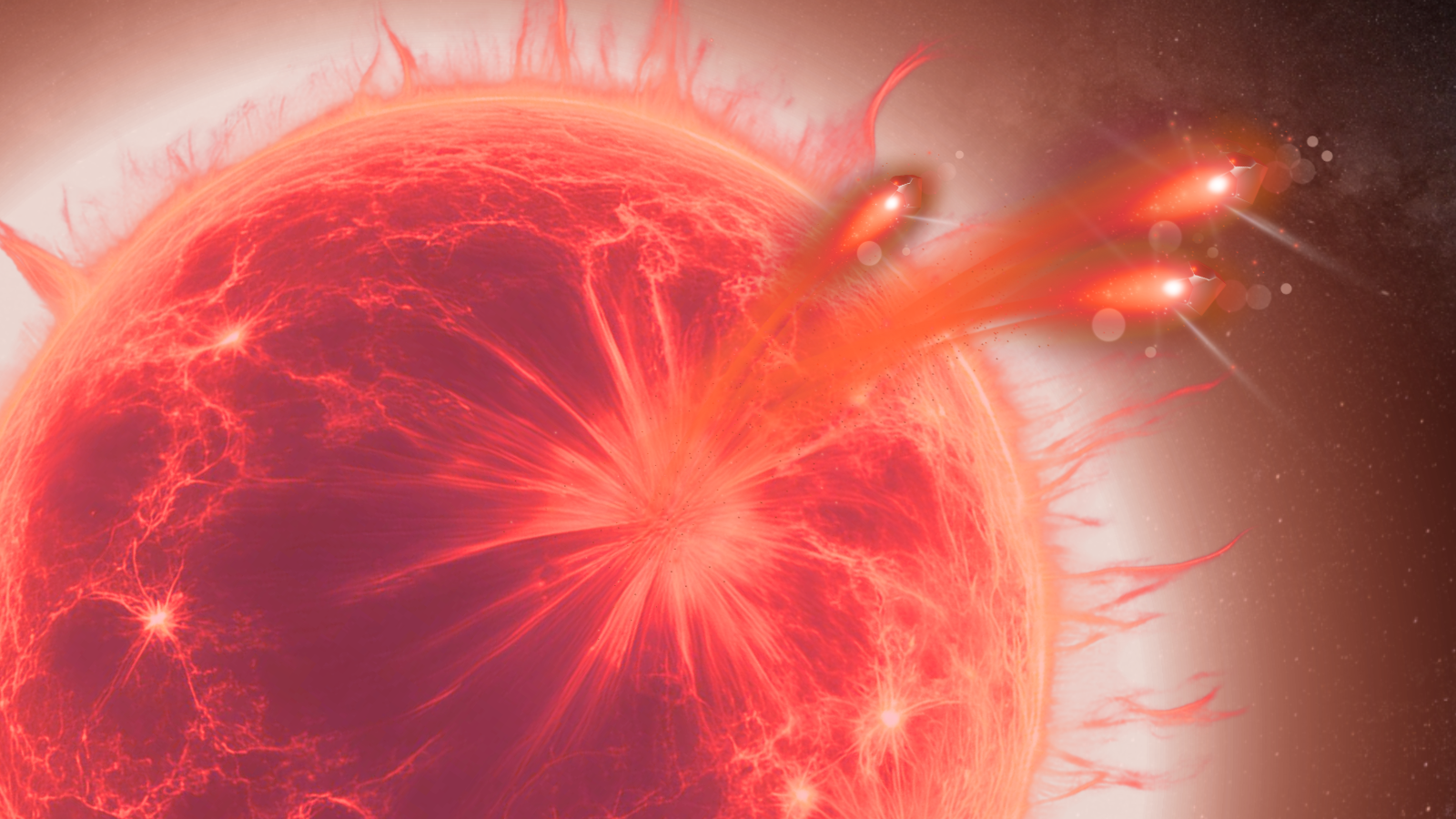
Dying stars like the sun eject plasma blobs and receive recoil 'kicks,' new research shows
By
Robert Lea
Summary
Scientists have discovered that dying stars like our sun don't fade quietly. When stars enter their red giant phase after exhausting their core hydrogen, they eject blobs of plasma and receive a corresponding "kick" in the opposite direction — a Newtonian action-reaction process. This research reveals that dying stars actively interact with their surroundings rather than passively fading away, with implications for understanding stellar death and its effects on the solar system.
Source
 Twitter / XDying stars like the sun eject plasma blobs and receive recoil 'kicks,' new research showsspace.com
Key quotes
· 3 pulledScientists have discovered that dying stars don't go down without a fight.
New research suggests that when stars like the sun enter their red giant phase, they spit out blobs of plasma and receive a corresponding 'kick' in the opposite direction.
Like Newton said, for every action there is an equal and opposite reaction.
You might also wanna read

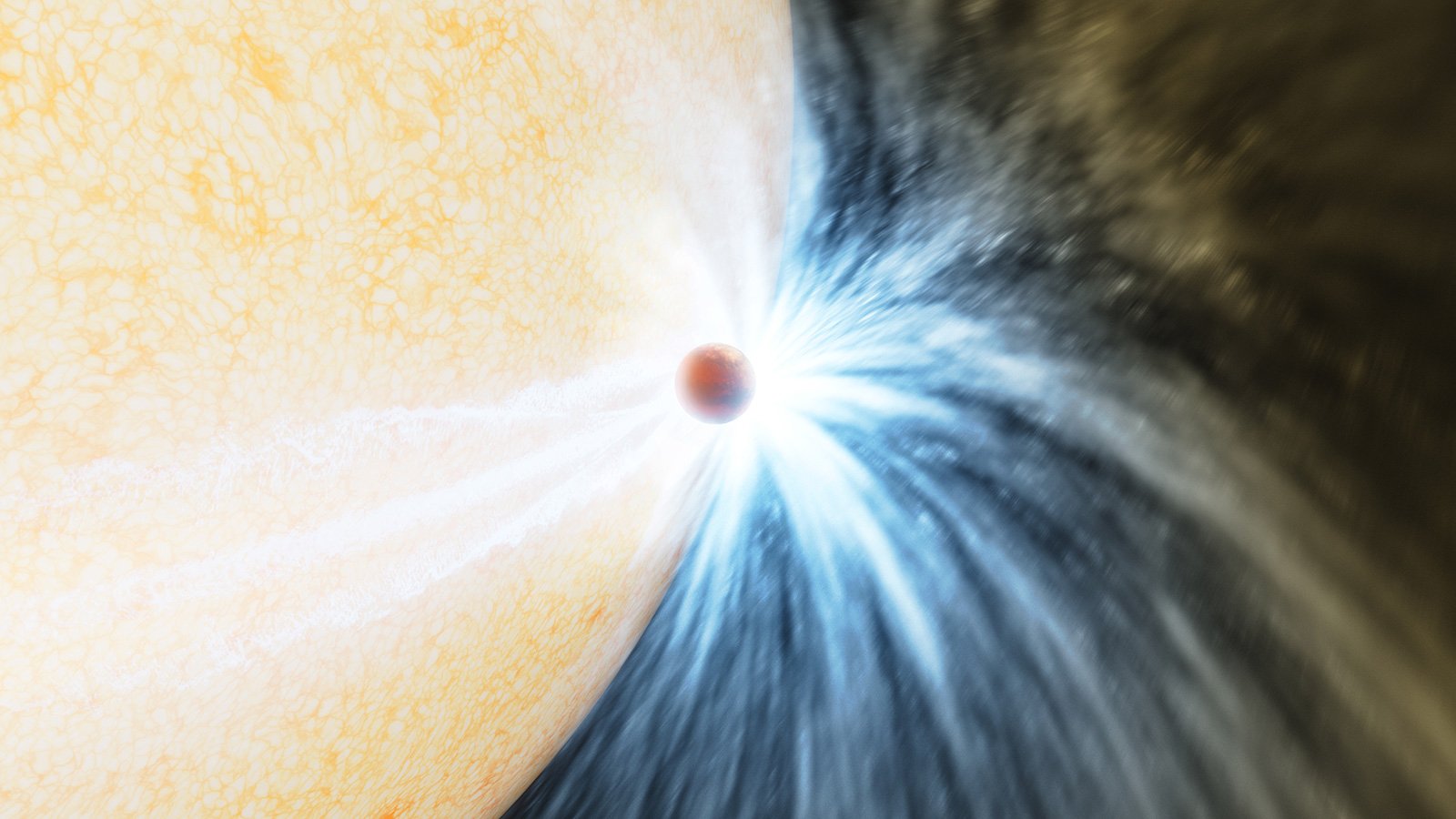
How Astronomers Can Identify Stars That Have Consumed Their Planets
This article explores the phenomenon of stars engulfing and consuming planets that orbit too closely. It discusses how planets can be drawn
 aasnova.org·1mo ago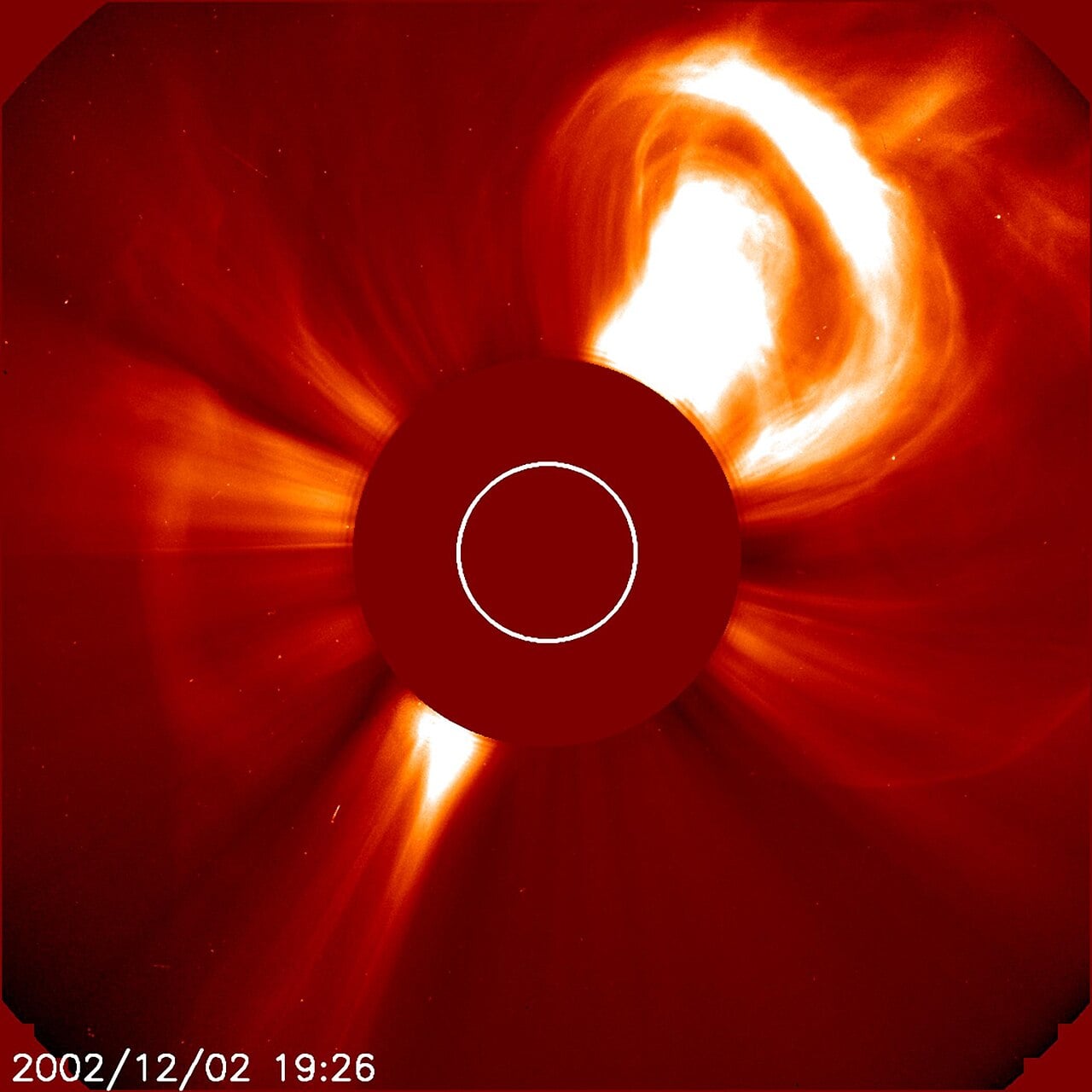
Harvard study explains why some solar eruptions fail to launch
A new study from the Center for Astrophysics at Harvard & Smithsonian has provided the most detailed explanation yet of failed solar eruptio
 universetoday.com·1mo ago
Astronomers may have caught an early galaxy in the process of dying
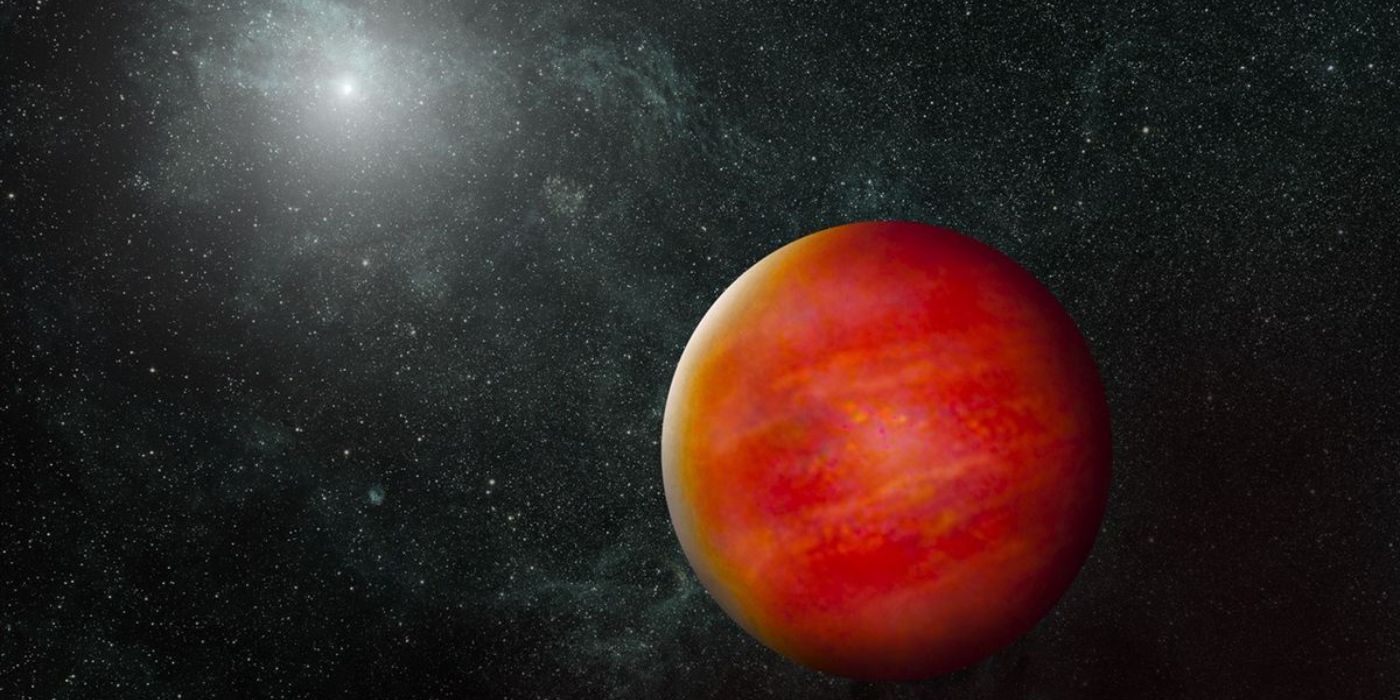
Brown Dwarfs: The Celestial Objects That Are Neither Stars Nor Planets
This article discusses brown dwarfs — celestial objects that blur the line between the lowest-mass stars and the largest gas giant planets.
 seti.org·15d ago
NSF VLA Reveals Supermassive Black Holes Emit Radio "Burps" Years After Destroying Stars
Astronomers using the NSF Very Large Array have discovered that supermassive black holes continue to emit radio waves years after tearing ap
 public.nrao.edu·19d ago
VLT Study Reveals Dramatic Nickel Emission and CN Outgassing in Interstellar Comet 3I/ATLAS
Astronomers using the Very Large Telescope (VLT) have conducted spectroscopic observations of interstellar comet 3I/ATLAS (C/2025 N1) as it
 arxiv.org·10mo ago
Comments
Sign in to join the conversation.
No comments yet. Be the first.