
























Osaka University researchers create self-regulating artificial photosynthesis system that eliminates need for batteries
Summary
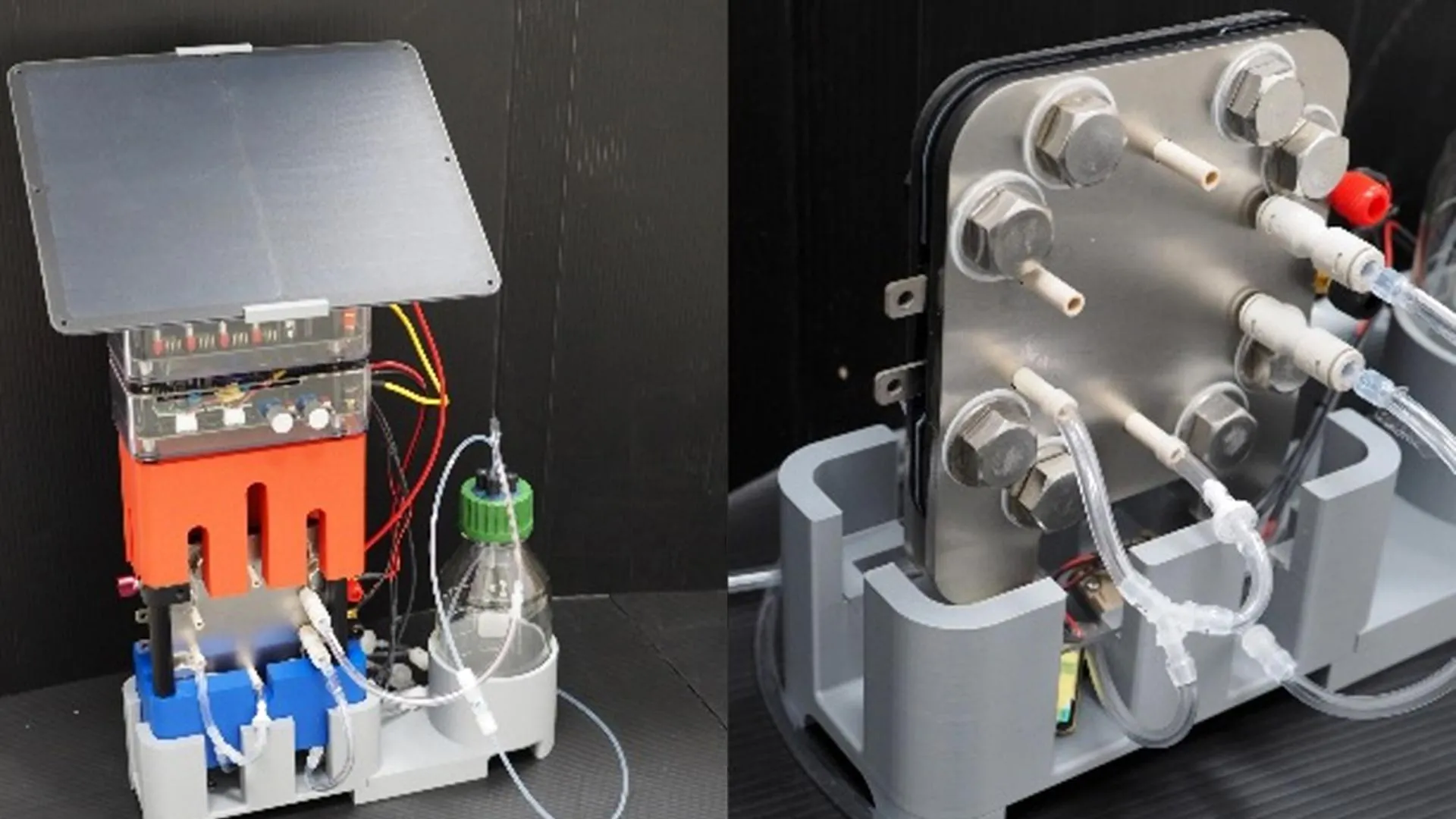
Researchers at Osaka Metropolitan University have developed an artificial photosynthesis system that regulates itself, eliminating the need for batteries used in current designs. The key innovation is an electrolyzer that automatically adapts to changing sunlight by altering its electrical properties as it heats up, keeping solar fuel production more stable while reducing cost and complexity. The system produces formic acid, a chemical that can serve as both fuel and energy storage.
Source
 bskyOsaka University researchers create self-regulating artificial photosynthesis system that eliminates need for batteriessciencedaily.com
Key quotes
· 3 pulledResearchers at Osaka Metropolitan University have created a new artificial photosynthesis system that can generate solar fuel more consistently while eliminating the need for battery based control equipment.
The advance comes from integrating a self regulating chemical component directly into the electrolyzer, reducing both system complexity and cost.
Like natural photosynthesis in plants, artificial photosynthesis uses sunlight to transform water and carbon dioxide into energy rich compounds.
You might also wanna read


UC Santa Barbara researchers develop liquid battery material that stores solar energy as heat for years
Researchers at UC Santa Barbara, led by Associate Professor Grace Han, have developed a novel material that absorbs sunlight, stores the ene
Sunlight-powered chemistry reduces hazardous oxidant risk
AI framework could speed battery, combustion and materials research by automating simulations

Understanding Earth's Sunlight Budget and Its Biotechnological Applications
The article explores the concept of Earth's sunlight budget, highlighting its significance as a vast and largely untapped energy source. It
 asimov.press·11mo ago
Solar desalination system eliminates toxic brine while producing fresh water
Scientists have developed a solar-powered desalination system that converts seawater into fresh water without producing toxic brine, a major
Solar desalination system eliminates toxic brine while producing fresh water
Scientists have developed a solar-powered desalination system that converts seawater into fresh water without producing toxic brine, a major

Comments
Sign in to join the conversation.
No comments yet. Be the first.